Jines Restaurant on Park Avenue: Rochester's Most Beloved Breakfast Table
I've been walking through the door of Jines Restaurant on Park Avenue since before I could reach the door handle — and nearly 50 years later, that door still feels like home. That's not a line I rehearsed. It's just the truth, the kind that sneaks up on you when you're standing on the corner of Park and Berkeley on a cold Saturday morning, watching your breath disappear into the air, thinking about how some places simply refuse to let go of you.
Jines Restaurant Park Avenue Rochester is, by any reasonable measure, a neighborhood institution. But that phrase — "neighborhood institution" — has always felt a little too formal for what Jines actually is. Institutions are plaques and proclamations. Jines is a tea mug on a doily and a waitress who already knows you want the eggs over easy.
A Corner That Has Held Rochester Together Since 1971
A Corner That Has Held Rochester Together Since 1971
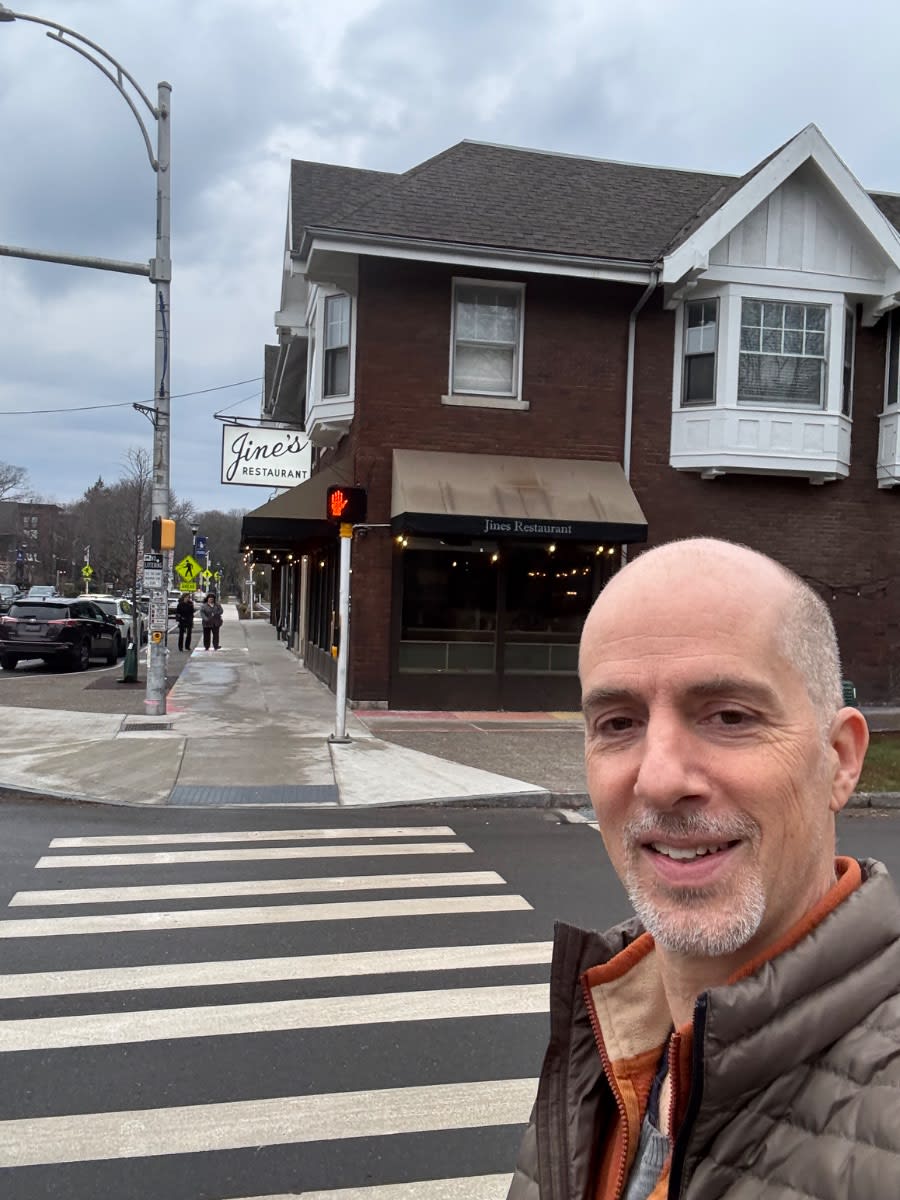
There's a particular kind of landmark that doesn't announce itself. No blinking sign, no rotating rooftop feature, no social media campaign reminding you it exists. The Park Avenue Rochester restaurant at the corner of Park and Berkeley is exactly that kind — quiet, assured, and utterly uninterested in proving itself to anyone.
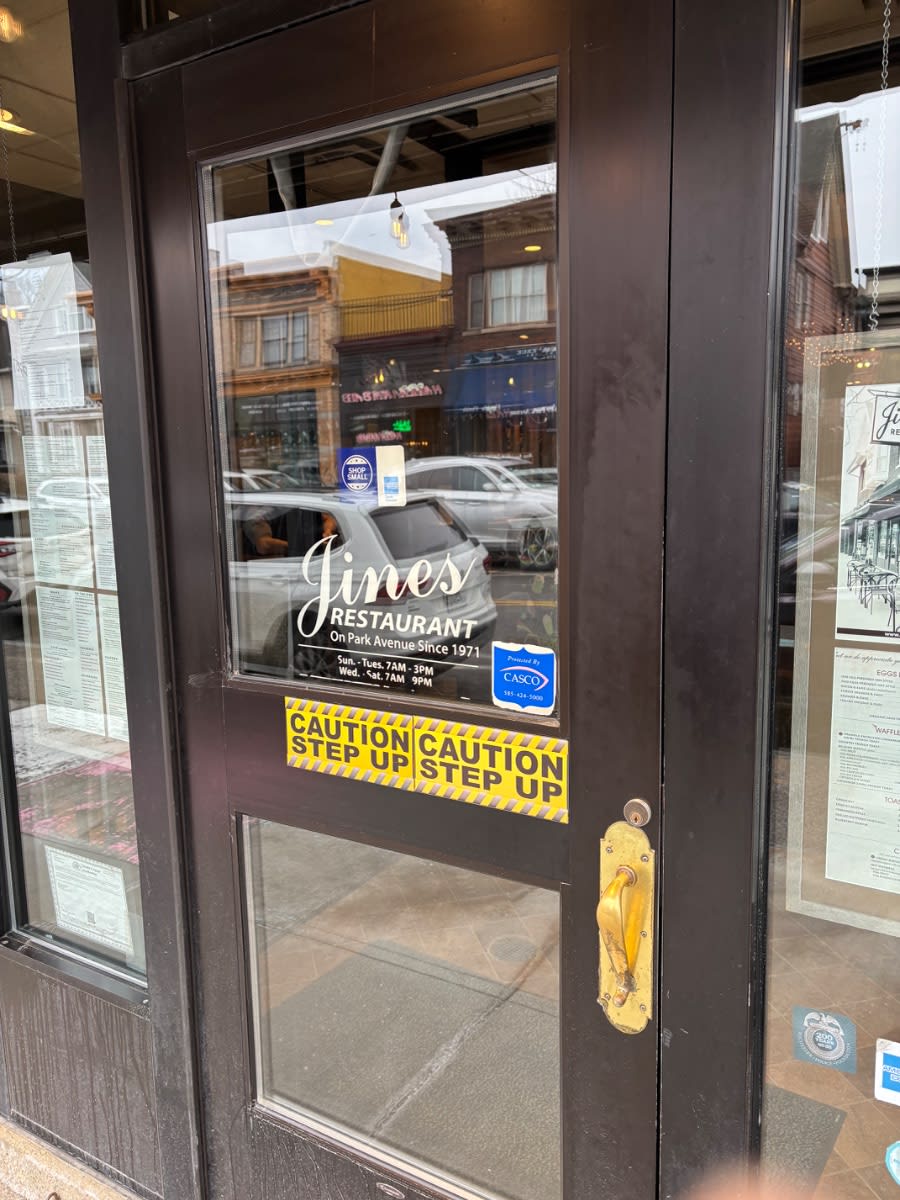
The dark awning. The hand-lettered sign. The small step up at the entrance, flagged with caution tape that every regular navigates on autopilot, muscle memory honed across years of Saturday mornings. And on the door, simple and understated: On Park Avenue Since 1971. Not a boast. More like a neighbor saying, I was here before you, and I'll probably be here after — and meaning it without any particular arrogance, because the neighborhood already knows.
What does it mean when a single building holds the memory of multiple generations of the same family, the same block, the same city? When parents bring children who will one day bring their own children, and the waitstaff connects all three chapters without missing a beat? It means that building is doing something more than serving food. It's holding time in place. It's giving a neighborhood a fixed point to orient around, the way a compass needs north to be useful.
Think about the Rochester places whose absence you'd feel most sharply. I'd argue Jines belongs at the top of that list — not because of any single dish, but because of what it represents: proof that some things can stay. Which Rochester corners would yours be?
Growing Up at Jines: My Earliest Rochester Memories Start Here
Growing Up at Jines: My Earliest Rochester Memories Start Here
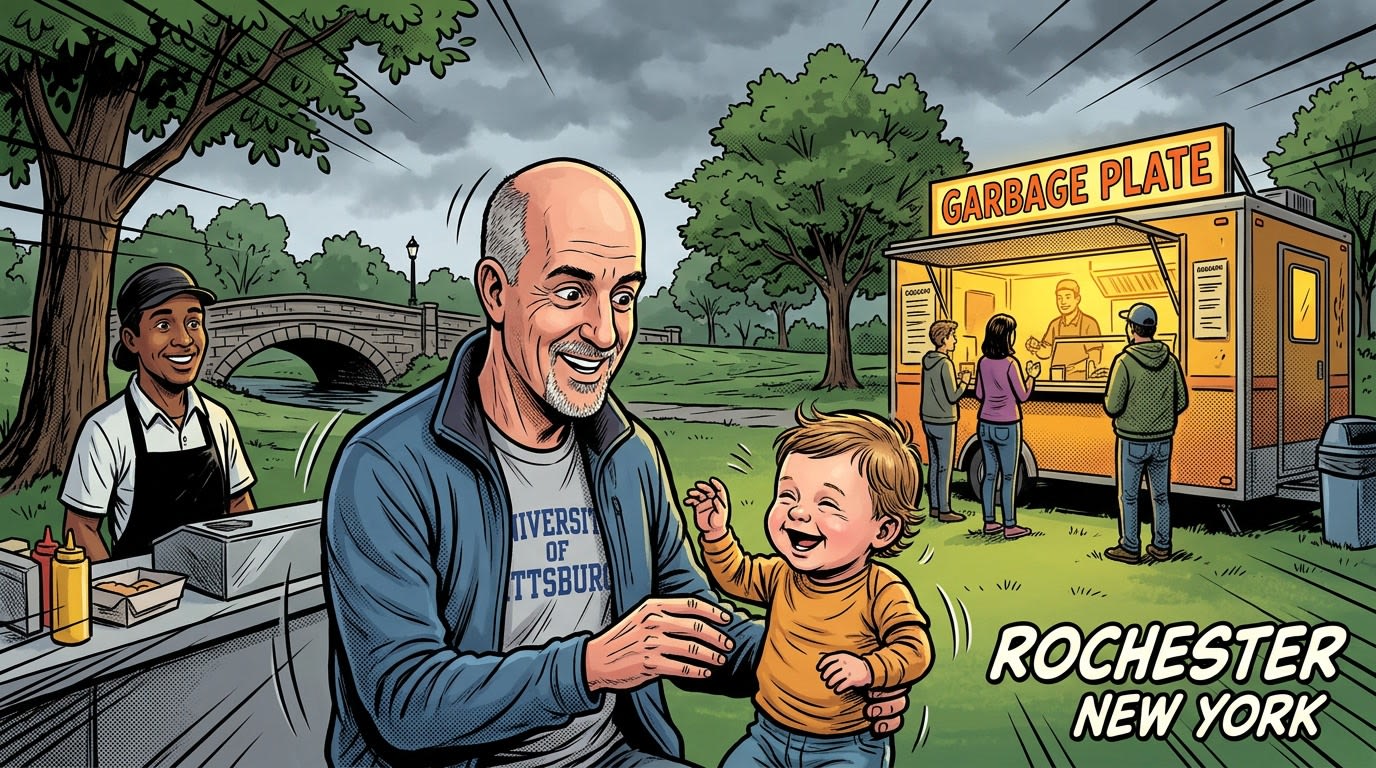
My earliest Rochester neighborhood breakfast tradition memory isn't of food. It's of running. The particular freedom of being a toddler in a restaurant where the staff actually liked having you there — where Mr. Jines Senior was still in his prime, working the room the way only a man who built something from nothing can, and where the waitresses treated looking after a small, enthusiastic child as part of the morning's reasonable expectations. I was not, by any account I've been given, a quiet child. They looked after me anyway.
That's what it means to be a restaurant kid. The booth becomes a second living room. The staff become an unofficial extended family — people who know not just your name but your order, your mood, your family dynamics, your history. There's a particular warmth in being known by the people who bring you coffee, a warmth that has nothing to do with temperature and everything to do with recognition. Being seen, without having to explain yourself, is one of the quieter luxuries of a long relationship with a place.
Park Avenue has always been a neighborhood where community is built around shared tables, not just shared geography. You can live on the same block as someone for a decade and never really know them. But sit at adjacent tables at Jines for a few years, nod hello on your way to the bathroom, wave when you see their car parked outside — that's how a neighborhood actually forms itself. One quiet acknowledgment at a time.
The Ritual of Friday Morning: 15 Years of Breakfast with My Dad
The Ritual of Friday Morning: 15 Years of Breakfast with My Dad
For the last fifteen years, my dad and I have had breakfast together at Jines almost every Friday morning. That's our weekly breakfast ritual — not a resolution we made, not a calendar invite, just a thing that became true and then stayed true because neither of us wanted to be the one to break it.
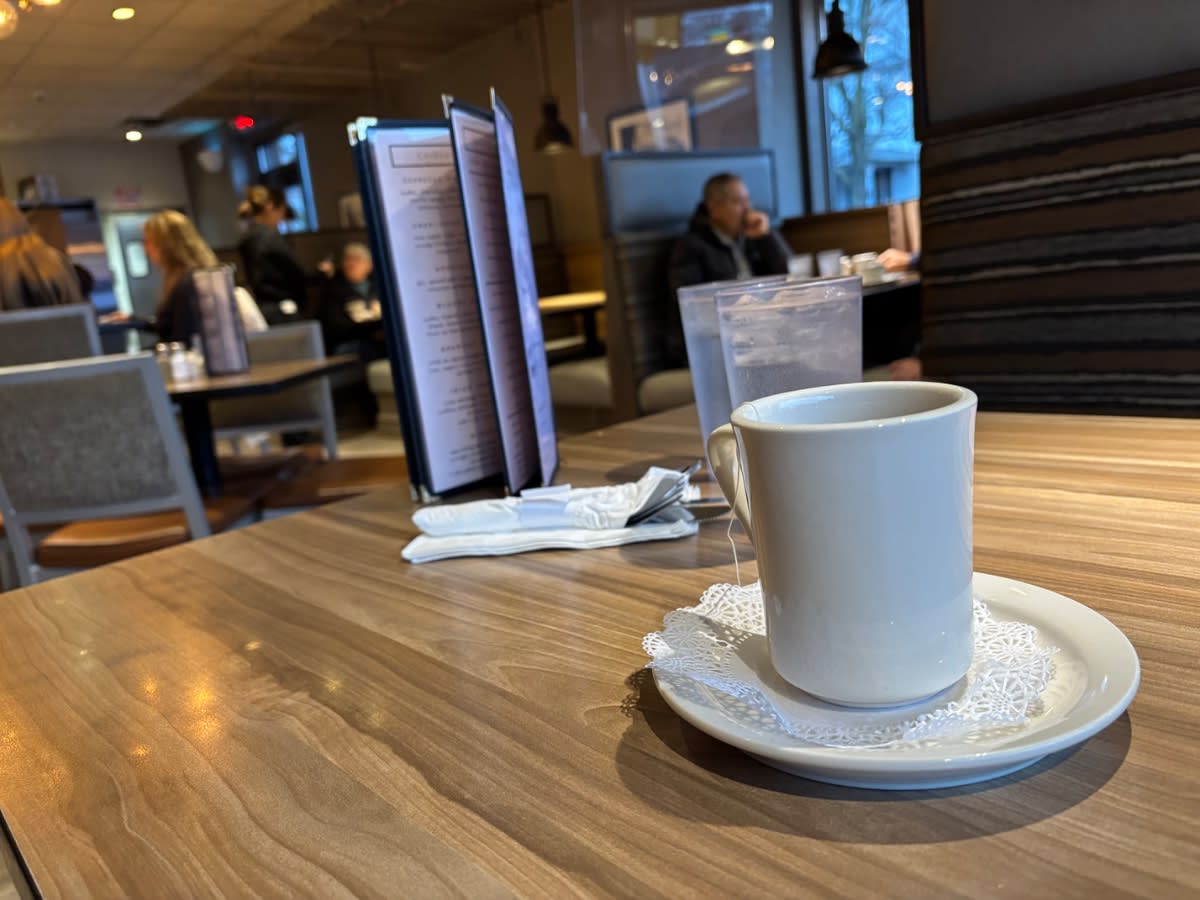
If you've sat at a table at Jines, you know the particular choreography of it. The tea mug arrives on a small doily — always. The water glass. The menus standing upright on the table like quiet sentinels, as if to say take your time, there's no rush here. And there isn't. That's part of what makes it work.
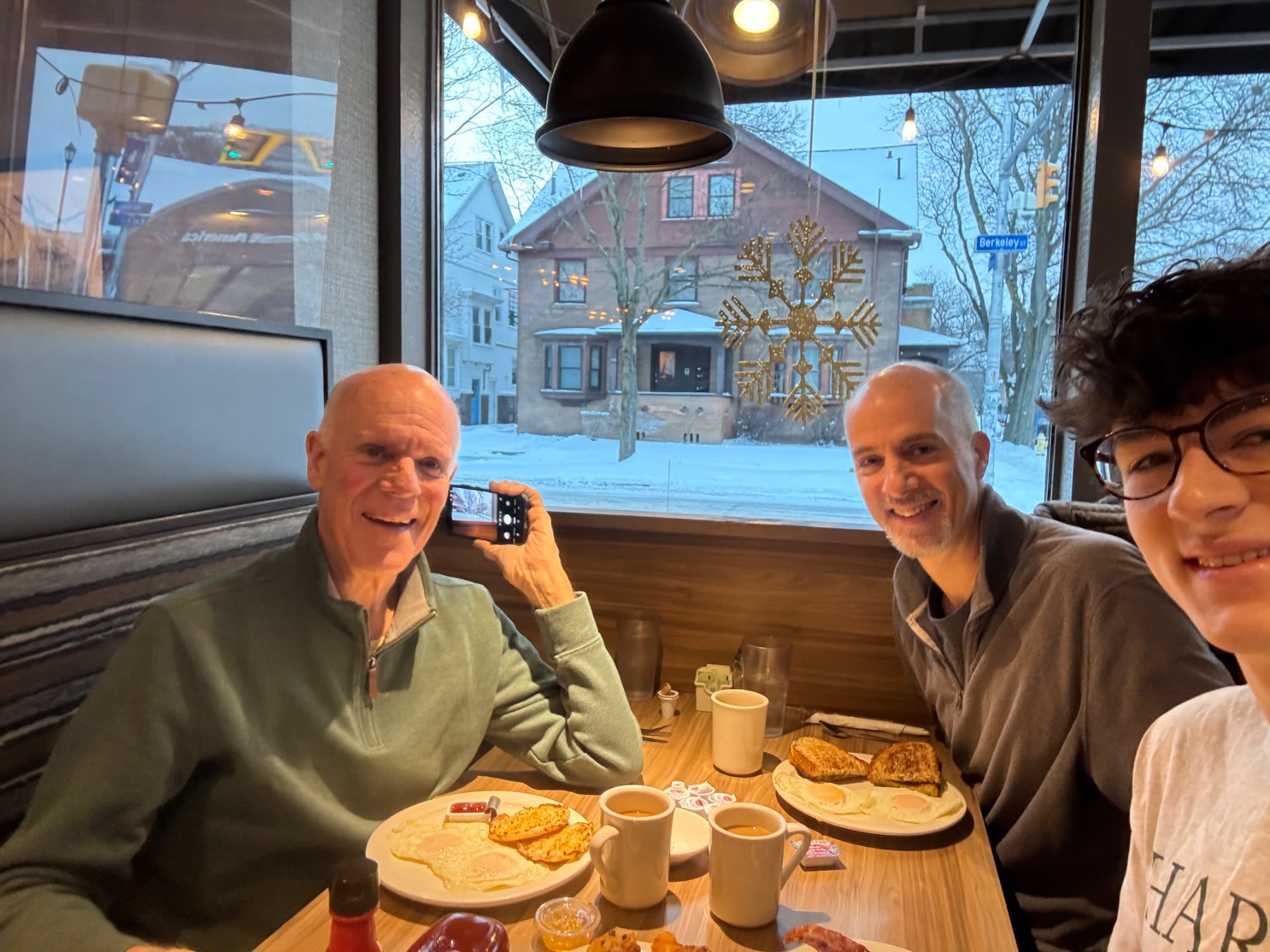
Fifteen years of Friday mornings, if you do the math, is somewhere in the neighborhood of 750 breakfasts. Seven hundred and fifty conversations. Seven hundred and fifty mornings when my dad and I sat across from each other over eggs and coffee and did the slow, patient work of actually knowing each other — not as archetypes (father, son) but as people. The research on this, for what it's worth, is pretty clear: according to a study published in the Journal of Epidemiology & Community Health (doi.org/10.1136/jech-2016-208357), shared meals are among the most reliable predictors of social wellbeing and close relationship quality, particularly across generations. Science, confirming what Jines already knew in 1971.
There's something particular about a recurring table. It removes the pressure of occasion. You're not there to celebrate anything or process anything. You're just there, the way you always are, and in that consistency something builds — slowly, without fanfare, the way most of the important things build. The ritual holds the relationship in place between the weeks when nothing else connects you.
Who do you show up for on Saturday mornings? And where do you take them?
Peter Jines: The Face That Makes a Room Feel Like a Neighborhood
Peter Jines: The Face That Makes a Room Feel Like a Neighborhood
The thing about a family-owned Rochester diner that survives across generations is that it requires someone to make a choice. At some point, every second-generation owner stands at a crossroads and asks a version of the same question: do I keep this, or do I let it go? The economics of the restaurant industry alone make the question complicated — the U.S. Bureau of Labor Statistics consistently finds that food service is among the most challenging sectors for small business survival, with a significant percentage of restaurants closing within their first five years (bls.gov/bdm/entrepreneurship/bdm_chart3.htm). Carrying something across generations is not a passive act. It's a decision, made daily.
Peter Jines made his decision. And you can see it in the way he moves through the dining room.
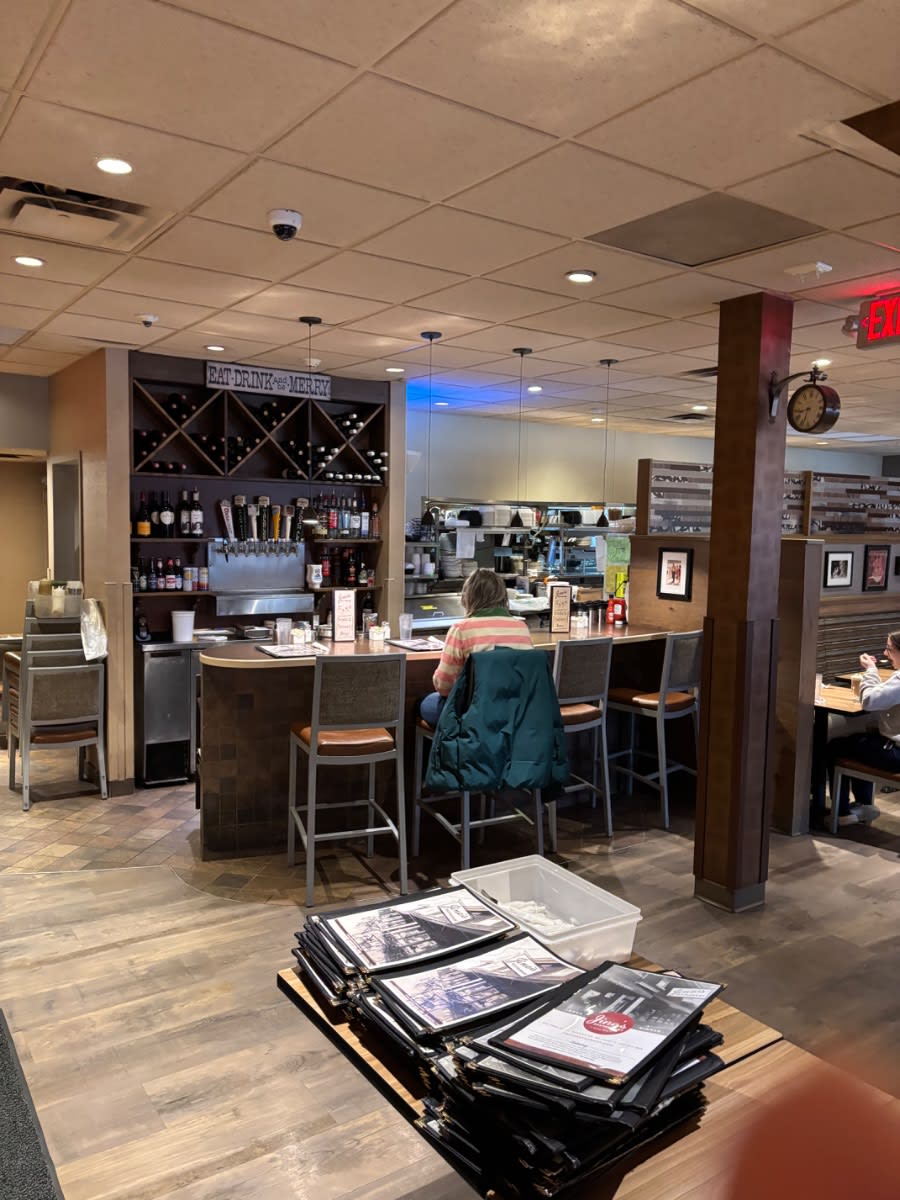
Always present. Always ready to greet regulars by name. The bar area, the menus stacked near the host stand — the same systems, the same rhythms his father established, now held by a new set of hands. It would be easy to frame this as a management style. It isn't. It's a community practice. Peter isn't just running a business; he's tending a gathering place. There's a difference, and most people can feel it the moment they walk in.
What Peter does by being on that floor is practice belonging — not as a concept but as an action. He shows up because he knows these people. Because they are his people. Because the woman in the corner booth has been coming in since before he was old enough to pour coffee, and that means something, and he doesn't need a customer loyalty program to remind him of it.
That, more than any menu item, is what keeps a family restaurant alive across fifty-plus years.
What the View from the Window Says About Park Avenue
What the View from the Window Says About Park Avenue
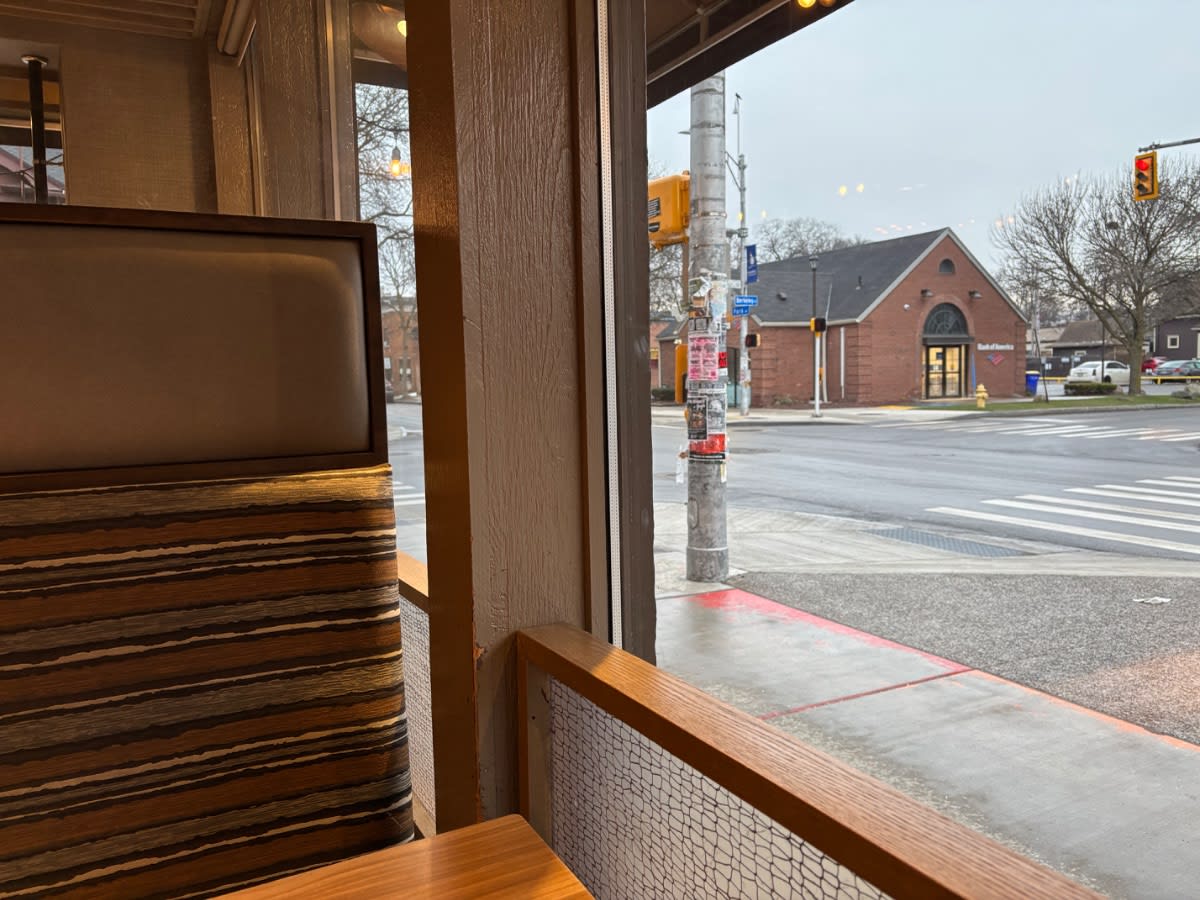
If you're lucky enough to get a window booth, take a moment before you order. Look out at the intersection of Park and Berkeley. The Bank of America building across the street. Magpie and the Blue Room visible from the other side, depending on your angle — independent businesses doing their own versions of the same work Jines has been doing for decades. Leafless winter trees lining the sidewalk. A travel agency holding its ground. The particular texture of a Park Avenue neighborhood Rochester streetscape that is lived-in, not curated — which is a distinction worth preserving.
New restaurants open across the street. Some thrive, some close, some become beloved in their own right. Jines watches all of it from the same corner it has always occupied. That's not smugness. That's just what permanence looks like from the outside.
The window seats at Jines are among the best people-watching real estate in Rochester. On a Saturday morning, you'll see dog-walkers and joggers and families with strollers and older couples who move at the pace of people who have earned their Saturday. You'll see the neighborhood doing what neighborhoods do when they're healthy: moving, greeting, existing in the same space without any particular agenda.
What does it mean for a city when some places simply refuse to disappear? I think it means the city still believes in itself. Jines, from its corner, makes that case every morning it opens.
Why Places Like Jines Matter More Than We Usually Say Out Loud
Why Places Like Jines Matter More Than We Usually Say Out Loud
Step back from the personal for a moment, because there's a civic point here worth making plainly.
Sociologist Ray Oldenburg spent years arguing that what holds communities together isn't just homes and workplaces — it's the third places in between. The coffee shops, the barbershops, the diners where you don't need to buy anything expensive or belong to anything official to feel like you belong. Oldenburg's framework, laid out in The Great Good Place (1989), identifies these informal gathering spots as essential infrastructure for social health — as necessary to a functioning community as roads or schools, just harder to fund in a budget meeting. Restaurants like this Rochester community gathering place are among the most democratic versions of third places that exist: you show up, you order something modest, and you are — for that hour — home.
Rochester has lost beloved institutions. Anyone who has lived here long enough carries a small private list of places that are gone — restaurants, record stores, gathering spots that felt permanent right up until they weren't. The absence is felt in a city's social fabric in ways that are genuinely difficult to quantify but easy to feel. Something loosens. Something that held the neighborhood together at a particular corner simply stops holding.
Which is why the places that remain deserve more than our passive affection. They deserve our presence. Our Saturday mornings. Our willingness to show up, order the eggs, and be part of what makes a corner worth remembering.
What would the Park Avenue neighborhood be without a place where three generations of the same family have eaten breakfast? I don't want to find out. And I suspect you don't either.
There's a door on the corner of Park and Berkeley with a small step up and a sign that says On Park Avenue Since 1971. Jines Restaurant Park Avenue Rochester has been holding that corner — and this community — for more than half a century. If you haven't been recently, go. And if you have someone you've been meaning to share a meal with — a parent, an old friend, a kid who can't quite reach the door handle yet — this is where you bring them next Saturday morning. The tea mug will be on a doily. The menus will be standing like sentinels. And the eggs will be exactly what you needed.