Roc City Skatepark Phase 2 Is Opening This October — Rochester Is About to Have the Biggest Concrete Skatepark in New York
The Short Version
- After thirteen years of community advocacy, Roc City Skatepark Rochester's Phase 2 is opening in October 2026 — months ahead of the spring 2027 schedule.
- At nearly 50,000 square feet total, the completed park will be the largest concrete skatepark in New York State — bigger than anything in New York City.
- Phase 2 adds a street plaza with rails, banks, pyramids, and the Flower City Mark embedded in the concrete, plus DJ booth and judge table infrastructure for competitions.
- The nearly $8 million Phase 2 investment is part of ROC the Riverway — Rochester's larger effort to reclaim the Genesee riverfront as a public asset for everyone.
- Both phases were built by Grindline, one of the most respected skatepark designers in the country, on land a city official once described as never going to be anything useful.
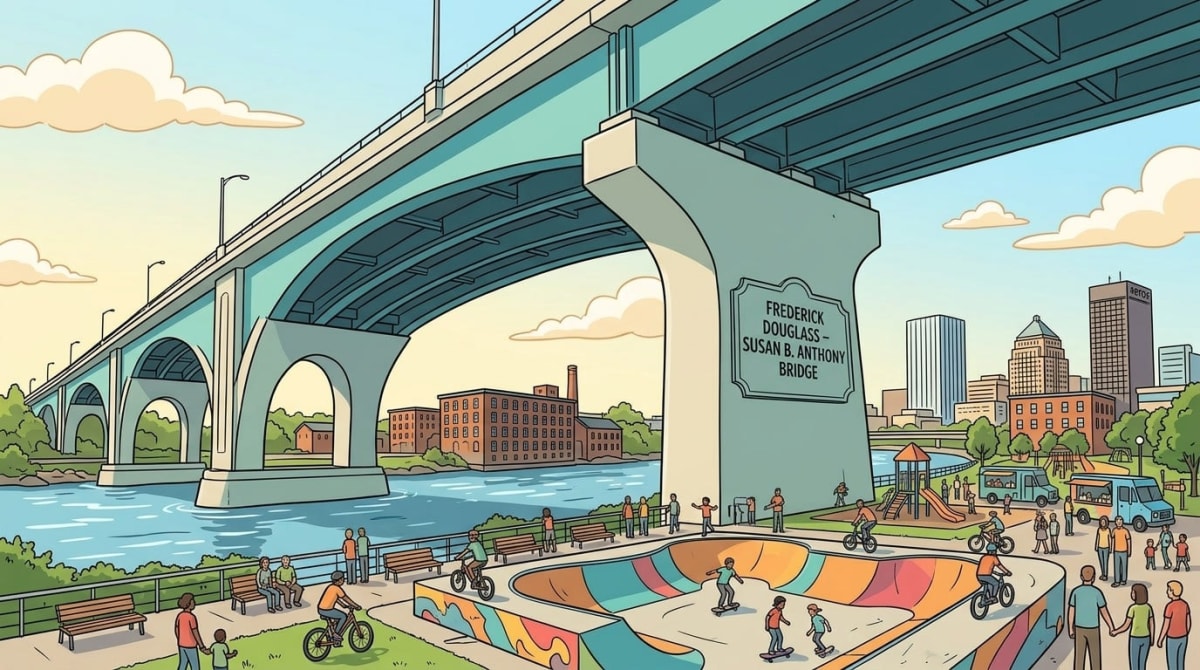
The site below the Frederick Douglass–Susan B. Anthony Bridge was, by all accounts, going to be nothing. Jeff Mroczek, the City of Rochester's senior landscape architect, said it plainly: the land "wasn't ever going to be anything useful." The Genesee Riverway Trail ran underneath, and the rest would just sit there — vacant, under a bridge most people crossed without ever looking down.
That was before the Friends of Roc City Skatepark decided otherwise. Thirteen years of community advocacy later, Phase 2 of Roc City Skatepark Rochester is on track to open this October — months ahead of the spring 2027 projection — and when it does, Rochester will be home to the largest concrete skatepark in New York State.
Thirteen Years of Rallying, and October Is the Finish Line
Thirteen Years of Rallying, and October Is the Finish Line
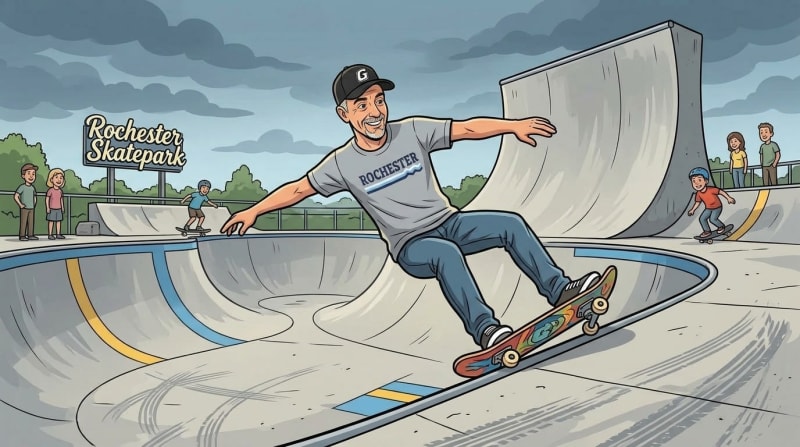
Before there was a site, before there were plans, before a single yard of concrete had been poured, there was a group of Rochester skaters who believed this city owed them something — or more accurately, believed they had something to offer the city that the city hadn't quite figured out how to accept yet. The Friends of Roc City Skatepark rallied for roughly thirteen years before Phase 1 finally opened in fall 2020. That's not a fundraising campaign. That's a commitment to a place.
Phase 1 — the bowl section with steep banks and high quarter pipes — was the first chapter. But the community knew Phase 1 was only half the story. Phase 2, the street plaza, was projected for spring 2027. It's now coming in October 2026, months ahead of schedule.
That kind of ahead-of-schedule news doesn't happen by accident. It happens when a project has momentum, when the people building it feel the weight of the community behind them, when a city understands that something real is being created. Thirteen years of showing up — to meetings, to conversations, to the site itself — turned vacant land under a bridge into a world-class destination.
What does it mean for a community to fight for thirteen years for a skatepark, and win? What does that kind of persistence say about what Rochester is capable of when it decides something matters?
What Phase 2 Actually Adds: Rails, Pyramids, and the Flower City Mark
What Phase 2 Actually Adds: Rails, Pyramids, and the Flower City Mark
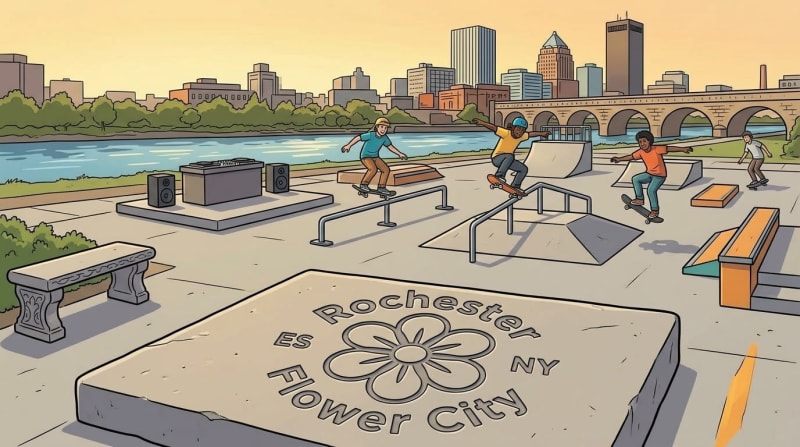
If Phase 1 is the bowl — technical, demanding, rewarding commitment — Phase 2 is the street. The new addition is a street plaza design with rails, banks, mellow obstacles, and pyramids: the kind of terrain that rewards creativity and style over raw courage. The two phases are complementary by design, not by coincidence.
According to WXXI News, the Phase 2 design integrates the Flower City Mark prominently — Rochester's visual identity pressed directly into the concrete. This is not a generic skatepark that could exist anywhere. It was built to be here, and it says so.
The design also includes pavement for DJ booths and judge tables. That's not a recreational amenity — that's infrastructure for competition. It signals that Roc City Skatepark isn't being built to occupy kids on a Saturday afternoon. It's being built to host events, to draw skaters from across the state and beyond, to put Rochester on the national skate calendar. Both phases were designed and built by Seattle-based Grindline, one of the most respected skatepark builders in the country. That continuity matters — the two phases feel like one idea realized in two movements.
The Full Picture: What Nearly 50,000 Square Feet of Skateable Space Looks Like
The Full Picture: What Nearly 50,000 Square Feet of Skateable Space Looks Like
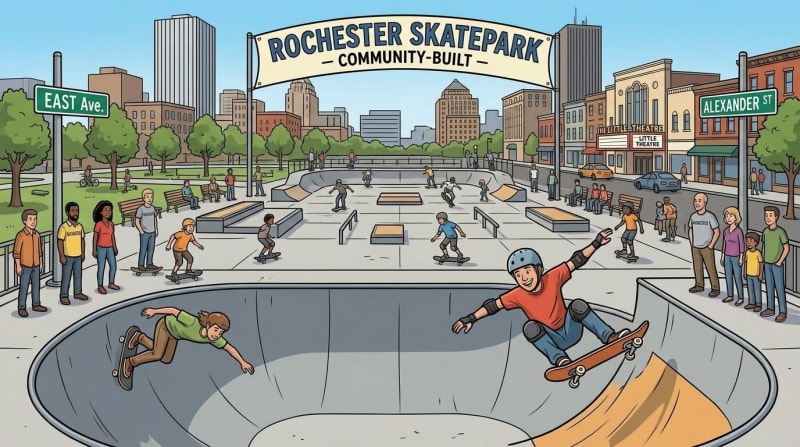
Phase 2 adds approximately 20,000 square feet of street plaza to the existing Phase 1 footprint, bringing the total to nearly 50,000 square feet of skateable concrete — the largest concrete skatepark in New York State. Bigger than anything in New York City.
Here is how the two phases break down by skateable area:
For context: a 10,000-square-foot concrete park is considered a serious regional facility. At nearly 50,000 square feet, Roc City is in a different category entirely — a destination park, the kind skaters plan trips to reach. Rochester is about to have one that belongs to everyone.
Phase 1 already offers the bowl section: steep banks, high quarter pipes, technical concrete that demands skill and rewards mastery. Phase 2 delivers the complement — accessible entry-level features alongside technical street obstacles that will challenge advanced skaters. Together they form a complete facility: something for the person dropping in for the first time, something for a professional who wants to push limits, and everything in between.
What does it mean for a city to hold a record like this — the largest concrete skatepark in New York State? It means Rochester has something no other city in the state has. For a community that has spent decades watching economic attention flow elsewhere, that kind of distinction is worth stopping to name.
Under the Bridge: How Forgotten Riverfront Land Became a Destination
Under the Bridge: How Forgotten Riverfront Land Became a Destination
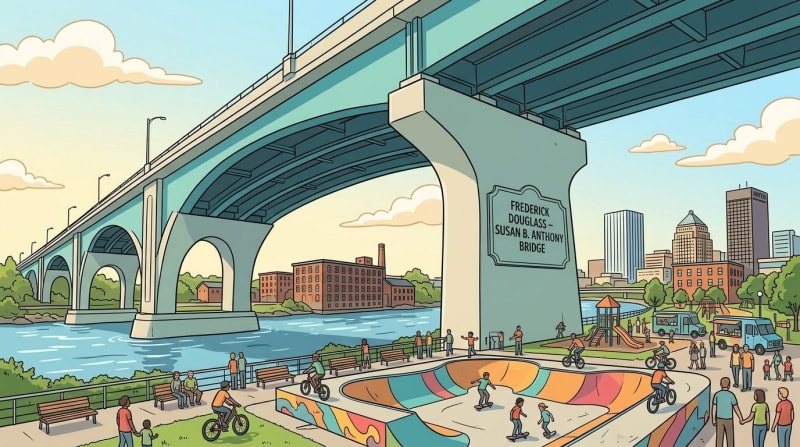
There's a version of this story where the land under the Frederick Douglass–Susan B. Anthony Bridge stays vacant forever. Jeff Mroczek, the City of Rochester's senior landscape architect, acknowledged as much to WXXI News: "Really, the site below the bridge wasn't ever going to be anything useful...we have the trail under there, but really the rest of this property was just going to sit vacant."
Instead, Phase 2 is a nearly $8 million investment and a piece of a much larger story. The project is part of ROC the Riverway, the state-supported riverfront revitalization initiative working to rebuild Rochester's relationship with the Genesee. That relationship had been estranged for decades — highways, industry, and disinvestment turned the river from a resource into a barrier. ROC the Riverway is the long reversal of that story.
The Genesee Riverway Trail already connects people to the water. High Falls, upstream, gives the Genesee drama and history. The skatepark gives the riverfront youth, energy, and a reason for people who might not think of themselves as outdoor recreation types to come down to the water anyway. That expansion of who the riverfront belongs to matters. A reclaimed waterfront that serves only joggers and kayakers is missing someone.
There's something fitting about a world-class skatepark sitting under a bridge named for Frederick Douglass and Susan B. Anthony — two people who refused to accept the world as it was. The land beneath their bridge wasn't going to be anything. Now it's going to be the biggest concrete skatepark in New York.
What This Means for Rochester's Skate Community
What This Means for Rochester's Skate Community
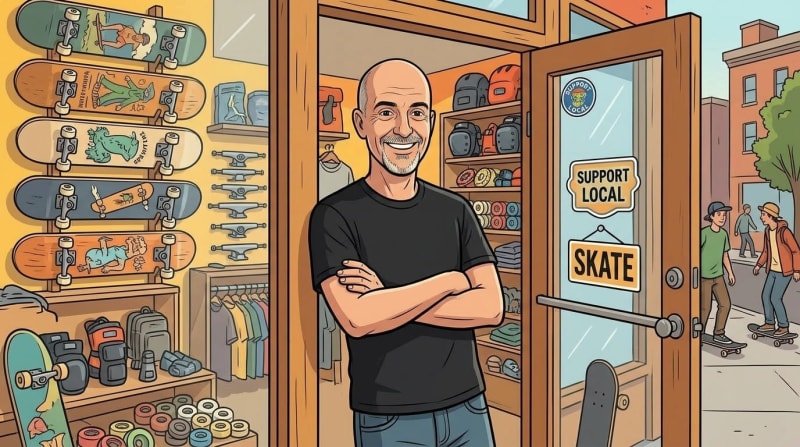
Aaron Costa has run Krudco skate shop in Rochester for years. He's watched the local skate scene through lean years and better ones, through the drift toward indoor parks and the persistent search for outdoor spots that don't disappear when the city decides the space is needed for something else. He knows what this park represents.
"It's going to be the biggest skate park, cement skate park, outdoor park, however you want to put it, in New York state, for however long that lasts."
— Aaron Costa, owner of Krudco skate shop
"For however long that lasts." That's not false modesty — that's a skater's understanding that records get broken, that something bigger will eventually come along. But right now, today, this is it. Rochester's skate community spent thirteen years advocating for public space, and what they're getting back is a world-class facility that takes youth recreation seriously enough to build it to competition standards.
The competition infrastructure — DJ booths, judge tables, a professional street section designed by Grindline — signals that Roc City Skatepark isn't positioned as a keep-the-kids-busy amenity. It's positioned as a venue. That means events. That means skaters traveling to Rochester from elsewhere in the state, finding out what this city has built, and spending time here. A thirteen-year fight for public space didn't just win a skatepark. It built an argument for what Rochester is willing to invest in — and who it's willing to invest in.
When and How to Visit This October
When and How to Visit This October
Phase 1 of Roc City Skatepark is open now. If you haven't been down to the bowl yet, you don't need to wait for October. The existing facility already shows you what Grindline builds: serious concrete, thoughtful design, terrain that rewards skaters at every level.
Phase 2 opens in October 2026. The exact date hasn't been officially announced — follow WXXI News and the Friends of Roc City Skatepark for updates as the opening approaches. The park sits underneath the Frederick Douglass–Susan B. Anthony Bridge and is accessible via the Genesee Riverway Trail — walkable and bikeable from multiple points along the river.
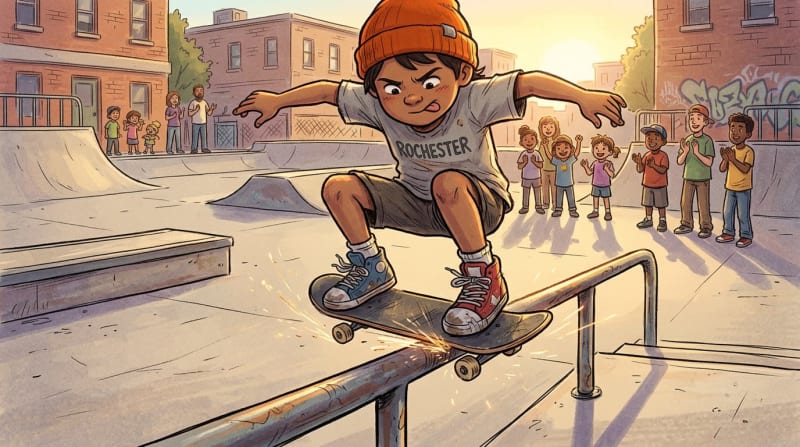
When Phase 2 opens, Rochester will have nearly 50,000 square feet of concrete that belongs to everyone. You don't have to skate to feel what that means. Show up. Watch someone drop in on the bowl for the first time. Watch a kid work out a rail in the street plaza and finally stick it. Thirteen years of community persistence made this possible. The least any of us can do is go see what they built.
Content ID: f4j22BADj3m1BDznvuYTj0oA
See an error? Tell us.

Comments
Share with the Community