Rochester Public Art Walk: The Best Murals, Sculptures, and Installations You Can See on Foot
The Short Version
- Wall Therapy, launched in 2011 by Rochester physician Dr. Ian Levitan, produced over 100 murals and brought internationally recognized street artists from Europe, Latin America, and Australia to paint on the city's walls.
- Some of the collection is already gone to building demolitions and surface deterioration, making the surviving pieces more urgent to find and document before more are lost.
- Three self-guided walking routes cover the city's highest-density art corridors — Downtown/East End, South Wedge/NOTA, and Park Avenue/MAG — each covering 1.5 to 2 miles in one to two hours.
- Memorial Art Gallery's outdoor sculpture grounds on University Avenue are one of Rochester's most underused public resources: permanent works by internationally recognized artists, free to see without a museum ticket.
- The South Wedge and NOTA district carries the highest mural density in the city, with Wall Therapy pieces alongside community-commissioned works made by and for neighborhood residents.
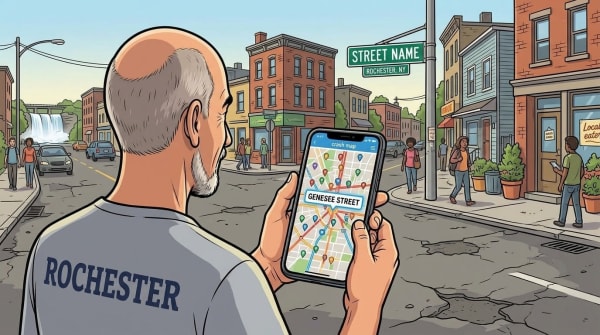
There's a moment every Rochester resident knows: you're on a block you've driven dozens of times, you happen to be walking it instead, and something stops you. A face twenty feet tall staring back from the side of an apartment building on South Avenue. A bronze figure catching early morning light in a courtyard off Park Avenue. A mural you've walked past for years that you suddenly, actually see. Rochester NY public art has been accumulating on walls and in plazas across the city's neighborhoods for decades — but the last fifteen years transformed a scattered collection into something that can hold its own against cities three times Rochester's size. This is a guide to finding it on foot.
The Wall Therapy Legacy: Rochester's Mural Movement
The Wall Therapy Legacy: Rochester's Mural Movement
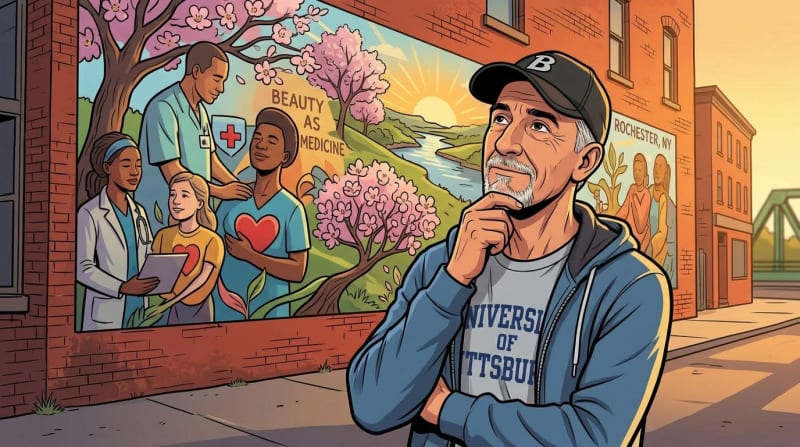
Wall Therapy started in 2011 with what sounds like an implausible origin story: a Rochester physician, Dr. Ian Levitan, believed that murals painted on the sides of buildings could function as a kind of public health intervention — that beauty in shared spaces changes how people experience their neighborhoods and each other. He co-founded the annual festival with artist and curator Erich Lehman, and what began as a small cluster of murals in a few downtown neighborhoods grew into something that eventually put Rochester on the international street art map.
The program works like this: Wall Therapy selects artists from around the world, negotiates wall access from building owners and businesses, and sets the artists loose on Rochester's urban fabric. The results are not commissioned graphics or civic announcements — they are real works by artists with international profiles, painted at scale, in public, for free. Over the course of its run, the program produced more than 100 murals in Rochester alone, bringing painters from Europe, Latin America, Asia, and Australia to leave work on the city's walls. Names like ROA from Belgium, Curiot from Mexico, Never2501 from Italy, and Gaia — who built his reputation across Baltimore and international walls — painted here before commanding major commissions in larger cities. Rochester got them while they were building something, and the city was better for it.
Here is how the program's output distributed across its history:
Some of this collection is already gone. As Rochester Beacon has reported, building demolitions and surface deterioration have claimed several Wall Therapy murals over the years, and that loss makes the surviving pieces feel more urgent to find. What remains is still remarkable — and most of it is within walking distance of a few key starting points across the city.
What does it mean that a physician started this program because he believed public art was medicine? Rochester took that question seriously enough to build something lasting around it.
Downtown and East End: Art in Rochester's Urban Core
Downtown and East End: Art in Rochester's Urban Core
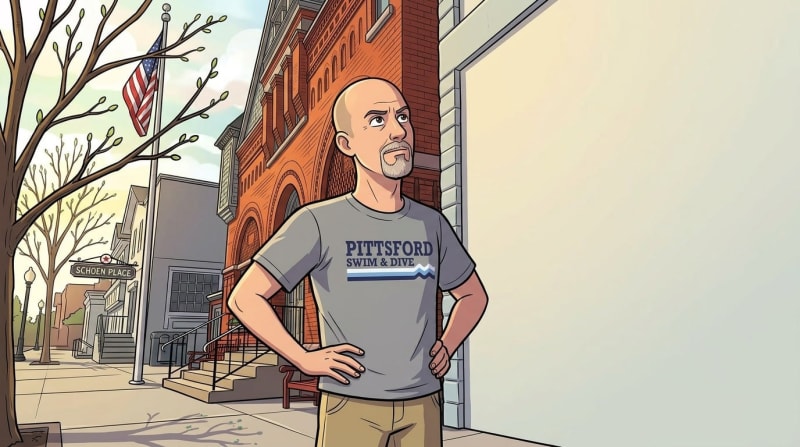
The most concentrated walking experience in the city starts downtown and extends east into the East End gallery and restaurant district. This is where Wall Therapy established its earliest roots, and where the city's official public art programs have layered in additional pieces over time.
Parcel 5, the open green space on Main Street between Elm and Clinton, anchors the downtown art walk. The city has used it for rotating public art installations alongside its events programming — pieces have ranged from large-scale sculpture to temporary light installations. The space earns a slow walk through, not just a pass-through on the way somewhere else.
Moving east on Main Street and into the East End, the mural density picks up noticeably. The corridor between Main Street and Alexander Street has some of the most visible Wall Therapy work in the city, with buildings along Chestnut Street and the surrounding blocks carrying pieces that have survived from multiple festival years. The City of Rochester has also commissioned permanent works in this corridor through its public art program — sculptures and ground-level installations that reward the kind of attention you only give on foot.
The East End's gallery district adds another dimension: several commercial storefronts and building exteriors carry work commissioned independently by the businesses themselves, outside of any city or nonprofit program. This is art that exists because someone who owns a building decided the wall deserved something. That's a different kind of civic participation, and it is worth noticing when you find it.
South Wedge and NOTA: The Neighborhood Art Trail

South Wedge and NOTA: The Neighborhood Art Trail
The South Wedge is the neighborhood that feels most like it built itself around its murals rather than the other way around. Gregory Street and South Avenue, the commercial spines of the neighborhood, carry some of the most photographed pieces in Rochester — work that has shown up in travel features, urban planning publications, and countless photography feeds.
The Wall Therapy connection is strong here. Several of the program's most recognizable pieces are on South Wedge walls, and the neighborhood's mix of older building stock with wide side walls gave artists room to work at the scale the program demands. But the Wedge also has community-commissioned work — murals that came from neighborhood conversations about what the art should say and who it should represent.
"The art here didn't arrive from outside. It was made by people who live in this neighborhood, for people who live here. That's a different kind of gift."
A short walk north brings you into NOTA — the Neighborhood of the Arts, a designated arts district running roughly between University Avenue and Monroe Avenue, anchored by a dense concentration of galleries, performance spaces, and studios. NOTA's public art reflects the district's institutional depth: sculptures commissioned for specific sites, installations tied to programming at the galleries, and work by artists who live and work in the neighborhood itself.
High Falls, the gorge overlook a short walk north and west of NOTA, adds a different register entirely. The installations at the High Falls site work with the landscape — the art and the geology in conversation, which is a different experience than a wall mural. If you're routing through NOTA, build in time to walk to the gorge.
What does a neighborhood look like when its residents decide its blank walls are worth filling? The South Wedge and NOTA are still working out that answer, and they are doing it in public.
Park Avenue and the Cultural Corridor

Park Avenue and the Cultural Corridor
Park Avenue's public art is quieter than the mural-heavy districts to the south — more sculpture, more integration with architecture, more pieces that reveal themselves slowly rather than announcing themselves from half a block away. This is not a criticism. It is a different register of attention, and the neighborhood rewards it.
The Memorial Art Gallery, at 500 University Avenue on the border of the Park Avenue district and NOTA, holds the most substantial outdoor sculpture collection of any walkable site in Rochester. The MAG's grounds include permanent installations on the lawns and in the garden spaces — work by artists with serious international reputations, accessible without a museum admission ticket. It is one of the most underused public art resources in the city, and that is genuinely worth correcting.
Walking west on Park Avenue from the MAG, the business district carries a mix of commissioned and informal pieces: storefront murals, sculpture in small plazas, and installations that respond directly to the street environment. The NOTA corridor extends through parts of this district, and the density of arts organizations in the area means there is almost always something temporary installed alongside the permanent collection.
Here is a rough breakdown of how Rochester's accessible public art collection divides by medium:
The Park Avenue corridor is also where Rochester's major arts institutions are most concentrated — the MAG, Geva Theatre, Blackfriars Theatre, Writers & Books, and Eastman School satellite programs. The public art here exists in a context of sustained institutional investment in culture. That changes how it reads: the work on these walls and in these plazas is part of a larger argument about what a city can choose to be.
What would it mean to spend an afternoon on Park Avenue treating the whole corridor as a gallery — not looking for a specific destination, but following the art where it leads?
Planning Your Walk: Routes, Timing, and Tips

Planning Your Walk: Routes, Timing, and Tips
The three districts above suggest three natural self-guided routes, each manageable in one to two hours at a comfortable walking pace.
Route 1 — Downtown and East End: Start at Parcel 5 on Main Street, walk east through the Main Street corridor, then south into the East End along Chestnut and the surrounding blocks. The route covers roughly 1.5 miles. Plan for 90 minutes to two hours if you're stopping to photograph and read artist information where it's posted.
Route 2 — South Wedge and NOTA: Start on Gregory Street in the South Wedge, walk north through NOTA along Oxford and University, then extend to the High Falls overlook before returning. The route covers roughly 2 miles with the High Falls extension. Allow two hours minimum — this is the highest-density mural corridor in the city and it earns the time.
Route 3 — Park Avenue and the MAG: Start at the Memorial Art Gallery grounds on University Avenue, walk the Park Avenue business district west to Goodman Street, then return through the side streets of NOTA. This route is the most leisurely, roughly 1.5 miles, and suits a slower pace because much of the art here rewards close attention.
Here is how the routes compare by estimated piece count:
Timing: Early morning and late afternoon offer the best light for photography and both avoid the midday glare that flattens colors on south-facing walls. Summer and early fall are ideal for outdoor walking; winter light is lower and softer, which suits certain sculptures particularly well.
Getting there: All three routes are accessible by RGRTA bus from downtown. For driving, street parking is generally available in the South Wedge along Gregory and South Avenue on weekday mornings. The MAG has a parking lot on University Avenue accessible from Goodman Street. Downtown parking is easiest on weekends.
The Wall Therapy website maintains a documented map of murals from the festival's history. Visit Rochester has a broader public art guide that supplements these routes with pieces across the city. Neither map is complete — some of the best work you'll find is not in any database, and that is part of the point.
Rochester has been putting gifts on its own walls for decades, and the collection is still growing. Some pieces are already gone to demolition — losses that cannot be recovered. But new work keeps appearing, and the city keeps making its argument in paint and bronze and steel.
The only thing left is to show up and see it.
Content ID: vt0BRBgqsSXGvkbm9YJDJAKf
See an error? Tell us.

Comments
Share with the Community