Rochester International Jazz Festival 2026: Your Complete Guide to Nine Days in the East End
The Short Version
- The 2026 Rochester International Jazz Festival runs June 19–27 with over 300 shows — free outdoor stages, Club Pass venues, and premium ticketed acts across nine days in the East End.
- Gladys Knight headlines a lineup that spans jazz, soul, blues, and world music; the festival has never confined itself to a single genre, and this year is no different.
- The free Gibbs Street stage is the emotional heart of the event — arrive 30 minutes before the set you want or you will be standing behind the crowd.
- Club Pass math: three or more indoor shows in a single evening makes the pass worth the price; one or two targeted shows, buy individual tickets instead.
- Residential streets east of Alexander Street open up free parking at 6 p.m. on weekend evenings — a 12-minute walk to the stages and consistently better than circling the garages.
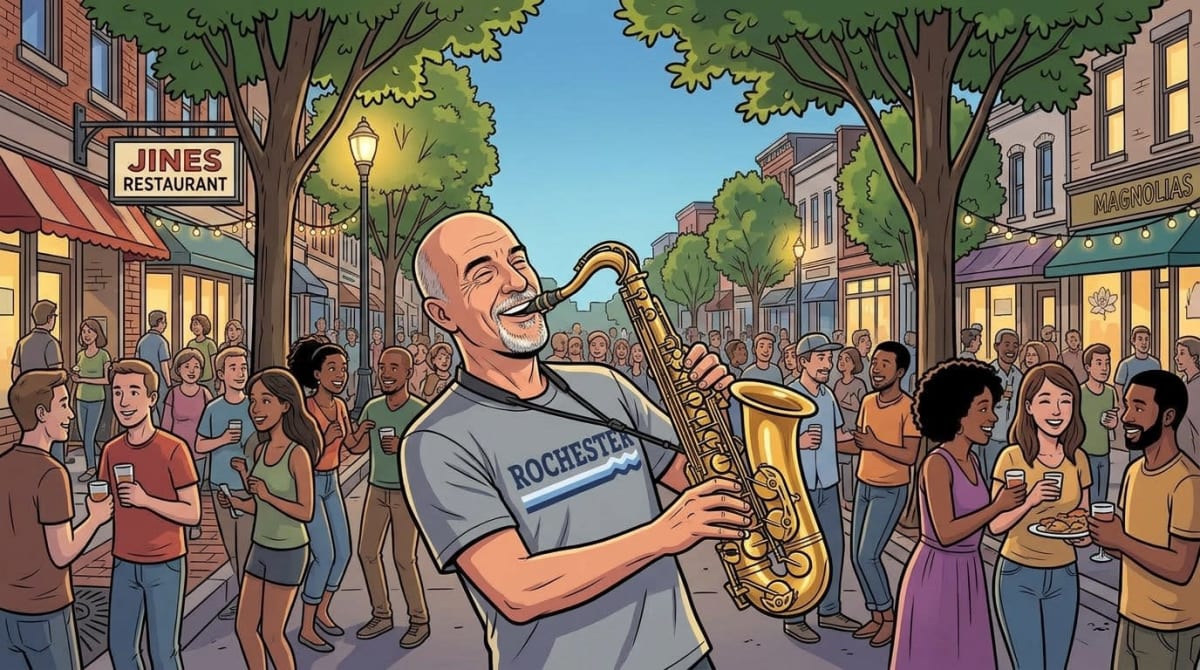
Somewhere around 9 p.m. on a Friday night in the East End, with the air still warm and a saxophone carrying over the crowd noise, you understand why people come back every year. The CGI Rochester International Jazz Festival 2026 runs June 19 through June 27 — nine days when a neighborhood becomes something larger than itself, and Rochester shows what it looks like when a city fully commits to something beautiful.
What to Know Before You Go
What to Know Before You Go
According to the official festival site, the 2026 edition features over 300 shows across multiple venues, with performances running from early afternoon into the early morning hours. Nine days. One neighborhood. The math alone tells you this event is built differently.
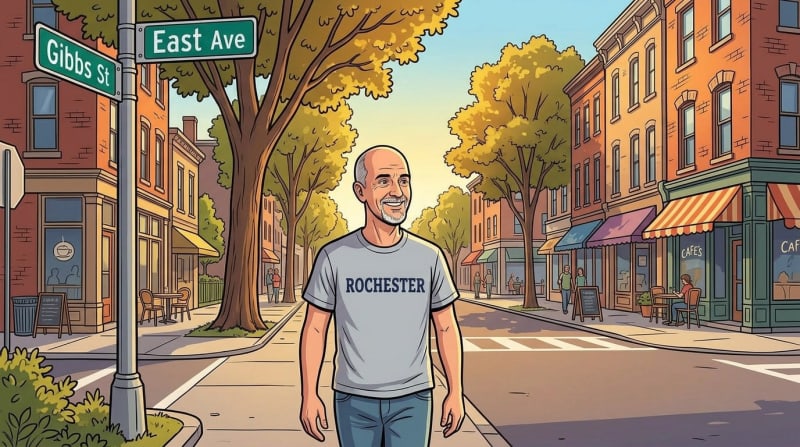
The structure is worth understanding before you arrive. Free shows happen on outdoor stages — Gibbs Street is the main artery, East Avenue hosts a second stage — and they require nothing but showing up. Ticketed indoor shows fill clubs and performance halls within walking distance of the free stages. The Club Pass is the third option: a flat-price pass that unlocks the indoor ticketed venues for an evening or for the full festival run.
Here is roughly how those 300+ shows break down:
The Club Pass math is worth working through before you buy. Three or more club shows in a single evening and the pass pays for itself. One or two targeted shows and individual tickets are the better value. The festival's ticket page has current pass pricing and availability.
East End geography rewards walkers. The core festival footprint runs roughly from the Eastman complex to the Gibbs Street and East Avenue intersection — under fifteen minutes end to end on foot. Comfortable shoes are not optional.
The Headliners and Must-See Acts
The Headliners and Must-See Acts
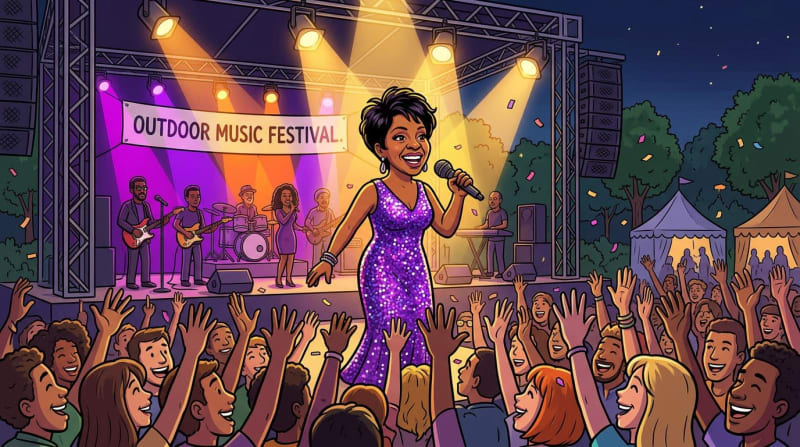
Gladys Knight headlining the 2026 festival is a statement booking. Knight carries six decades of catalogue and a voice that has deepened into something more interesting than most artists reach at any age. Her presence reflects what the festival has understood about itself from the beginning: that jazz is not a fence. It is a lineage — and that lineage includes gospel, soul, R&B, and every strand of American popular music that followed.
The rest of the lineup follows the same logic. Visit Rochester notes the festival's consistent ranking among the top jazz events in North America, and that reputation draws international artists who don't otherwise make it to upstate New York. The booking doesn't confine itself: blues, funk, soul, world music, and experimental acts share stages with straight-ahead jazz over all nine days.
Here is how the genre representation typically spreads across the festival's stages:
For under-the-radar finds: the 6 to 8 p.m. slots at the smaller club venues are consistently worth investigating before the evening crowds arrive. These early sets regularly feature newer or more adventurous artists, and you catch them in a room of fifty people rather than five hundred. Regulars have known this for years. What would it mean to discover a set like that — the kind you are still talking about a week later, trying to describe to someone who wasn't there?
The Free Stages: Where the Jazz Festival Lives
The Free Stages: Where the Jazz Festival Lives
The ticketed shows are excellent. The free stages are the soul of the whole thing.
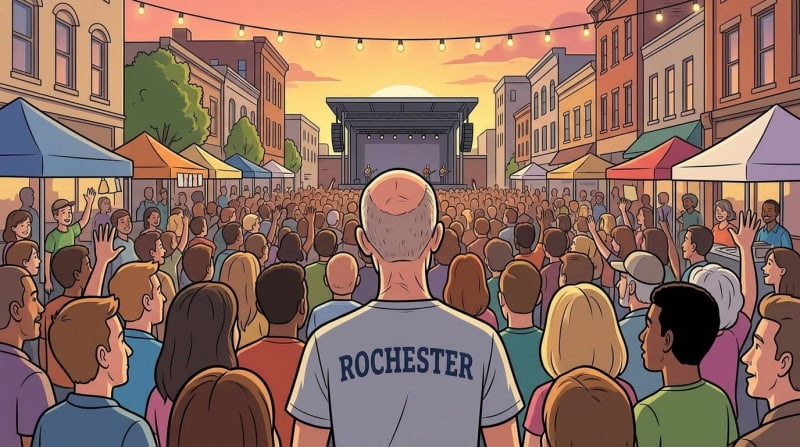
Gibbs Street closes to traffic for the duration of the festival and becomes a pedestrian commons — food vendors lining one side, the stage drawing the crowd forward, and that specific electricity you only feel when thousands of people voluntarily choose to share the same sound. The East Avenue stage runs parallel programming with slightly different audiences depending on the night and the act. Together, these two stages are where Rochester actually lives during Jazz Fest week.
Arriving thirty minutes before a set you want to catch on Gibbs Street generally gets you a clear sightline. Wait until the set starts and you are standing behind the crowd, squinting over people. The grass section behind the main standing area is overlooked by most first-timers and is often the most comfortable spot at the festival.
After the outdoor stages close, the music migrates. Several East End bars and restaurants host informal late-night sets that stretch well past midnight — louder, smaller, and exactly right for that particular hour.
Eating, Drinking, and the East End During Jazz Fest
Eating, Drinking, and the East End During Jazz Fest
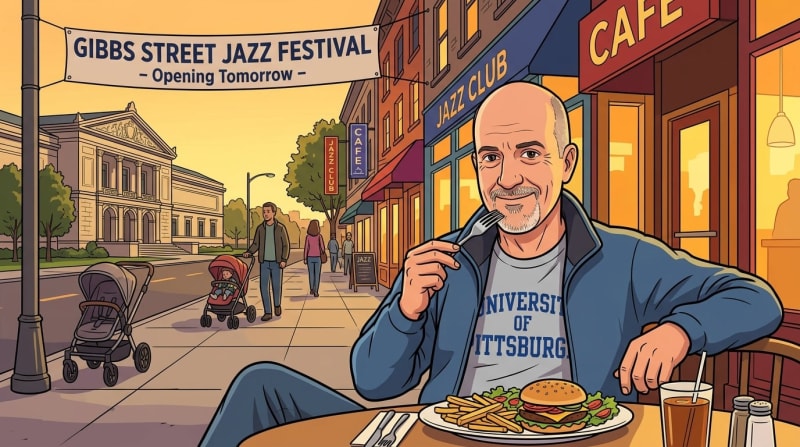
Jazz Fest week changes the East End's restaurant scene in ways that reward planning. The restaurants that take reservations — and some of the best-known spots don't — fill out days in advance once the festival calendar publishes. If dinner before a ticketed show is part of your plan, make the reservation when you buy the ticket, not the night before.
Food vendor lines on Gibbs Street peak between 7 and 9 p.m. on weekend evenings. The practical workaround most regulars use: eat before 6:30 or after 9:30, when the volume drops and the lines collapse. A fifteen-dollar meal at 6:15 takes ten minutes. The same meal at 7:45 takes thirty.
Alexander Street and Park Avenue — both within a fifteen-minute walk of the Gibbs Street stage — have their own restaurant corridors that operate somewhat outside the festival footprint. Several spots there expand their outdoor seating during Jazz Fest week and provide a quieter alternative to the Gibbs Street vendor corridor.
The East End doesn't just host Jazz Fest. For nine days, it becomes Jazz Fest — and the neighborhood's sidewalks, bars, and restaurants are as much a part of the experience as anything happening on a stage.
Getting There and Getting Around
Getting There and Getting Around
Parking during Jazz Fest is genuinely manageable with a strategy and a genuine frustration without one.
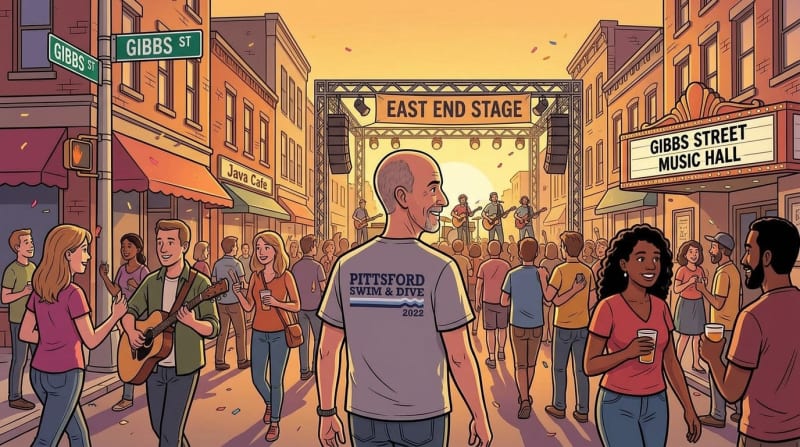
The structured garages nearest to the festival corridor fill early on Friday and Saturday evenings. The better move: residential street parking on the blocks east of Alexander Street — Meigs, Berkeley, Oxford — opens up after 6 p.m. and is free. The walk from those blocks to Gibbs Street runs about twelve minutes, which is consistently better than circling garages.
The Regional Transit Service runs extended routes during festival week, with increased evening frequency connecting downtown and the East End. Check the RTS site closer to June for Jazz Fest-specific service additions — they typically announce them two to three weeks before opening night.
Biking to the festival works well. The East End connects to the Genesee Riverway Trail and has protected infrastructure along East Avenue. Bike corrals are set up near the Gibbs Street stage and are properly staffed throughout the run. Bring your own lock.
Rideshare drop-off logic: set your pickup point one block off Gibbs Street rather than on it. Alexander Street and Goodman Street handle the pedestrian flow better than the main festival corridor, and your pickup window will be shorter when you're not competing with the crowd for street access.
First-Timer vs Regular: Two Different Jazz Fest Playbooks
First-Timer vs Regular: Two Different Jazz Fest Playbooks
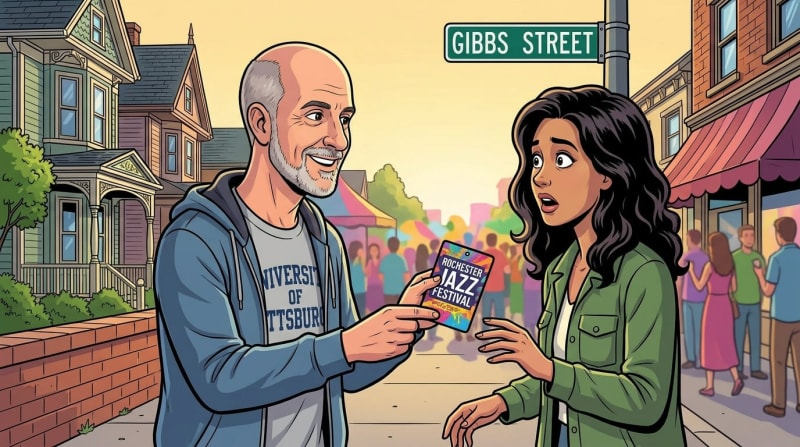
The first-timer playbook is simple and it works. Arrive around 6 p.m. Spend an hour on Gibbs Street getting your bearings. Catch a free set. Then pick one indoor club show and stay for the whole thing. Eat from the vendors. Let yourself wander. Leave around 10:30. You'll leave knowing exactly what you want to do differently next year — and you'll already be planning to come back.
The regular's playbook operates on different logic. Club Pass holders who've been coming for years tend to map their evenings in advance — three or four venues per night, staggered to catch one act ending as another begins. They know which venues have the best acoustics for specific genres, which rooms get uncomfortably warm by 10 p.m., and where to position for the late-night overflow. The Club Pass rewards that kind of accumulated knowledge. It also creates it.
The daytime window — noon to 5 p.m. on weekend days — is worth knowing regardless of experience level. Crowds are lighter, families are present, and several venues run afternoon sessions that draw serious listeners rather than the evening party crowd. It is a different festival, quieter and more focused, occupying the same streets.
What does it mean that a city offers nine days of this — free at the curb, world-class behind a door, open to anyone who decides to show up? Rochester built something here that most cities study and struggle to replicate. The answer, when you look at it honestly, is people. Residents who come back every year. Neighbors who hand passes to strangers. Musicians who return because the audiences actually listen.
Come find out what June sounds like in the East End.
Content ID: wEKZwudBTpD89WbXIzNou3IX
See an error? Tell us.

Comments
Share with the Community