

A New Nuclear Plant Near Rochester? Here's What New York's Biggest Energy Bet Means for This City
The Short Version
- RE Ginna has supplied carbon-free electricity to more than 400,000 homes from Wayne County — a few miles from Rochester — since 1970, and its operator is now seeking an 80-year license extension.
- New York's proposal calls for at least one new 1-gigawatt advanced nuclear plant in Upstate New York, with Wayne County among the top candidate sites.
- The state's own modeling puts required public support at between $15.4 billion and $23.9 billion for a 5-gigawatt buildout.
- Labor and economic development groups back the plan; environmental organizations argue wind and solar are faster to deploy and cheaper per kilowatt-hour.
- Public comment periods and siting hearings are the next formal steps — Wayne County residents will have a voice in one of the largest infrastructure decisions this region has faced in decades.
RE Ginna Nuclear Power Plant has been running in Wayne County since 1970. It sits a few miles from downtown Rochester — most people who drive Route 104 pass it without a second thought. Now, for the first time in a generation, New York State is weighing whether to build a new nuclear plant near Rochester, and Wayne County is on the short list.
The Neighbor You've Had for 50 Years
The Neighbor You've Had for 50 Years
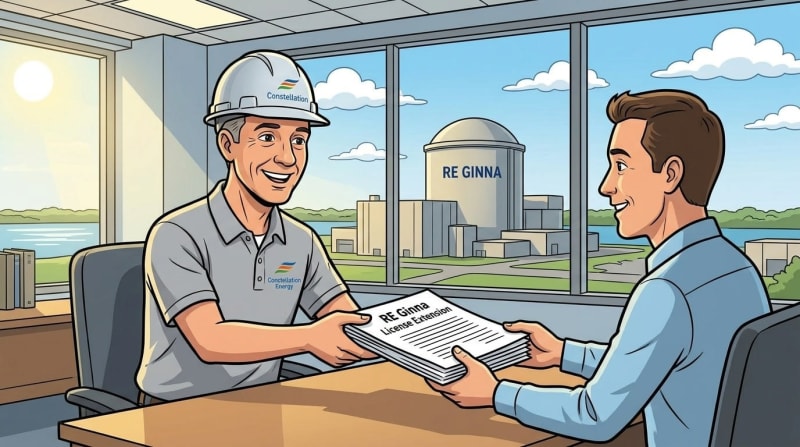
RE Ginna has been generating carbon-free electricity for more than 400,000 homes for over five decades, according to Rochester Beacon reporting. Its lone reactor runs with a capacity factor above 99 percent — ranking among the most reliable nuclear plants in the country — which means it is producing power virtually every hour of every day.
Constellation Energy, which operates Ginna, is now seeking to extend the plant's operating license to 80 years. That is not a routine administrative move. It signals that Constellation views Wayne County as a long-term strategic commitment, not a facility heading toward retirement.
What New York Is Actually Proposing
What New York Is Actually Proposing
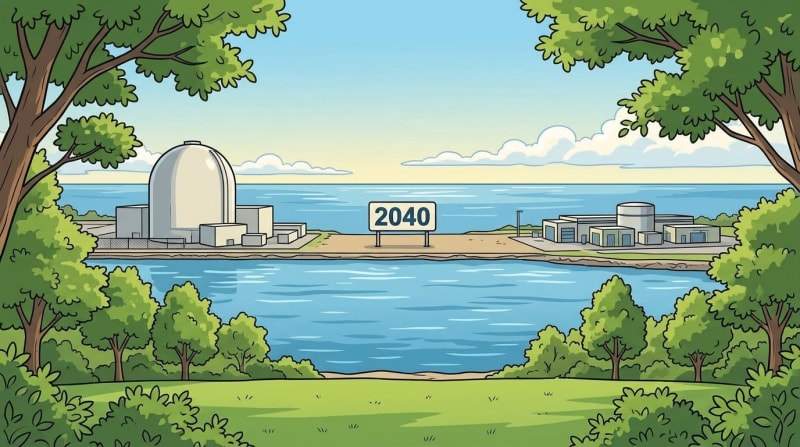
Earlier this year, Gov. Hochul directed the New York Power Authority to develop at least one new 1-gigawatt advanced nuclear facility in Upstate New York, according to Rochester Beacon's August 2026 coverage. Wayne County is among the top candidate sites. The broader plan envisions a statewide nuclear backbone totaling 8.4 gigawatts, combining existing plants like Ginna with new construction.
The demand driving this is concrete: AI data centers, semiconductor manufacturing, and the electrification of vehicles and buildings are pulling significantly more electricity from the grid than New York's current clean sources can supply. The state has committed to 70 percent renewable electricity by 2030 and zero-emission power by 2040. That gap between commitment and current capacity is what the nuclear proposal is designed to close. Advanced nuclear designs — smaller, modular, with updated safety systems — are a different engineering proposition from the 1970s reactors at Ginna.
What It Costs — and Who Pays
What It Costs — and Who Pays
The state's own modeling puts the required public support for a 5-gigawatt buildout at between $15.4 billion and $23.9 billion, according to Rochester Beacon reporting. That money would flow through a mix of cost-overrun guarantees, Zero Emission Credits, direct state equity, and federal financing via Department of Energy loan programs.
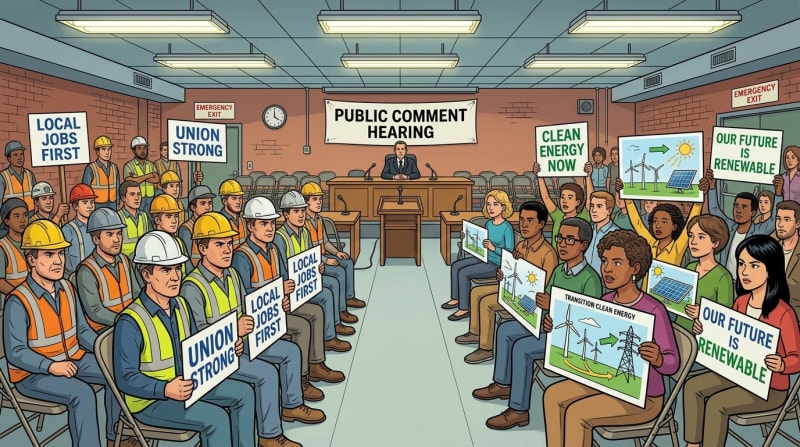
labor unions and economic development groups are backing the proposal. Nuclear construction at this scale means sustained, high-wage employment — and Wayne County already has the workforce pipeline that Ginna has built over five decades. Environmental organizations are more skeptical. Their case is that wind and solar can be deployed faster and at a lower cost per kilowatt-hour, and that committing tens of billions to advanced nuclear delays a transition that is already underway.
"Whether New York's next generation of nuclear plants ever gets built may depend as much on politics and public acceptance as engineering."
— Will Cleveland, Rochester Beacon, August 6, 2026
Public comment periods and siting hearings are the next formal steps. The site selection announcement will determine whether Wayne County is in the running for one of the largest construction projects Upstate New York has seen in decades.
Content ID: y3ignx6RQjyqNWW7AG5ETfSn
See an error? Tell us.


Comments
Share with the Community