Rochester's Own Susan B. Anthony Wrote to President Grant a Week After Her Arrest — The Letter Just Came to Light
The Short Version
- Susan B. Anthony wrote to President Grant seven days after her November 1872 arrest in Rochester — not asking for mercy, but making a constitutional argument about what citizenship means.
- Her exact words to Grant: "If I am a citizen — I have full and free right of suffrage — if our government is a true republican form — it is founded on the consent of the whole people — not one half."
- The letter spent more than 50 years in a private collection, unknown to historians, before coming to light recently.
- Allison Hinman, president and CEO of the Susan B. Anthony Museum and House in Rochester, called the discovery exciting and said it is consistent with everything the Museum knows about Anthony's arguments from the 1870s.
- The 19th Amendment was ratified 48 years after Anthony wrote this letter and 14 years after her death — she argued without knowing she would not live to see it become law.
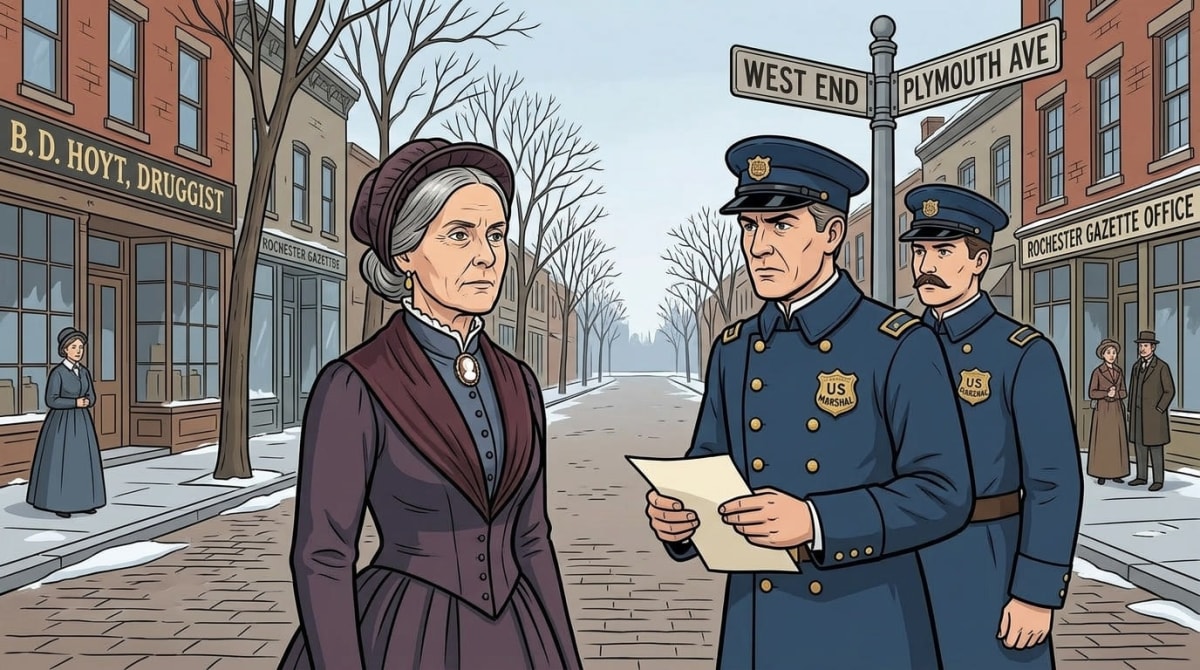
On November 25, 1872, one week after federal marshals arrested her for casting a ballot in Rochester, Susan B. Anthony wrote a letter to the President of the United States. That Susan B. Anthony letter from 1872 spent more than 50 years in a private collection, unknown to scholars. It came to light recently.
What She Wrote — A Week After Her Arrest in Rochester
What She Wrote — A Week After Her Arrest in Rochester
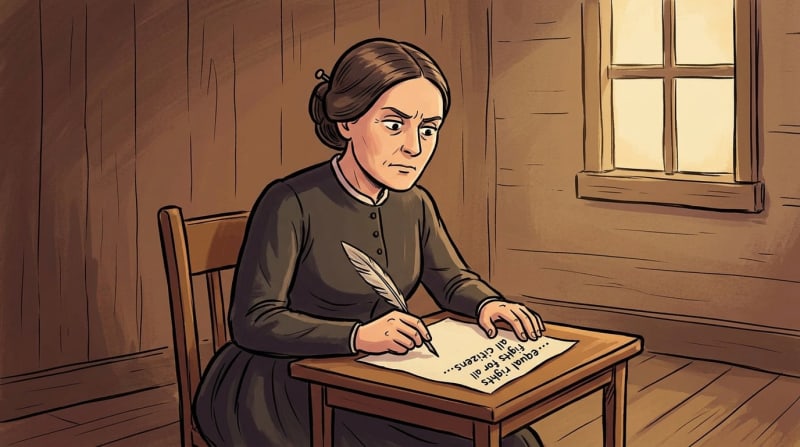
The letter Anthony wrote to President Grant on November 25 is a constitutional argument, not a plea. According to WXXI News, she asked Grant to urge Congress to define what citizenship actually means — and she made her position plain: "If I am a citizen — I have full and free right of suffrage — If our government is a true republican form — it is founded on the consent of the whole people — not one half."
Federal authorities had charged Anthony with illegally voting in the presidential election. Her arrest came on November 18. The letter to Grant followed one week later — not a request for sympathy, but the constitutional argument pressed forward to the most powerful elected official in the country.
The logic was precise: citizenship cannot be a partial condition. A republic founded on the consent of the governed cannot exclude half its citizens from voting. Anthony put this to Grant in writing while under arrest and awaiting trial.
Fifty Years in Private Hands — How the 1872 Susan B. Anthony Letter Came to Light
Fifty Years in Private Hands — How the 1872 Susan B. Anthony Letter Came to Light
The letter had been in a private collection for more than 50 years. WXXI News reports that until recently, scholars had not known of its existence.
Allison Hinman, president and CEO of the Susan B. Anthony Museum and House in Rochester, called the discovery exciting. She told WXXI the sentiment is entirely consistent with Anthony's other writings and speeches from the 1870s — the letter fits everything the Museum already knows about how Anthony argued during this period.
"History is still being written. There's still a lot left to interpret and a lot left for us to understand about the past."
— Allison Hinman, president and CEO, Susan B. Anthony Museum and House
The 19th Amendment was ratified on August 18, 1920 — 48 years after Anthony wrote this letter, and 14 years after her death. She made the argument without knowing she would not live to see it become law.
Why This Moment Belongs to Rochester
Why This Moment Belongs to Rochester
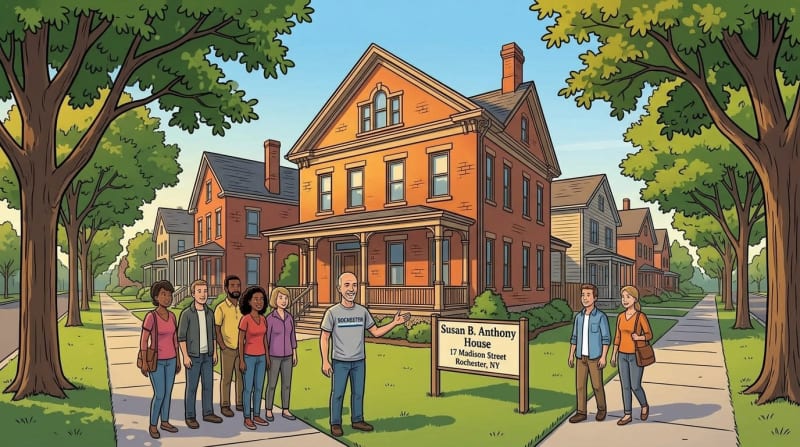
Rochester and the Finger Lakes region are the birthplace of the modern women's rights movement. That is the historical record, not civic pride. Anthony spent 40 years in Rochester — on Madison Street — through the most politically active decades of her life. She organized, wrote, argued in courts, and was arrested for voting, all from this city.
The National Susan B. Anthony Museum and House on Madison Street is Rochester's first National Historic Landmark. It holds the archive of what happened here. A letter that spent more than 50 years in a private collection doesn't change that archive — it adds to it.
The Museum is open at 17 Madison Street in Rochester.
Content ID: SP9JSOM9vUcXZDNuaagIBt54
See an error? Tell us.
Comments
Share with the Community