Monroe County Overdose Deaths Fell by Half in 2024 — What Rochester's Harm-Reduction Network Got Right
The Short Version
- Monroe County overdose deaths fell from 433 in 2023 to 216 in 2024 — a 50% drop that outpaced the national decline of 26.9% over the same period.
- Recovery All Ways runs free, no-barrier Sunday outreach at 1248 N Clinton Ave every week — food, hygiene, naloxone, and peer connection from 10 a.m. to 1 p.m., no appointment needed.
- Monroe County installed more than 630 Nalox Boxes and runs 24/7 street outreach through the IMPACT Team — the harm-reduction infrastructure is physical and already deployed.
- Cocaine appeared in 82.5% of Monroe County overdose deaths in 2024, fentanyl in 73% — often in the same incident, which shapes what harm reduction has to address.
- The countywide numbers improved, but the geography of overdose risk in Monroe County is uneven — and overdose prevention centers remain under political debate in Rochester.
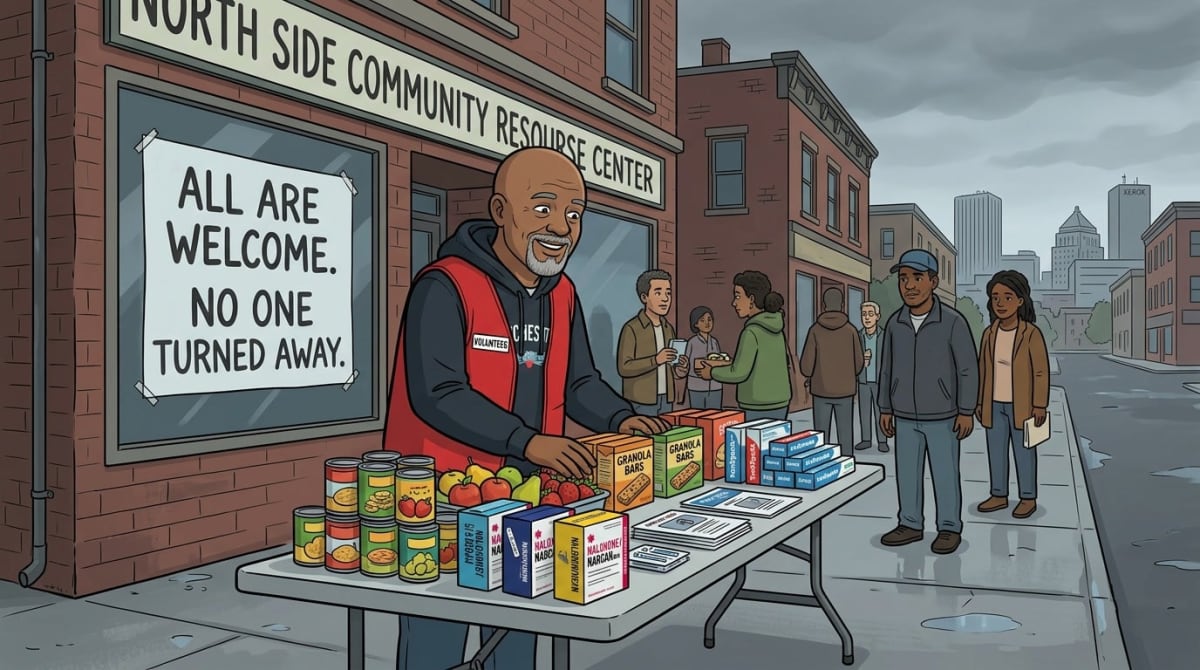
Every Sunday morning, volunteers from Recovery All Ways set up at 1248 N Clinton Avenue on Rochester's North Side — food, hygiene supplies, overdose prevention tools, and peer connection, no referral required, no conditions attached.
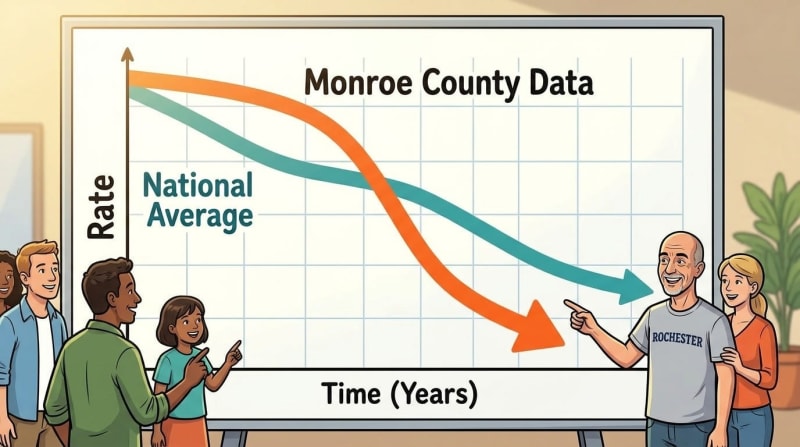
That model is part of what public health officials credit with one of the more striking public health shifts in Monroe County's recent history: Monroe County overdose deaths in 2024 fell from 433 to 216 — a drop of 50%.
The Numbers — and What Monroe County's Decline Actually Means
The Numbers — and What Monroe County's Decline Actually Means
Monroe County's 50% decline outpaced the national average. WXXI News reported that Monroe County's decline exceeded the national drop of 26.9% over the same period. The CDC reported that U.S. overdose deaths fell from roughly 114,000 to 87,000 for the 12 months ending September 2024 — the lowest count in any 12-month stretch since June 2020.
The drug supply in Monroe County remained complex throughout 2024. WXXI News reported that cocaine appeared in 82.5% of Monroe County overdose deaths, with fentanyl present in 73% — often in the same incident. The harm-reduction tools being deployed had to work against that combination.
Each of those 217 fewer deaths is a person who did not die in 2024 who might have in 2023.
Recovery All Ways: Harm Reduction as Community Practice
Recovery All Ways: Harm Reduction as Community Practice
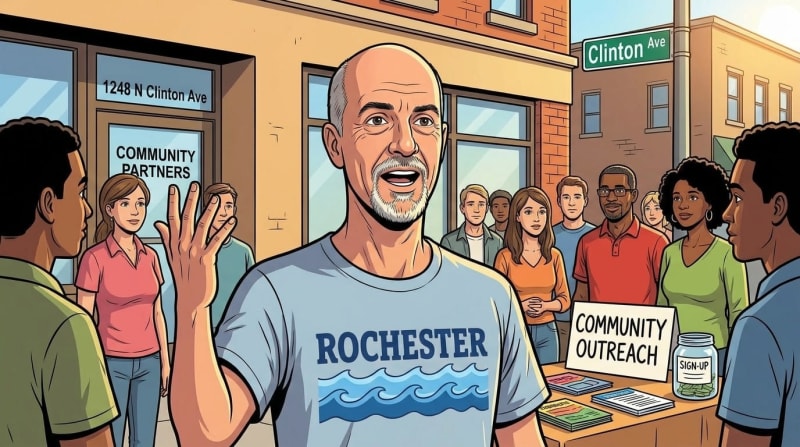
Recovery All Ways (RAW) has been running weekly outreach at 1248 N Clinton Ave every Sunday from 10 a.m. to 1 p.m. The model, which the organization describes as "support rooted in dignity, harm reduction, and community care," puts people with lived experience alongside people who need help — before a crisis becomes a death.
RAW's 11th annual Scotty B. Overdose Awareness Day, held August 27, 2026, drew more than 40 community partner tables. Forty organizations showing up to one event is a measure of what Rochester's harm-reduction network has become.
Program Director Josh Sheridan named the stakes directly:
"This is about whether a person survives long enough to make another choice."
— Josh Sheridan, RAW Program Director
The County's Naloxone Infrastructure: 630 Boxes and a Hotline
The County's Naloxone Infrastructure: 630 Boxes and a Hotline
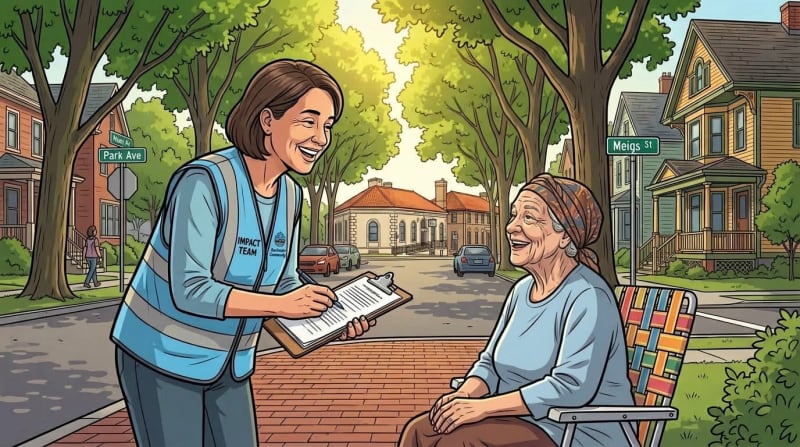
Monroe County has installed more than 630 publicly accessible Nalox Boxes countywide — naloxone placed where people might need it, not waiting for someone to reach a pharmacy. The IMPACT Team provides 24/7 street-level outreach, post-overdose follow-up, and community education across the county.
County Executive Adam Bello credited prevention and harm-reduction programs directly for the 2024 decline. The CDC named the same mechanism at the national level: widespread, data-driven naloxone distribution as a contributing factor to the U.S. drop.
What 216 Deaths Still Demand
What 216 Deaths Still Demand
The overall decline does not mean every part of Monroe County improved equally. Advocates have brought attention to the North Clinton Avenue area's struggle with drugs, and a countywide number can mask where the work is still falling short.
Overdose prevention centers — supervised consumption sites where people can use drugs under medical supervision — remain under political debate in Rochester, despite their use in other cities.
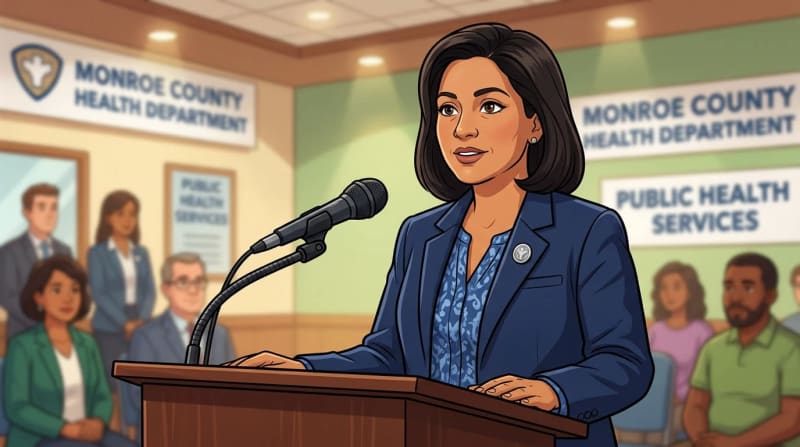
Monroe County Health Commissioner Dr. Marielena Vélez de Brown was direct: "The drop in overdose deaths is encouraging, but this crisis isn't over."
RAW's Sunday outreach runs every week at 1248 N Clinton Ave from 10 a.m. to 1 p.m.
Content ID: fMVTQwFNFtmnR5CDdBBjoqq0
See an error? Tell us.

Comments
Share with the Community