
Plan for Immigration Detention Cells at Rochester Federal Building on Hold
The Short Version
- Plans to build immigration detention cells and a canine kennel at Rochester's Kenneth B. Keating Federal Building are paused, but CBP's legal claim on the space has not been withdrawn.
- The Keating Building at 100 State Street houses an active federal courthouse and a daycare center — neither was told about the detention proposal before it became public through documents obtained by WXXI.
- GSA claims the planned changes are too small to trigger a formal Section 106 historic preservation review; New York State's Historic Preservation Office is now checking that argument.
- Federal officials told Rep. Joe Morelle that construction was set to begin May 23, 2026 — making October's on-hold status a meaningful pause, not a routine delay.
- Morelle introduced the ROC Act in response, which would require public transparency and community input before any federal construction of ICE or CBP detention facilities.
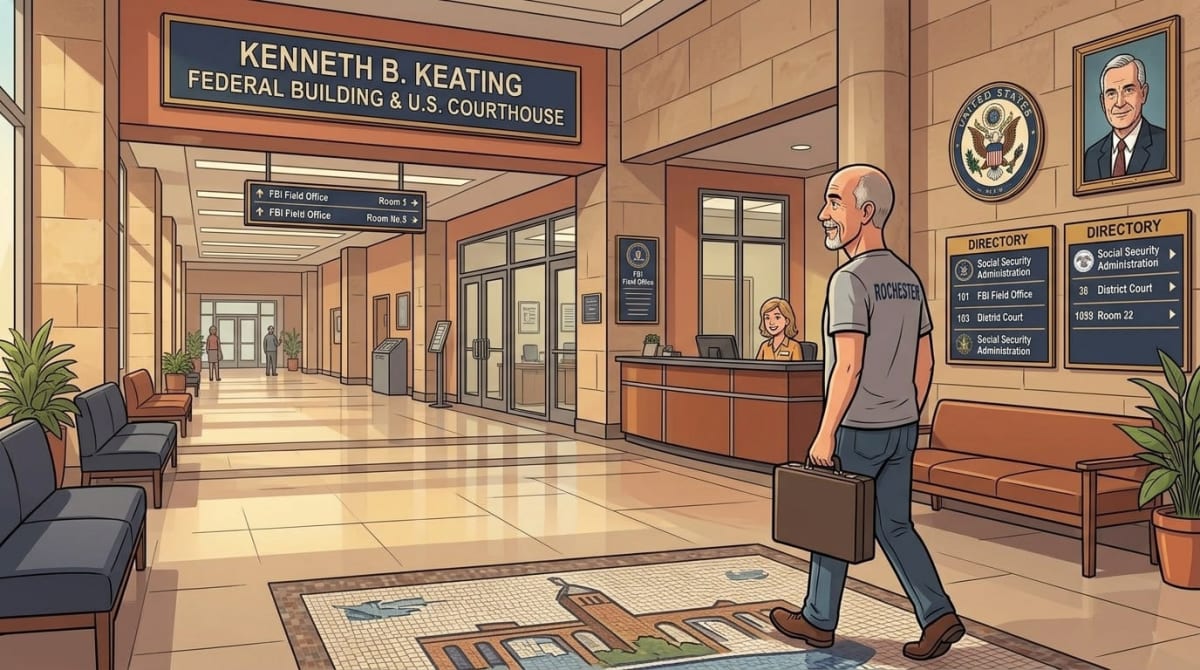
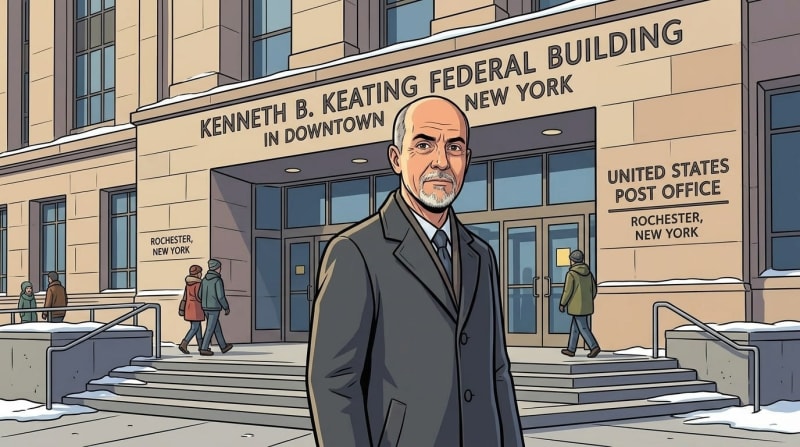
The Kenneth B. Keating Federal Building at 100 State Street is one of downtown Rochester's civic anchors. It holds federal courtrooms. It holds a daycare center. It holds the ordinary work of government that most people pass through without much notice. A proposal to install immigration detention cells and a canine kennel in its vacant post office space — without public announcement — has put the building at the center of a fight between the city and federal agencies.
A Downtown Building That Already Does a Lot

A Downtown Building That Already Does a Lot
U.S. Customs and Border Protection wants to relocate its local office from Pattonwood Drive in Irondequoit to vacant space inside the Keating Building. That part is routine. The version of the plan currently on hold goes further: overnight detention cells and a kennel for dogs used in enforcement operations. The proposal was not announced publicly. It came to light when WXXI obtained federal planning documents, first covered by local reporters earlier this year.
The Keating Building sits on the State Historic Register and is a contributing structure to the Four Corners–Genesee Crossroads Historic District. That designation triggers — or is supposed to trigger — a formal review before federal construction can alter the interior. That review is the center of the current dispute.
Why Rochester and New York State Said No

Why Rochester and New York State Said No
Rochester City Corporation Counsel Patrick Beath put the city's position in writing: "The proposed construction of detention cells and a canine kennel are inconsistent with the purposes of historic preservation of the Keating Federal Building and that such uses should not, therefore, be undertaken at this location."
The legal dispute turns on Section 106 of the National Historic Preservation Act, which requires federal agencies to assess the effects of their actions on historic properties before proceeding. GSA argues the planned interior changes affect less than 10% of the building's total space, which they claim puts them below the threshold for a formal review. the New York State Historic Preservation Office is now reviewing that argument.
How Rochester's Elected Officials Responded
How Rochester's Elected Officials Responded
The response from Rochester's congressional delegation was fast and unified. Senator Chuck Schumer called it "the wrong place for that kind of operation." Mayor Malik Evans used sharper language, calling the plan a "clandestine repurposing" — his term for a federal construction project that would put detention operations into a building shared with an active courthouse and a daycare center, without notifying the city.
Senators Schumer and Gillibrand and Rep. Joe Morelle sent a joint letter on March 5, 2026 demanding transparency and community input. The timeline then sharpened: federal officials told Morelle that construction was set to begin May 23, 2026.
Morelle introduced the Respect Our Communities (ROC) Act — named for Rochester's airport code — requiring public transparency before any federal construction of ICE or CBP detention facilities.
"There is nothing responsible about dropping detention cells into the downtown community in Rochester without explaining how they'll operate."
— Rep. Joe Morelle
What On Hold Actually Means for Residents

What On Hold Actually Means for Residents
No construction has started as of October 2026. The plan is paused while the State Historic Preservation Office reviews GSA's documentation on the building's historic character.
This pause is not a withdrawal. CBP received court approval to occupy the vacant space roughly five years ago, and that legal claim remains in place. GSA has also noted that if CBP doesn't fill the vacant space, the federal government would likely have to sign a costly lease elsewhere.
The Section 106 review outcome will determine whether construction can move forward. Residents who want to weigh in can contact the New York State Historic Preservation Office or the offices of Morelle, Schumer, or Gillibrand.
Content ID: pwx7LJPRVIibtpEAnkZUn3ZH
See an error? Tell us.



Comments
Share with the Community