Seneca Park Zoo Breaks Ground on a $135 Million Tropics Complex — The Biggest Transformation in Rochester Zoo History
The Short Version
- The Seneca Park Zoo Tropics Complex broke ground October 27, 2026 — the largest single expansion in the zoo's 130-year history, backed by $135 million from Monroe County, New York State, and private donors.
- A 30,000-gallon Amazon River tank, 60,000 gallons of aquatic habitats, and new species including orangutans and coral sharks will open to the public by late 2029.
- Monroe County leads the public investment at $67.6 million; New York State contributes $42.5 million; the Seneca Park Zoo Society is raising $23 million in private funds.
- More than 350,000 people visit Seneca Park Zoo annually, making it one of Monroe County's most-attended public institutions.
- Coral reef tanks, a 30,000-gallon Amazon River habitat, and a tropical forest are coming to a zoo that has centered on land mammals and birds for over a century.
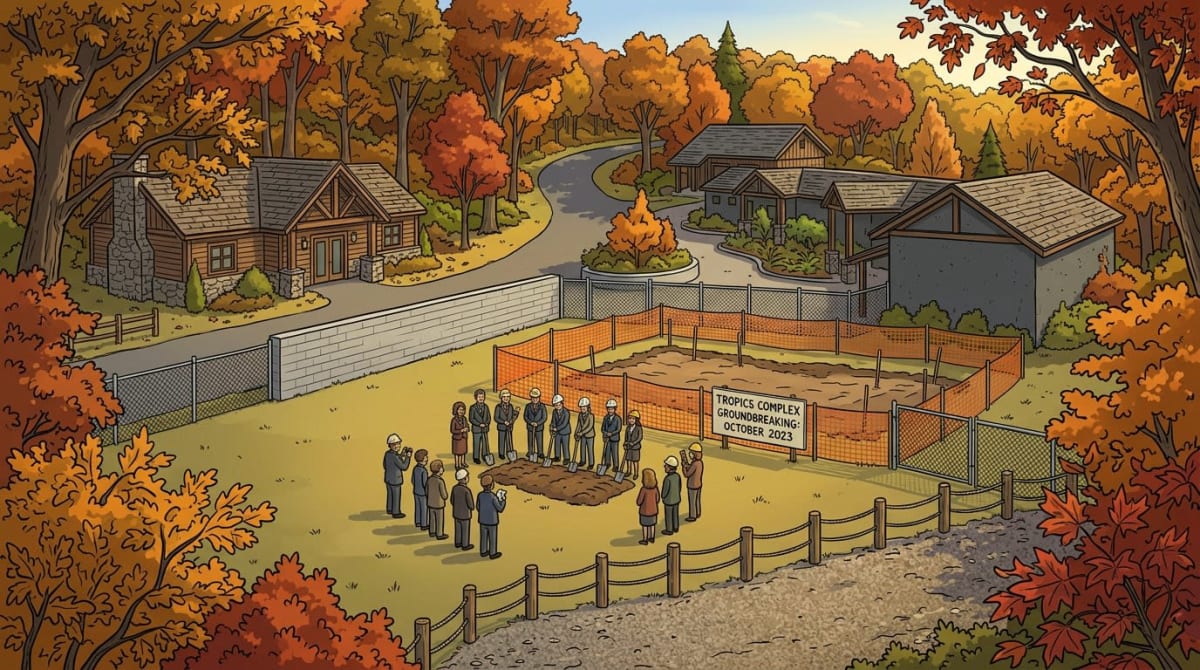
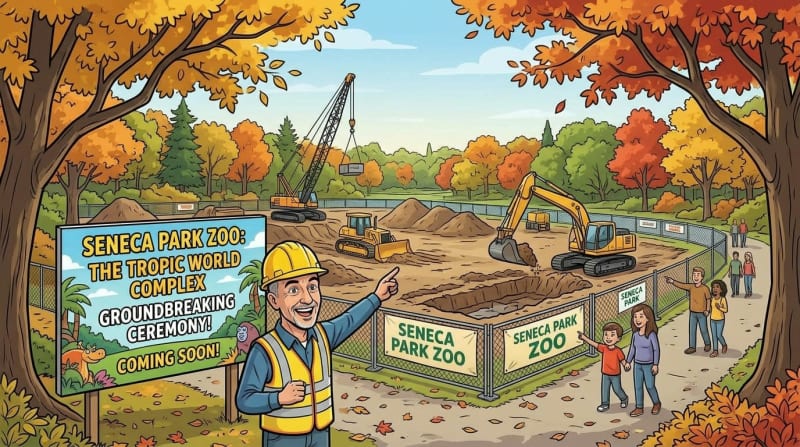
On October 27, 2026, Monroe County Executive Adam Bello and Seneca Park Zoo CEO Pamela Reed Sanchez broke ground on the Seneca Park Zoo Tropics Complex — a $135 million expansion that will bring coral reefs, rainforest habitats, and approximately 60,000 gallons of aquatic space to a zoo that has anchored Rochester's Seneca Park for more than 130 years. Sanchez has called it "the most transformative project in the Zoo's history." Construction is expected to wrap in late 2029.
A New Tropics Complex: Forests, Reefs, and a 30,000-Gallon Amazon River
A New Tropics Complex: Forests, Reefs, and a 30,000-Gallon Amazon River
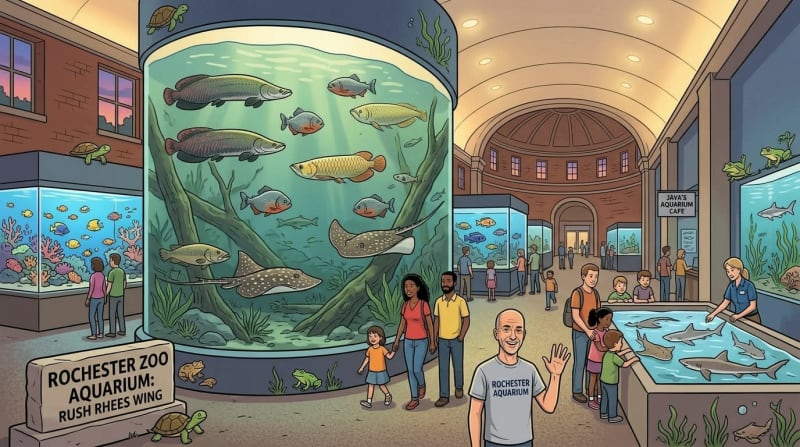
The complex is organized around three zones: a Tropical Forest, Tropical Island Habitats, and Pacific Reef Habitats. The aquatic component alone will hold approximately 60,000 gallons of water, anchored by a 30,000-gallon Amazon River tank, with a coral reef tank, a shark touch tank, and a Madagascar cichlid tank alongside it.
New species include orangutans, lemurs, and siamangs in the forest habitats, and coral cat sharks, Amazonian fish and rays, jellyfish, and giant Pacific octopuses in the aquatic zones. The build adds a new gift shop, administrative offices, and event and educational space. The Seneca Park Zoo Tropics Complex is not a renovation of what exists — it is a new category of experience at a zoo that has primarily centered on land mammals and birds.
How Rochester Is Paying for It: A $135 Million Public-Private Partnership

How Rochester Is Paying for It: A $135 Million Public-Private Partnership
The funding structure matters as much as the dollar figure. Monroe County is investing $67.6 million as the lead public contributor. New York State committed $42.5 million through Governor Kathy Hochul. NYS Historic Preservation adds $1.9 million. The Seneca Park Zoo Society is raising the remaining $23 million from private donors to reach the $135 million total.
County officials noted at the ceremony that the groundbreaking coincides with Monroe County's 100th anniversary of its parks system. Hochul put the investment in historical terms: "For more than 130 years, the Seneca Park Zoo has been an important part of the region's history, educating and entertaining hundreds of thousands of visitors and residents alike."
Why This Matters for Rochester
Why This Matters for Rochester
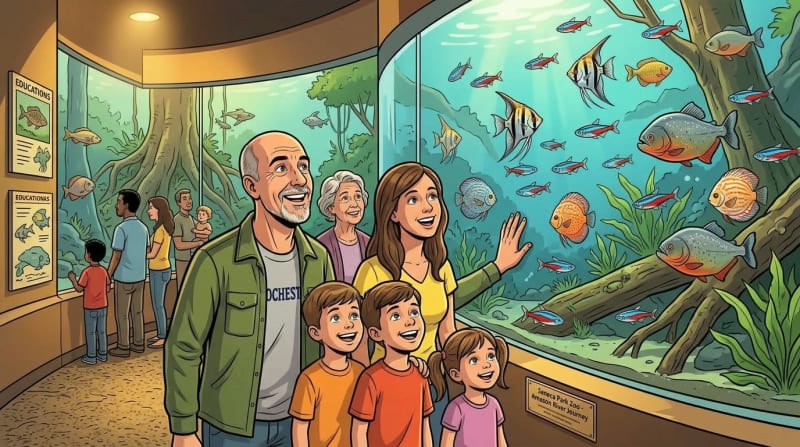
More than 350,000 people visit Seneca Park Zoo every year, placing it among Monroe County's most-attended public attractions. A substantial number of those visits are school trips, and the new educational facilities expand the zoo's capacity to serve structured programs. The event space opens the site to community gatherings that weren't previously available.
The families who have been coming to Seneca Park since their own childhoods will bring their kids to something their parents never saw. A coral reef and a 30,000-gallon Amazon River habitat are not an improvement on the existing zoo — they are an addition that changes what the zoo is.
Timeline: What to Expect and When
Timeline: What to Expect and When
The Seneca Park Zoo Tropics Complex broke ground October 27, 2026. Construction is scheduled through late 2029 — a three-year build that will add the Tropical Forest, Tropical Island Habitats, Pacific Reef Habitats, a new gift shop, and new administrative offices to the existing zoo footprint. When the doors open, Rochester will have approximately 60,000 gallons of living aquatic habitat inside a zoo that has served Monroe County for more than 130 years.
Content ID: CIX3pRgzXV5r9HHyVFtgGOGp
See an error? Tell us.


Comments
Share with the Community