
Rochester and the Cream Ale: How the Flower City Shaped American Beer
The Short Version
- Genesee Brewery has operated continuously since 1878 — one of the few American breweries to survive Prohibition by pivoting to near-beer and soft drinks.
- Cream ale gets its name from its thick foam head and smooth mouthfeel, not dairy — it's a hybrid style fermented with ale yeast but cold-conditioned like a lager.
- Rochester's advantage was geographic: Genesee River ice caves made cold-lagering possible before refrigeration, giving local brewers a production edge no other northeastern city had.
- The Erie Canal turned Rochester from a village of 1,500 in 1820 into a city of 162,000 by 1900 — and gave its breweries a distribution network that reached the entire eastern seaboard.
- Genny Cream functions less like a product and more like a belonging artifact — the thing Rochesterians bring to the table that signals they're from here and in on the joke.
The can is green and modest. No craft brewery origin story printed on the side, no small-batch mythology, no artisan grain list. Just the Genesee Brewery label, a cold Friday afternoon, and a Rochester fish fry that wouldn't be complete without it. If you've lived here long enough, you've been in this moment — and you've probably never stopped to think about what Rochester cream ale history actually means, or how a beer this unassuming came to define a city's relationship with itself.
That story is worth telling.
What Is Cream Ale — And Why the Name?

What Is Cream Ale — And Why the Name?
Cream ale confuses people from outside Rochester. They expect something thick, something dairy-adjacent, something that earns the name the way a cream of tomato soup does. What they get instead is crisp, light, almost deceptively simple — a beer that goes down easy and doesn't ask much of you.
The name has nothing to do with milk. According to the Brewers Association's style guidelines, cream ale gets its name from the thick, sustained foam head it produces and the unusually smooth mouthfeel that comes from its highly attenuated fermentation. The style runs typically between 4.2 and 5.6% ABV — approachable, sessionable, built for a long afternoon rather than a quick impression.
What makes cream ale genuinely interesting is its hybrid identity. The Craft Beer Association describes it as a style produced either by fermenting with ale yeast at warmer temperatures and then cold-conditioning like a lager, or by blending separately fermented ale and lager batches. The result sits in a middle ground that neither category fully claims: the smoothness of a lager, the slight fruitiness of an ale, without committing hard to either. In that in-between space, something interesting happened.
Here's how cream ale compares to its American cousins by typical ABV:
The style predates Prohibition and was, for a time, one of the most popular beer styles in America. It nearly disappeared when Prohibition wiped out the industry and lager took over in the post-repeal era. Rochester held on.
What draws you to a beer that doesn't ask to be noticed?
Genesee Brewery: 150 Years on the Falls
Genesee Brewery: 150 Years on the Falls
The brewery that made cream ale famous in Rochester didn't set out to be historic. It set out to make beer.
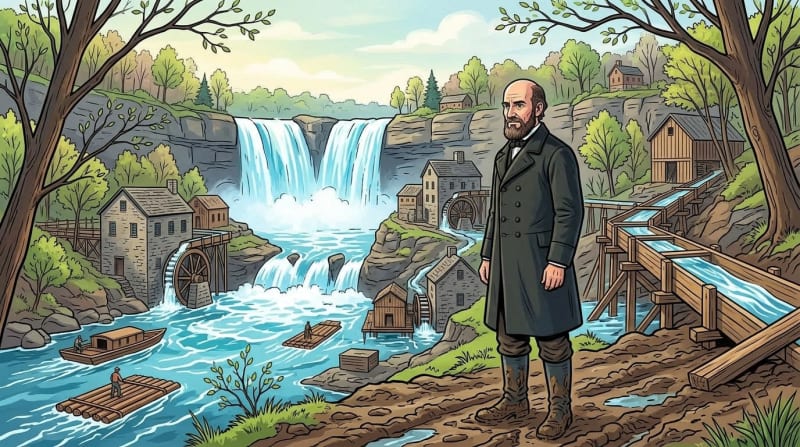
Genesee Brewery was founded in 1878 by Mathias Kondolf on the east bank of the Genesee River, at the site of Cataract Falls — where the river drops into the gorge that defines the city's geography. The location wasn't accidental. The falls provided water and power. The river provided a natural cold storage system. The site made industrial-scale brewing possible at a moment when Rochester's population was growing fast.
When Prohibition arrived in 1919, it nearly ended everything. Most American breweries didn't survive — the number of operating breweries in the United States collapsed from roughly 1,568 in 1910 to fewer than 100 by the time repeal came in 1933, according to Brewers Association historical records. Genesee made it through by pivoting to cereal malt beverages, soft drinks, and near-beer — products legal under Prohibition's restrictions. It was a humbling stretch for a brewery of that scale, but it kept the doors open.
After repeal, Genesee rebuilt. Then in 1960, the brewery launched Genesee Cream Ale — a product that would quietly become one of the best-selling cream ales in the United States. It wasn't marketed with the fanfare that modern craft launches get. It was good beer, made by people who knew how to make it, sold in a city that was ready for it.
The brewery has gone through ownership changes over the decades — operating for a time under the name High Falls Brewing Company before returning to the Genesee name — but the footprint on Cataract Street has remained. Nearly 150 years of continuous operation is not a small thing. In an industry where most businesses don't survive a decade, it's worth paying attention to.
Why Rochester? The Genesee River and the Ice Caves

Why Rochester? The Genesee River and the Ice Caves
The question worth asking is why Rochester, specifically. Cream ale as a style existed in various forms across the American northeast in the 19th century. But Rochester is where it survived and where it became something that defined a place. That doesn't happen by accident.
Part of the answer is geography. The Genesee River gorge runs directly through the city, and before mechanical refrigeration, the river ice was a commercial resource. Breweries harvested ice from the river and stored it in underground caves cut into the gorge walls — natural cold storage that made cold-conditioning possible year-round. This mattered enormously for a style that required the lagering process. Rochester had an infrastructure advantage that other northeastern cities didn't.
Part of the answer is immigration. The mid-19th century brought a large German immigrant community to Rochester, and German brewers brought a lager tradition built on cold fermentation, clean flavor profiles, and meticulous technique. Those traditions collided productively with the English ale heritage dominant in American brewing. The hybrid that emerged — cold-conditioned, smooth, light-bodied — was a practical response to what Rochester's brewers knew and what their customers wanted.
And part of the answer is the Erie Canal. When the canal opened in 1825, Rochester became a major distribution node connecting the Great Lakes region to New York City and the eastern seaboard. Beer brewed in Rochester could move. That reach meant local breweries could grow to a scale that justified investment in ice harvesting, cave storage, and cold-conditioning equipment. U.S. Census Bureau data from the canal era shows what that access meant for the city:
Rochester went from a village of 1,500 to a city of over 162,000 in eighty years. The brewing industry scaled with the population. By the time Genesee opened in 1878, it was entering a market with real depth — and a distribution network that could take its product well beyond Monroe County.
Genny Cream as a Rochester Identity Marker

Genny Cream as a Rochester Identity Marker
Ask anyone who grew up in Rochester what they drink at a summer cookout and Genny Cream will come up. It's at Frontier Field for a Red Wings game. A Friday fish fry in Rochester is practically a civic institution — and Genny Cream has been the default pairing at most of them for decades. It's on the porch in the summer and at the bar in January.
What makes Genny Cream interesting culturally isn't just that people drink it. It's the way they talk about it when someone from outside the city dismisses it. The "cheap beer" characterization from craft enthusiasts has a way of producing something close to tribal loyalty in Rochesterians. Cheap isn't the word they'd use. Unpretentious, maybe. Reliable. Theirs.
Locals call it "Genny" with the kind of shorthand that signals membership — and that shorthand has been part of Rochester bar culture for decades. It's affectionate, slightly self-deprecating, and not an insult.
A beer can be humble and still belong to a place. Rochester figured that out a long time ago.
There's something worth naming here: Genny Cream functions as a belonging artifact. It's the thing you bring to the table that signals you're from here — that you're in on the joke, that you're part of the community and not just passing through. The can is the password.
What does it mean that a city's identity can live in something this modest?
Where to Drink Cream Ale in Rochester Today

Where to Drink Cream Ale in Rochester Today
The most direct way to experience Rochester cream ale at its source is the Genesee Brew House at 25 Cataract Street. The taproom sits directly on the Genesee River gorge, overlooking the falls that gave the original brewery its power. The Brew House offers tours of the historic facility and a Pilot Batch series — small-batch experimental beers brewed on-site alongside the classic lineup. Tasting flights let you trace the lineage from the flagship Cream Ale through seasonal and experimental releases.
Beyond the Brew House, Genny Cream is simply part of the fabric. Monroe Avenue bars have kept it on tap for decades. The Park Avenue corridor has spots where it's the working choice alongside whatever craft beer is seasonal. Downtown, it shows up at places that could charge more for something with a more interesting label and choose not to — because their regulars would notice.
The craft brewing scene in Rochester has grown substantially, and several local breweries have taken the cream ale style as their own challenge. Three Heads Brewing has produced cream ale variations that honor the style while bringing a craft sensibility to it. Fairport Brewing Company in nearby Fairport has done similar work. These aren't imitations of Genesee — they're the next generation of Rochester brewers proving that the style has depth worth exploring.
The Finger Lakes Beer Trail connects breweries across central and western New York and offers a regional frame for understanding where Rochester cream ale fits — a broader New York brewing tradition that stretches from the Hudson Valley to the lake country west of the city. Genesee sits at the center of it.
If you've never walked into the Brew House and stood at the bar with the gorge out the window and a Genny Cream in your hand — the question isn't whether you'd like it. The question is what you've been waiting for.
Content ID: FynQ7DxWTT5JVdVoCIqIonPg
See an error? Tell us.



Comments
Share with the Community