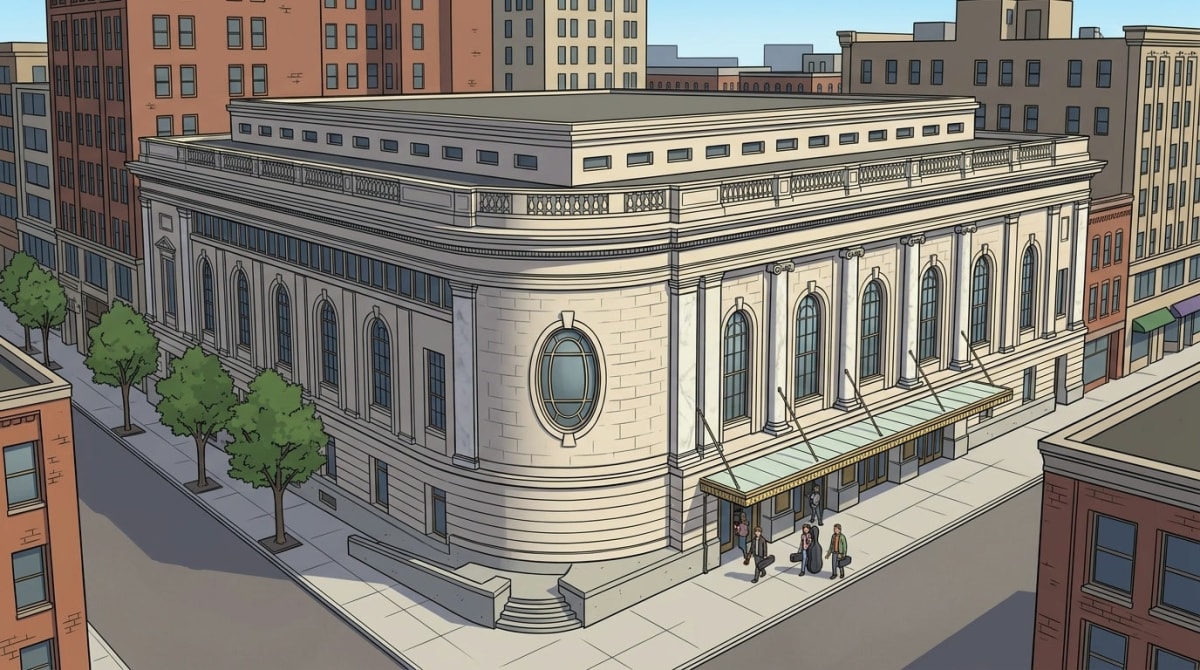
Eastman School of Music Brings Music Composition Inside Monroe County Jail
The Short Version
- Breaking Barriers flipped the standard arts-in-jail model: incarcerated men at Monroe County Jail became the composers, not just the audience.
- Participants used Hyperscore, a visual composing program developed at MIT's Media Lab, to write original pieces performed live by Eastman student musicians in a Spring 2026 concert.
- Frank Cremaldi, who has battled addiction for 20 years, said the program gave him something rare — a chance to start something, finish it, and be proud of it.
- Breaking Barriers becomes a for-credit course in Eastman's chamber music department in Spring 2027; a second cohort of incarcerated women launched in Fall 2026.
- Arts programs in correctional settings show a documented gap: Rehabilitation Through the Arts reports fewer than 3 percent of participants return to prison within three years, versus a national recidivism rate above 60 percent.
In Spring 2026, men inside Monroe County Jail began composing original music — not as an audience, but as composers writing pieces that would be workshopped and eventually performed. None of them had played an instrument before. The Monroe County Jail music program is called Breaking Barriers, a partnership between Eastman School of Music and Monroe County Jail. It is built around one direct idea: the people incarcerated here make the music, not just receive it.
From Listening to Creating
From Listening to Creating
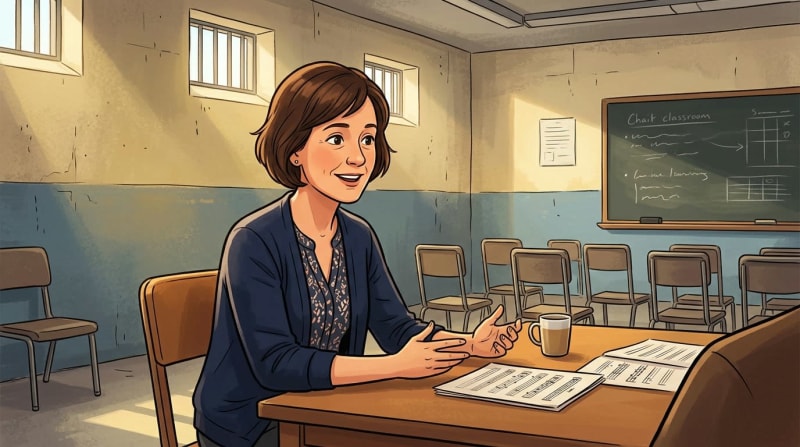
Eastman had a presence at the jail before Breaking Barriers. A prior concert series brought live performance to incarcerated residents — music as experience, with the participants as audience. Breaking Barriers reversed that direction. Elinor Freer, an Eastman faculty member, built the program around a specific premise: composing music teaches the skills that matter most in recovery and reentry.
"It's not really about the music," Freer said. "It's about practicing life skills: making decisions, working collaboratively, seeing a project through to the end."
The participants were not learning to perform. They were learning to finish something.
Monroe County Jail Music Program: How the Classes Worked
Monroe County Jail Music Program: How the Classes Worked
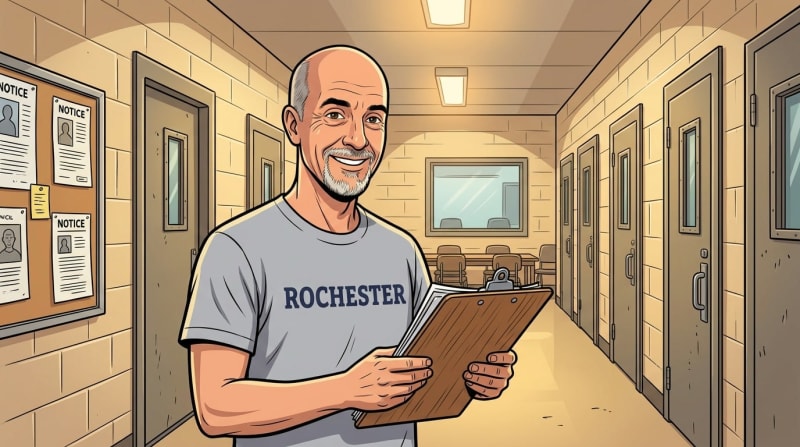
Participants composed using Hyperscore, a visual composing program developed at MIT's Media Lab that requires no prior music training or knowledge of notation. Colors and shapes on screen translate to melody and rhythm. No instrument required.
As each piece developed, Eastman student musicians workshopped it live — playing back what the composer had written so they could hear it in real time. The Eastman students were not there to correct. They were there to perform what had been written.
Joel Yager, who oversees the jail's rehabilitation programming, noted that incarcerated residents cannot access outside programs — delivering this inside the facility was the only way to reach them.
The Concert: Original Compositions Performed
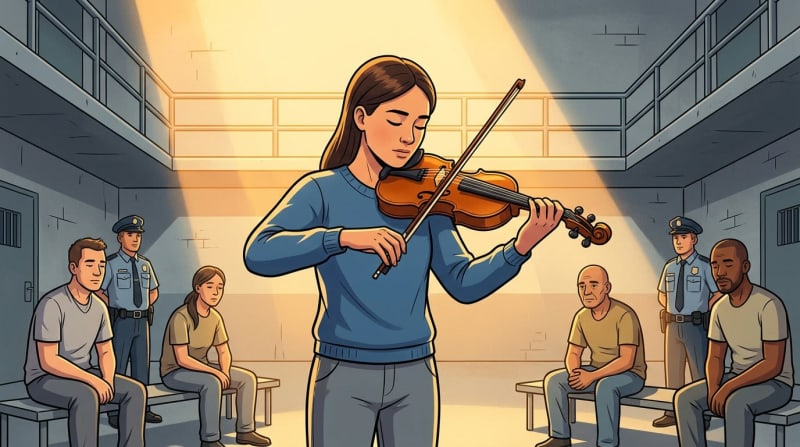
The Concert: Original Compositions Performed
A Spring 2026 concert in the jail atrium paired classical works with original pieces written by the participants. Frank Cremaldi, who has battled addiction for 20 years, was among the composers.
"Being in addiction, I mean it's hard to start something and finish it. This gave me an opportunity to start something, to finish something, to be proud of something."
— Frank Cremaldi, Monroe County Jail participant
Eastman violinist Amelia Posner-Hess described performing the composers' own pieces: "We wanted to honor what they'd written. It wasn't our music anymore."
Breaking Barriers Becomes a Credit Course
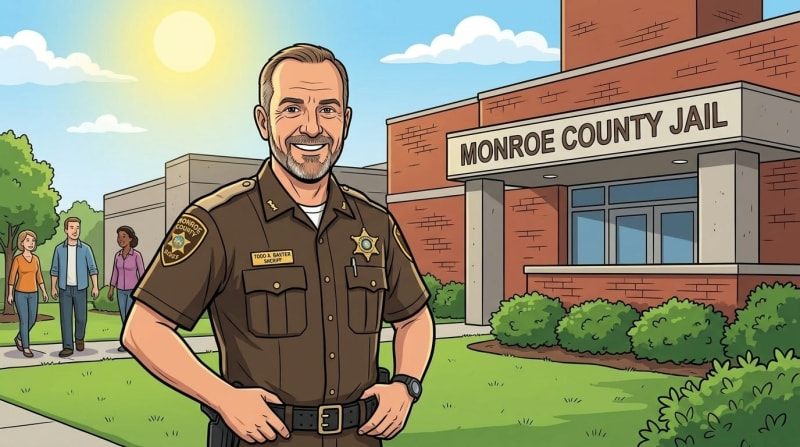
Breaking Barriers Becomes a Credit Course
The program is not staying a pilot. In Spring 2027, Breaking Barriers will become a for-credit course in Eastman's chamber music department. A second cohort — incarcerated women — launched in Fall 2026 with new Eastman students.
Rehabilitation Through the Arts reports that fewer than 3 percent of arts-program participants return to prison within three years. The national recidivism rate is more than 60 percent. Monroe County Sheriff Todd K. Baxter has called the program "proven to be therapeutic for those working on a path forward."
Breaking Barriers runs as an Eastman credit course beginning Spring 2027. The second cohort is already in session inside Monroe County Jail.
Content ID: eHqBOjA2U3xBBD65CT99yhZf
See an error? Tell us.
Comments
Share with the Community