How to Get Around Rochester on a Veo E-Bike or Scooter
The Short Version
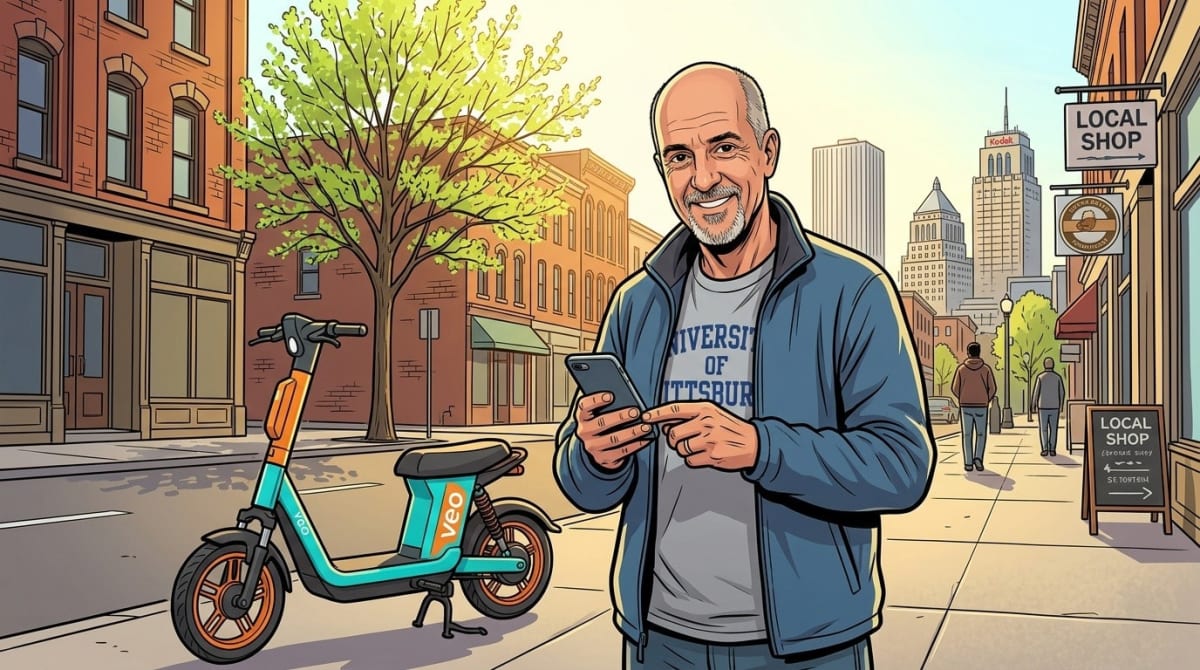
- The 2026 Veo season opened March 9, making it one of the earliest spring starts for Rochester's shared micromobility program since it launched in partnership with the city in 2023.
- Ridership numbers reveal this is genuine infrastructure, not a tourist novelty — 67% of riders in 2025 had household incomes under $50,000, and 37% said Veo helped them postpone or avoid buying a car.
- The Cosmo-e e-bike is the smarter pick for longer rides like the Genesee Riverway Trail, which runs 9 miles through eleven parks — four of them Olmsted-designed — past the 1842 Erie Canal Aqueduct and High Falls.
- Veo Access gives qualifying low-income riders 30 free minutes of riding daily for just $5 per month, and riders without a smartphone or bank account can access the program by calling (855) 836-2256.
- Skipping the end-of-ride parking photo is the most common mistake — the meter keeps running until that photo is submitted through the app.
Slow Travel Is Not Just for Paris
Slow Travel Is Not Just for Paris
Every city worth knowing rewards you for slowing down. In Barcelona, it's the e-bikes along the waterfront. In Washington, D.C., the shared scooters that skip you past gridlock on the Mall. In Zagreb, the quiet lanes where a rented bike turns a morning into a small adventure. The pattern repeats in Boston, New York, Paris — anywhere people have figured out that the space between walking and driving is where a city actually lives.
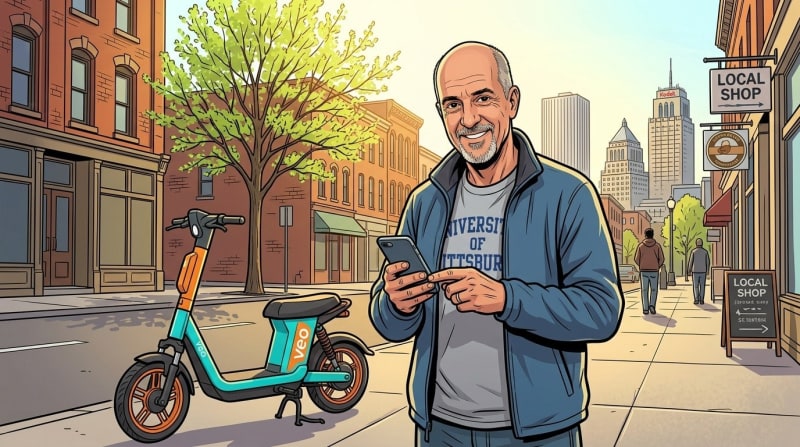
Rochester is that kind of city. You just need the right vehicle to find it. Veo, the electric scooter and e-bike share program that has been running in partnership with the City of Rochester since 2023, returned for its 2026 season on March 9. It is the city's most practical tool for slow travel — faster than walking, slower than a car, and just present enough that you notice what you're riding through.
The Two Vehicles: Astro Scooter vs. Cosmo-E Bike
The Two Vehicles: Astro Scooter vs. Cosmo-E Bike
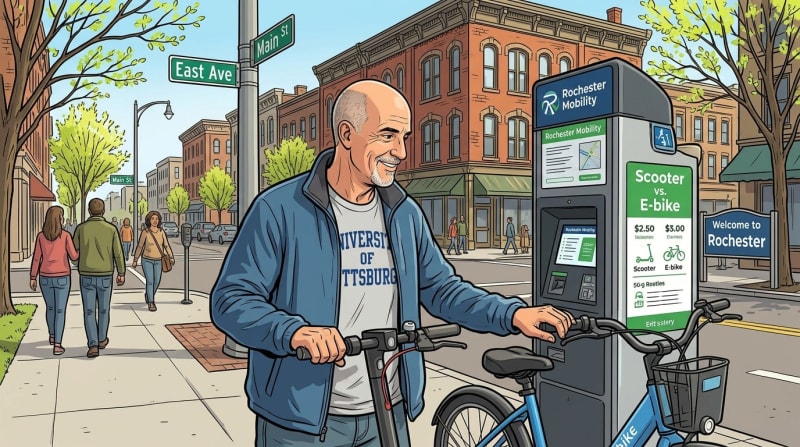
Veo operates a mixed fleet in Rochester. The choice between the two vehicles matters more than people expect.
The Astro is a standing electric scooter — the familiar format you've seen in every city doing this well. It's nimble, quick to grab, and best for short hops: getting from Corn Hill to the Public Market, crossing downtown, or threading through a neighborhood. If you've ridden shared scooters anywhere, you already know how it works.
The Cosmo-e is a seated, Class 2 throttle-assist e-bike — a different experience entirely. It has big tires, a low center of gravity, and a throttle that provides a comfortable ride with no standing or pedaling required. (Veo, 2025) For longer rides — the Genesee Riverway, a run out to Corn Hill and back, anything over a mile or two — the Cosmo-e is the better call. It's also the more accessible option for riders who aren't comfortable on a standing scooter.
Both vehicles are available through the same app and the same unlock process. Current per-minute rates for each are shown in the VeoRide app. (City of Rochester, March 2026)
Getting Started: App, Unlock, and Cost
Getting Started: App, Unlock, and Cost
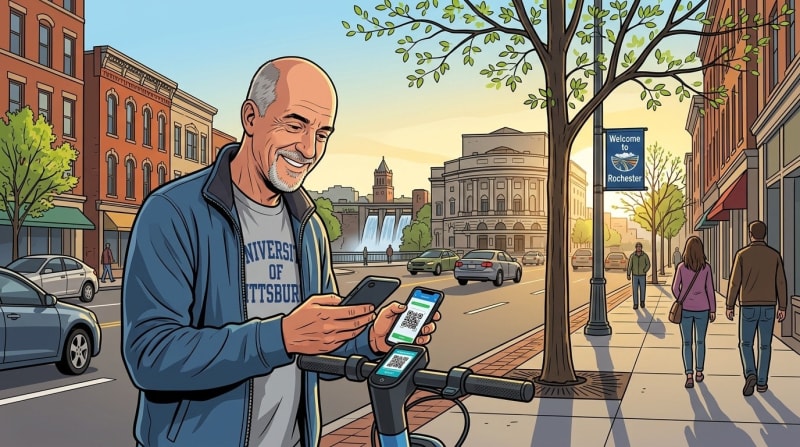
The process is straightforward and nearly identical to how these systems work in other cities. Download the free VeoRide app through the App Store or Google Play, locate a nearby vehicle on the map, scan the QR code, and pay $1 to unlock. First-time users complete a short user agreement before their first ride. (City of Rochester, 2026)
Per-minute rates vary by vehicle type and are shown live in the app. A typical ride covering a mile or two runs a few dollars total — competitive with any city where these programs run well.
For regular riders, two membership tiers make the math better. VeoPlus costs $8.99 per month and waives unlock fees on every ride. Veo Access, at $5 per month for qualifying low-income riders, waives unlock fees, provides 30 free minutes of riding daily, and offers reduced per-minute rates. (City of Rochester, March 2026)
For riders new to the system, the app includes a Training Mode — also called Education Mode — that limits speed while you get comfortable. (City of Rochester, 2026)
The Best Routes for a First Ride
The Best Routes for a First Ride
Rochester has the trail infrastructure to make these rides genuinely memorable. Three routes stand out.
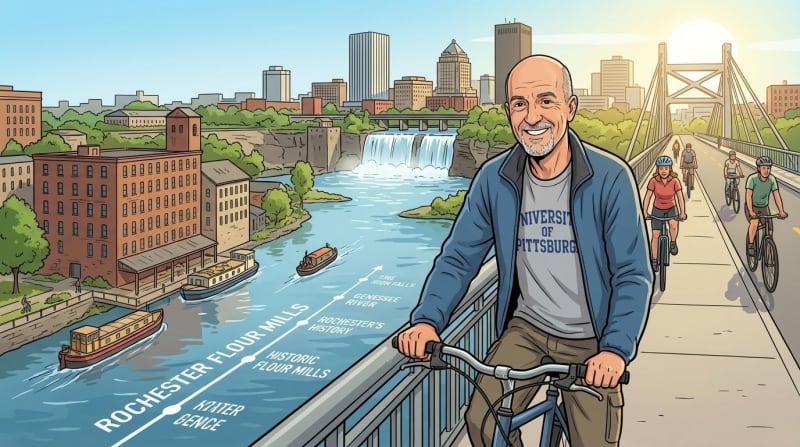
The Genesee Riverway Trail is the city's signature ride. The trail runs 9 miles along both sides of the Genesee River from the south city line to Court Street downtown, passing through eleven parks — four of them Olmsted-designed — nine historic districts, and landmarks including the 1842 Erie Canal Aqueduct and the High Falls. (City of Rochester) The Pont de Rennes bridge, a converted road span, offers unobstructed views of the High Falls from directly above — one of the better lookout points in the city. (TrailLink, 2025) Note that as of late 2025, some northern sections near the lake were affected by construction — check the trail map before heading north of downtown.
The Erie Canal Trail toward Pittsford is the one to ride when you want to feel like you've actually left the city without going far. The trail runs east from Genesee Valley Park along the canal toward Pittsford and Fairport. This 14-mile section is mostly paved asphalt, running on the north side of the Erie Canal past woodlands, stream crossings, and water views of boats and canal infrastructure. (Empire State Trail) The Pittsford-to-Fairport stretch in particular runs miles of unbroken stonedust trail where intersecting roads pass over the canal and towpath — no stop-and-start with traffic, just the trail and the water. (Go Finger Lakes) In Pittsford village, Schoen Place is the natural stop: Lock 32 Brewing, Simply Crepes, Pittsford Farms Dairy, and the canal boats docked along the water. (Erie Canalway National Heritage Corridor) Important note: Veo's service area covers city limits. Riders can start from the Genesee Valley Park area and ride out along the canal trail, but plan to ride back or arrange a pickup if you go deep into Pittsford.
Corn Hill, the South Wedge, and the Public Market make for a shorter, neighborhood-scale ride that shows Rochester at its most lived-in. These are areas covered elsewhere on this site — the goal here is simply to say that a Veo is the right vehicle for connecting them. Park once, or don't park at all. Grab a scooter near the Market, ride the riverfront to Corn Hill, cut back through the South Wedge. Forty-five minutes, no car required.
Making It Work for Everyone: Veo Access and Riding Without a Smartphone
Making It Work for Everyone: Veo Access and Riding Without a Smartphone
The ridership data behind Veo in Rochester says something worth stating plainly. In 2025, 67% of riders had household incomes under $50,000, and 25% identified as having a disability. A recent survey also found that 78% of riders reduced their car travel, and 37% said they were able to postpone or avoid buying a car because of Veo. (Mass Transit, March 2026)
This is not a program for tourists and commuters with disposable income. It's infrastructure.
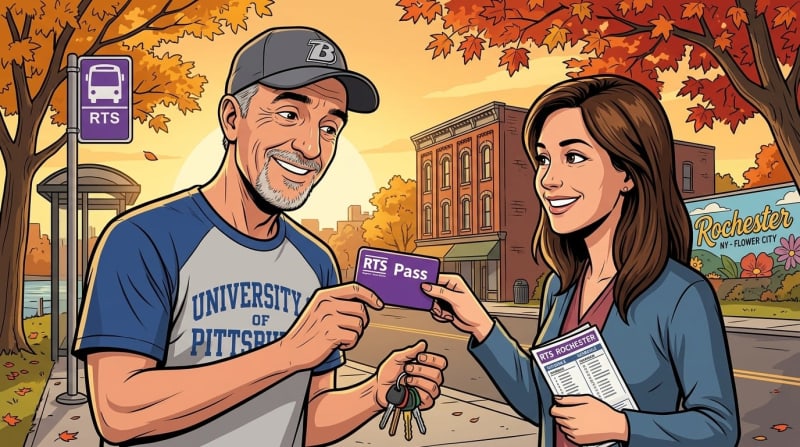
The Veo Access program is the mechanism that makes this real. Qualifying low-income riders pay $5 per month, receive 30 free minutes of riding daily, and pay reduced per-minute rates. Applications are available at veoride.com/veo-access or by calling (855) 836-2256. That same number is the path in for riders without a smartphone or bank account — the program accommodates both. (City of Rochester, March 2026)
A city that moves well moves everyone. That's worth supporting as a rider — and worth knowing about as a neighbor.
A Few Things to Know Before You Go
A Few Things to Know Before You Go
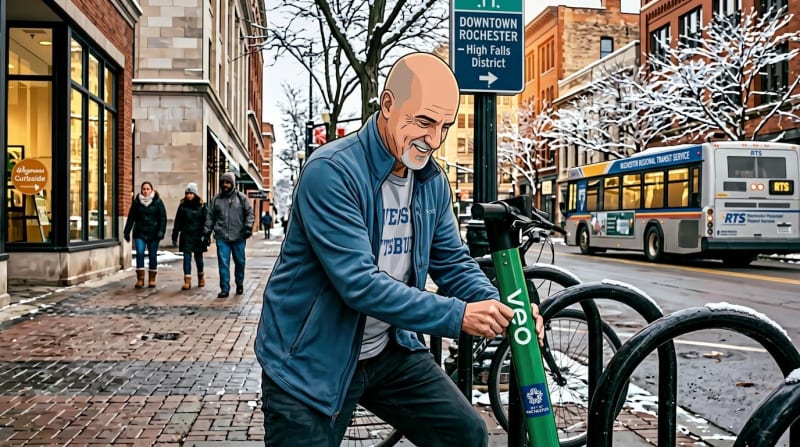
Sidewalk riding is prohibited inside the City Center District, except on sidewalks marked as part of the Genesee Riverway Trail. On the trails and in most neighborhoods, you're fine. Downtown, stay in the bike lane or the road. (Veo, 2026)
End your ride parked upright near a bike rack, in a designated Veo hub shown in the app, or at the outer edge of the sidewalk without blocking pedestrian access. A parking photo submitted through the app is required to close every ride. Skipping the photo keeps the meter running. (City of Rochester, 2026)
Riders must be 18 or older. For your first ride, use Training Mode — it limits speed while you calibrate to the vehicle. The Cosmo-e in particular handles differently from a standard bike, and a few minutes at reduced speed is worth it.
The 2026 season opened March 9. (City of Rochester, March 2026) Veo typically runs spring through late fall in Rochester, with the exact end date weather-dependent.
Content ID: EAjuYAN1niApUKzIWxuZL5TV
See an error? Tell us.
Comments
Share with the Community