

Rochester's Vacuum Oil Reckoning: The PLEX Neighborhood Finally Gets Its Cleanup
The Short Version
- Vacuum Oil Company was founded in Rochester in 1866 and acquired by Standard Oil in 1879 — the contamination it left behind in the PLEX neighborhood has persisted in the soil for more than a century.
- A legal breakthrough establishing ExxonMobil's successor liability for the former Vacuum Oil site has finally moved the property toward active remediation under New York's Brownfield Cleanup Program.
- The EPA estimates 450,000 brownfield sites exist nationally; communities of color and lower-income neighborhoods bear a disproportionate share of both the contamination and the decades-long delays in cleanup.
- Brownfield remediation moves through multiple phases — from assessment through long-term monitoring — and can span 15 or more years total, making sustained community engagement throughout the process essential.
- The cleanup is being legally compelled; what the land becomes after remediation is not — that outcome will be determined by who shows up consistently in the planning conversations that start now.
Rochester has a particular relationship with its industrial past — one that shows up in the brick of old factory buildings converted to lofts, in the names of streets that no longer go where they once went, and in the soil of neighborhoods that absorbed the residue of a century of manufacturing and processing. In the PLEX neighborhood, that relationship has a specific name: Vacuum Oil.
The former Vacuum Oil site has been a known presence in this community's conversation for years — not as a point of pride, but as an open question about who bears the cost of an industrial legacy and who gets to determine what comes next. A legal breakthrough involving ExxonMobil, the corporate descendant of the company that turned Rochester's petroleum history into global scale, has now moved that question closer to an answer. The ground in PLEX is finally moving toward cleanup. And what happens after that cleanup belongs to the neighborhood.
Vacuum Oil's Rochester Legacy
Vacuum Oil's Rochester Legacy
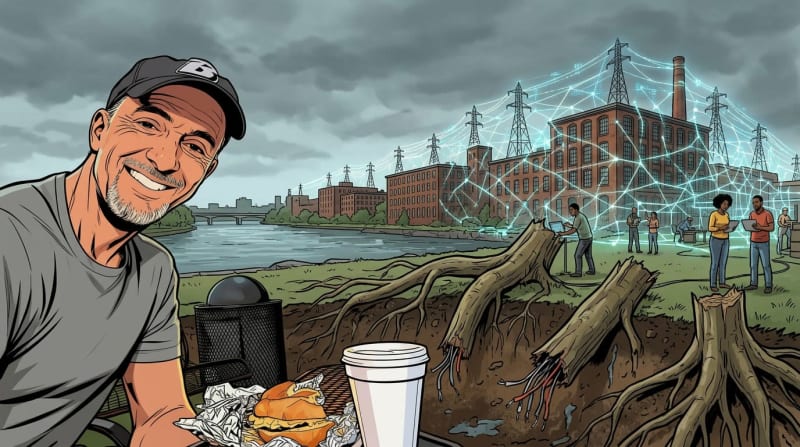
Vacuum Oil Company was incorporated in Rochester in 1866 by Hiram Bond Everest and Matthew Ewing, who had developed a new process for refining lubricating oil. The company grew quickly, attracted the attention of John D. Rockefeller's Standard Oil trust, and was acquired in 1879. From that acquisition forward, what had been a Rochester company became one node in a national petroleum network. The site in what is now PLEX was part of that network — a piece of industrial infrastructure that processed, stored, or refined petroleum products and, in doing so, left compounds in the soil and groundwater that persist long after the last barrel moved through.
That is how brownfield contamination works. The chemistry is patient in ways that industrial timelines are not. Petroleum hydrocarbons, benzene compounds, and metals from processing operations can remain in soil and groundwater for decades after a facility closes. According to the EPA's Brownfields Program, there are an estimated 450,000 brownfield sites across the United States, many of them in cities that built their economies on exactly this kind of industrial work. Rochester has more than its share.
What makes the Vacuum Oil site different from many brownfields is the chain of corporate succession. When a small local company leaves contamination behind and then disappears, recovery is often genuinely difficult — there is no legally solvent party to hold responsible. ExxonMobil, the company that traces its lineage through Standard Oil to Vacuum Oil's acquisition, is not in that position. The legal pathway that environmental advocates and regulators have pursued reflects that reality.
A Neighborhood That Kept Asking

A Neighborhood That Kept Asking
PLEX has not been waiting passively. The neighborhood has a documented history of community organizing around environmental quality, housing, and economic development — the kind of organizing that starts with neighbors at kitchen tables and eventually ends up at planning meetings and legal proceedings. Rochester's environmental justice advocates have consistently named contaminated sites in lower-income neighborhoods as a priority, and the Vacuum Oil site has been on that list for a long time.
Environmental justice as a framework recognizes a pattern that is well documented nationally: industrial facilities and their contamination are disproportionately located in communities of color and lower-income communities, and the timelines for cleanup in those communities consistently lag behind cleanup timelines in wealthier, whiter ones. The PLEX neighborhood's demographics place it squarely within that pattern. The legal work that produced this breakthrough is not just about one site — it is about whether the tools of environmental law can actually produce equity when equity has been the exception.
What the neighborhood has been asking for, consistently, is a voice in what comes after cleanup — not just the removal of contamination, but genuine participation in what the land becomes. That is a different ask than cleanup alone, and it is the more important one.
"The infrastructure is always simpler than we think it is. The land already exists. The people already want something better. The community is already organized — they just need to be handed the pen."
The Legal Breakthrough
The Legal Breakthrough
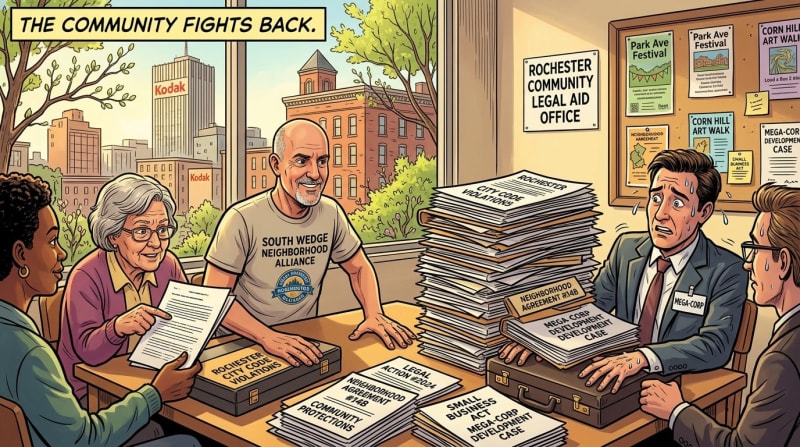
The specific legal mechanism that has moved the Vacuum Oil site toward remediation involves ExxonMobil's liability as a successor company to the entities that operated here. New York State's Department of Environmental Conservation oversees brownfield cleanup through its Brownfield Cleanup Program, which provides pathways for regulators and affected communities to compel cleanup when a responsible party can be identified and held accountable.
ExxonMobil's size and resources mean that financial constraints are not the obstacle they would be for a smaller legacy company. The legal breakthrough that has been achieved represents the clearing of a barrier that has been structural rather than financial: the question of whether a responsible party could be held accountable across decades and multiple layers of corporate transformation. That answer is now yes.
This matters beyond PLEX and beyond Rochester. ExxonMobil and its predecessor companies left industrial footprints in dozens of American cities. A legal framework that establishes accountability for those footprints in one case strengthens the argument in others. What happened here is a precedent as much as a remedy.
What Cleanup Actually Requires
What Cleanup Actually Requires
Brownfield remediation is not a single event. It is a process that moves through phases: site assessment, remedial investigation, feasibility study, remedial design, and implementation. For a site with the kind of contamination associated with a petroleum operation, that process can take years. Soil excavation and removal, groundwater treatment systems, and long-term monitoring are all components depending on what the investigation reveals.
New York's Brownfield Cleanup Program provides a framework that includes community notification, public comment periods, and opportunity for community input into the remedial design. Those provisions exist on paper. Whether they translate into genuine community voice depends on whether residents and advocates use them actively and persistently — because bureaucratic processes do not come looking for public participation on their own.
The community should expect, and demand, regular updates throughout the process. Remediation timelines slip. Contamination turns out to be more extensive than initial assessments suggested. The monitoring phase after active cleanup can extend for a decade or more. Staying engaged through that arc requires sustained organizing, not a single moment of legal victory.
What Could Rise Here
What Could Rise Here
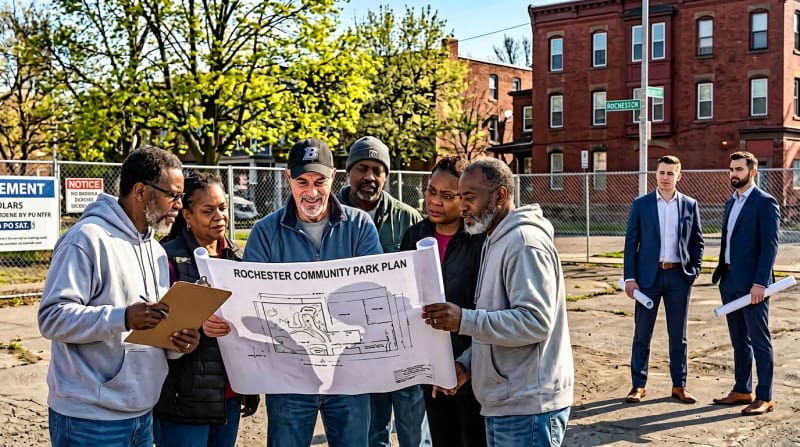
This is where the conversation gets genuinely interesting — and genuinely open. A cleaned-up site in PLEX is a blank canvas of a kind that Rochester rarely gets. urban land doesn't come available often, and when it does, the question of who shapes its future is usually answered by whoever has capital and existing political relationships. The legal framework that produced this cleanup is not a substitute for community power in the redevelopment process. But it creates the conditions for that conversation to happen, which is different from where things stood before.
What residents and organizers have consistently named when asked about redevelopment in this neighborhood: affordable housing that serves people who actually live here, green space that addresses the parks deficit that lower-income urban neighborhoods disproportionately carry, and economic uses that produce jobs and wealth at the neighborhood level rather than extracting value from it.
Those are not incompatible goals. Cities across the country have used brownfield redevelopment as genuine community anchors — mixed-income housing, community land trusts, urban agriculture, neighborhood commercial development. The outcome is not predetermined by the cleanup. It is determined by the planning process that follows, and who participates in it.
What would PLEX look like if the neighborhood got to answer that question without the weight of contaminated ground underneath it? That question is not rhetorical. It is the actual work.
PLEX Gets to Define This
PLEX Gets to Define This
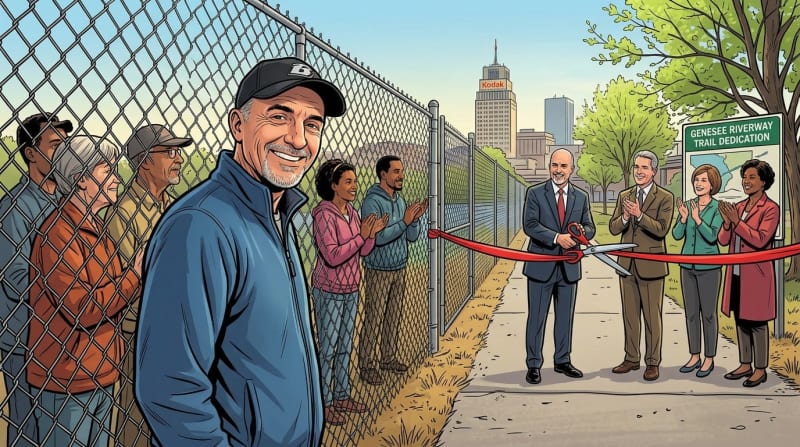
There is a version of this story that ends with a press release and a ribbon cutting. A corporation announces a cleanup. Regulators declare it complete. A developer builds something generic. The neighborhood that bore the contamination for decades gets a new building it cannot afford to live near.
That is not the only version available — but it is the default, and defaults do not change on their own.
The version that serves PLEX is one where the legal breakthrough is treated as the opening move in a longer conversation, not the final one. Where the community organizations that have been showing up for years stay engaged through every phase of the remedial process. Where the planning for what follows cleanup starts now — before the cleanup is complete, before the land is transferred, before the terms are set by someone else.
The ground in PLEX is finally moving toward clean. What grows there next belongs to the neighborhood. The question is whether the neighborhood is ready to claim it — and if you live here, that question is for you.
Content ID: 1hT9Fv61ETUGzXzvaVmKORhI
See an error? Tell us.


Comments
Share with the Community