
Erik Frisch Takes the Helm at Neighborhood and Business Development — What It Means for Rochester's Streets
The Short Version
- Frisch's appointment signals Mayor Evans is prioritizing walkability, multimodal transportation, and equity-centered corridor investment — this isn't a routine hire.
- The Department of Neighborhood and Business Development touches more of Rochester's daily life than most residents realize: housing rehabilitation, commercial corridor investment, code enforcement, and small business support all flow through this office.
- Inner Loop North is the clearest early test — Frisch helped shape Inner Loop East from inside city government, and how he approaches the North segment will reveal whether integrated neighborhood development is a real priority or a talking point.
- Poverty rates along Rochester's major corridors reach as high as 42% on North Clinton, making equity in infrastructure investment foundational to any credible corridor strategy.
- The first signals of Frisch's direction will appear in budget line items and community meeting locations well before any visible policy changes reach the street.
There is a particular kind of move a mayor makes when they want to signal something. Most commissioner appointments are about institutional continuity — someone who knows the budget cycles, the staff, the stakeholders. When Mayor Malik Evans named Erik Frisch as Rochester's new Commissioner of Neighborhood and Business Development, replacing Dana Miller, he made a more layered choice than the headlines suggest. Frisch is not an outsider walking in from the world. He spent years working inside Rochester city government — part of the planning apparatus that shapes how this city's streets and neighborhoods get built. He built credibility on both sides of the desk. That is an awesome résumé to bring into a commissioner's office, and it is worth understanding why it matters.
From Planner to Commissioner

From Planner to Commissioner
Erik Frisch's path to this appointment runs through the full arc of Rochester's planning world. Frisch worked for the City of Rochester in transportation and planning — part of the institutional machinery that determines how corridors are designed, how streets are evaluated, and how infrastructure investment decisions get made. His city work included involvement with the Inner Loop East project, the conversion of a below-grade highway trench into a surface street that reconnected the Neighborhood of the Arts to downtown and has been cited nationally as a model for urban freeway removal and neighborhood reconnection.
Alongside that city work, Frisch has maintained an advisory role with Reconnect Rochester, the regional organization that shows up when Rochester proposes a road diet, debates a transit corridor, or wrestles with whether a new development should include protected bike lanes. That association gave him insight into the transportation advocacy community that complements his years on the planning side of the desk.
Rochester's car dependency shapes daily life in ways that often go unnamed — from who can afford to live here without a vehicle, to whether a commercial corridor is accessible to the neighbors who live closest to it. According to the U.S. Census Bureau American Community Survey, Rochester's commute mode split reflects the region's deep car dependency. This is the kind of data-driven, equity-focused work that has defined Frisch's external profile. But the fact that he spent significant time as a city planner means he understands not just what better design looks like, but how decisions inside city government actually get made — and where they get stuck.
The appointment of someone who spent years arguing against car-first planning — and who built that argument from inside city government as well as through his advisory work outside it — into the role that controls how Rochester invests in its commercial corridors and neighborhoods, is not an accident. Mayor Evans is telling you something about the direction he wants to go.
The transition from Dana Miller deserves direct acknowledgment. Miller led this department through a genuinely demanding stretch — pandemic-era pressures on Rochester's small businesses and neighborhoods, federal recovery funding cycles that required navigating complex compliance requirements, and persistent challenges across the city's commercial corridors. The programs Frisch inherits, the community relationships already in place, the grant cycles underway — these are Miller's work as much as they are the department's. Frisch doesn't walk into a blank slate. He walks into an institution Dana spent years steering, and that matters.
What Frisch brings is a different but complementary set of strengths: a dual perspective inside city planning and public-facing advisor that gives him credibility on both sides of the institutional divide — with neighborhood organizations, transit advocates, and the planning staff who will ultimately implement whatever direction he sets. Whether that translates into different outcomes for Rochester's neighborhoods is the central question of his tenure.
What does it mean when a city chooses someone who already spent years inside these walls — and who has continued to push for better outcomes from the outside — to run the department that actually controls the levers?
What the Department Actually Does
What the Department Actually Does
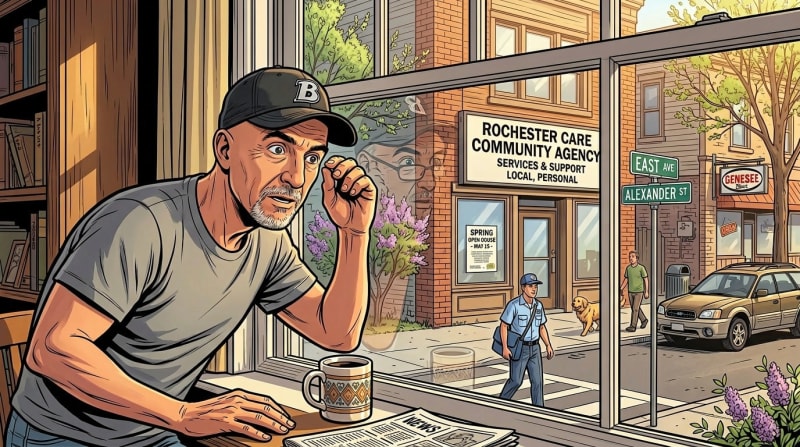
The Department of Neighborhood and Business Development is one of those city agencies that shapes daily life more than most people realize — until something goes wrong on their block and they need to know who to call.
The department's portfolio includes housing rehabilitation and investment programs, commercial corridor revitalization, code enforcement, small business technical assistance, and neighborhood planning. A landlord who isn't maintaining a property in your neighborhood? Code enforcement. The grant that helped a restaurant on your corner fix its facade? Probably this department. The plan for what gets built on a vacant lot near your house? Reviewed here.
This breadth is both the department's leverage and its complexity. The commissioner doesn't just think about streets — they manage a system that touches housing conditions, business survival, neighborhood identity, and code compliance simultaneously. A transportation and planning background is genuinely useful in this role: understanding how physical design, transit access, and walkability interact with whether a business corridor stays viable is exactly the kind of systems thinking the department needs more of.
What Frisch inherits includes programs and initiatives that were mid-implementation under Miller — corridor plans in progress, community partnerships already formed, grant cycles underway. City departments don't pause for leadership changes. His first job is to understand what's already moving before redirecting anything. The institution will shape him as much as he shapes it — which is not a warning, just a fact of how government works.
The Corridors That Need Attention

The Corridors That Need Attention
Rochester's commercial corridors are not all struggling the same way, and they don't all need the same thing. Some stretches of Lyell Avenue are visibly rebuilding — new businesses, renovated storefronts, people on sidewalks. Other blocks carry decades of vacancy. Bull’s Head on Chili Avenue sits at a complicated intersection of working-class neighborhood identity and commercial reinvestment pressure from adjacent development. North Clinton Avenue runs through some of the highest-poverty census tracts in New York State.
According to U.S. Census Bureau estimates, poverty rates along Rochester's major commercial corridors reflect stark disparities that any meaningful investment strategy has to reckon with directly.
What someone with Frisch's background brings to these corridors is an understanding that commercial viability and physical design are not separate problems. A corridor without safe pedestrian crossings, adequate lighting, and accessible transit stops is a corridor that excludes the people who live closest to it from being its customers. Investment in infrastructure and investment in business retention are the same investment, made from different angles.
The Inner Loop North is the test case worth watching most carefully. Frisch worked on Inner Loop East from inside city government — he understands the mechanics of that project in ways an outside observer cannot. The North segment offers a second opportunity, and his institutional memory of what made the East tearout work (and what made it hard) is directly relevant. How that land and the surrounding corridor get designed will reveal whether the city is serious about integrated neighborhood development, or whether it defaults to whatever the market brings first.
Reconnect Rochester has graded Rochester's bike infrastructure and flagged equity gaps in how safety infrastructure is distributed across neighborhoods. Frisch knows those grades. He helped develop the framework for evaluating them. The question is whether knowing translates to acting — and whether the department's resources and political priorities can sustain that acting.
If you've watched a corridor in your neighborhood stall — a storefront stay vacant for years, a sidewalk crumble without repair, a transit stop remain uncomfortable and underserved — this appointment is the one to watch.
What Neighbors Should Watch For

What Neighbors Should Watch For
The first 90 days of a new commissioner's tenure rarely produce visible change. What they produce is signal — in budget requests, in which community meetings the commissioner attends, in how the department talks about neighborhoods in its public materials. The language shifts before the policy does.
Watch the budget. A commissioner with Frisch's background should be prioritizing capital investment in neighborhood infrastructure — sidewalks, transit stops, street lighting, protected crossings. These are not glamorous line items, but they are how you know whether a department is serious about the physical conditions of life in Rochester's neighborhoods. If those items don't appear in the department's budget requests, the advocacy values haven't survived the translation to city hall.
Watch community engagement. If Frisch brings a data-driven and community-involved approach inside city government, you'll see it in whether community meetings happen in neighborhoods or at city hall, whether materials are accessible, and whether public feedback actually changes plans. Those differences are measurable. Residents who pay attention will know within a year.
Engaging with the department is more accessible than most people assume. Code complaints, corridor investment inquiries, and small business assistance questions all go through this office. The department's neighborhood planning processes are open to public input. The arrival of a new commissioner — someone who has a deep understanding of these conversations and who spent years inside city government before that — is exactly the right moment to show up, before the agenda is set and the budget is closed.
The real tension in any appointment like this is not about ideology. It is about institution. Administrators who once pushed from outside sometimes expand what's possible from the inside — moving faster and with more resources than they ever could as advisor. And sometimes the institution shapes them more than they shape it. The rhythms of budget negotiations, council relationships, and departmental inertia are real, and they don't yield to good intentions alone.
Frisch has walked this particular institution from multiple angles. He knows where the leverage points are. What he does with the authority of this office — what gets funded, what gets built, who gets engaged — is what remains to be written.
What would it mean for your block if the person controlling these resources not only understood what streets and sidewalks and storefronts do for belonging, but had spent years inside the system trying to make that argument work?
Content ID: 39C4xxiKRgfp55bPCTBF0xoI
See an error? Tell us.

Comments
Share with the Community