She Walked the Same Trail Hundreds of Times. Then She Discovered a New Species.
The Short Version
- Judy Dobles, a retired Kodak finance employee volunteering at Cumming Nature Center, discovered a new tardigrade species in a moss sample from a log she'd walked past hundreds of times.
- Before her research, New York had 12 recognized tardigrade species; her work at the Naples preserve raised the state count to 27.
- The new species is named Mesocrista Ojagwaji — the second word chosen by Tonawanda Seneca Nation Turtle Clan member Jamie Jacobs in the Onondowaga language.
- Dobles chose not to name the species after herself, partnering with Indigenous language keepers to root the discovery in the land where it was found.
- The Cumming Nature Center is a 900-acre RMSC preserve with 12 miles of trails in the Finger Lakes, open year-round.
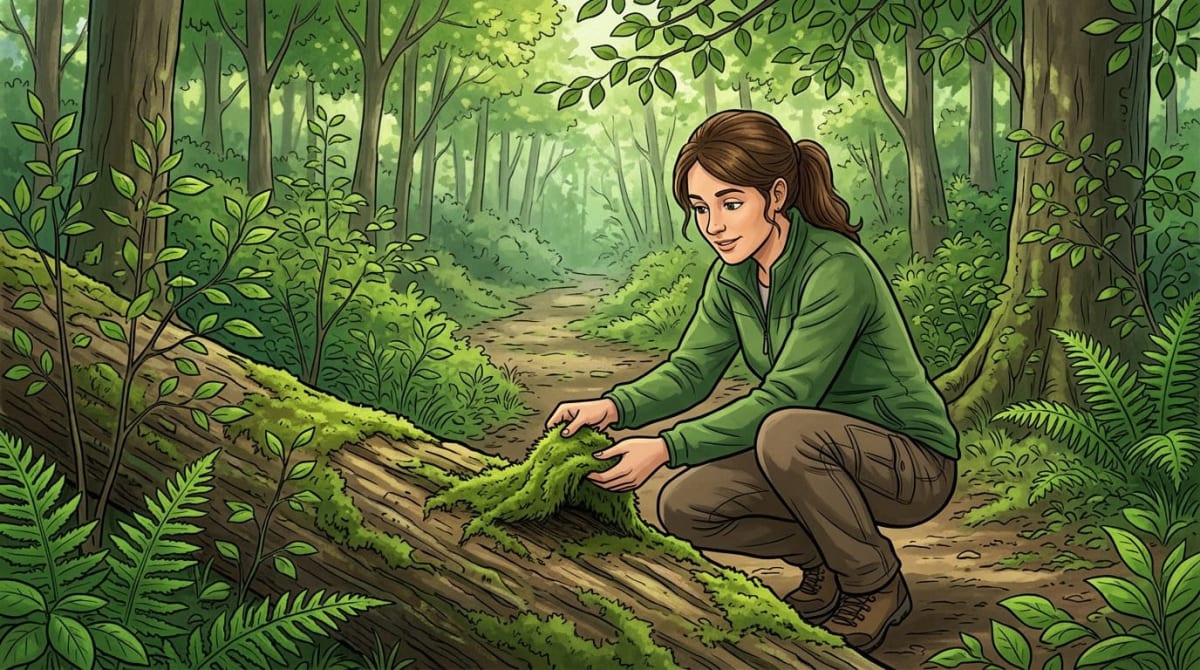
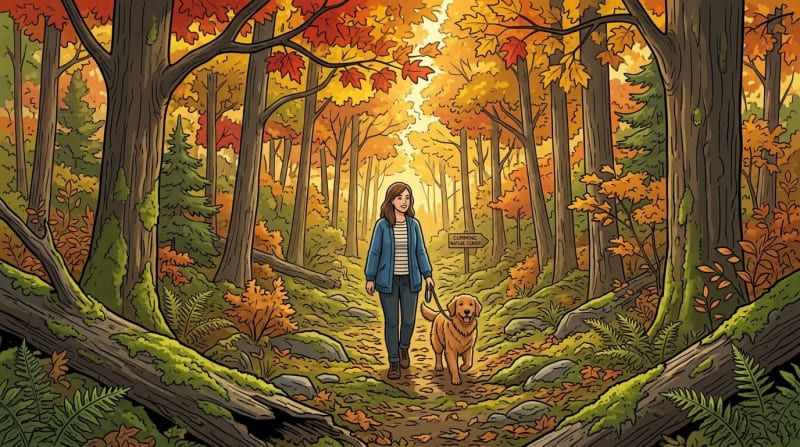
Judy Dobles had walked past that log hundreds of times. She knows the trails at the Cumming Nature Center — 40 miles south of Rochester, in the Finger Lakes hills — the way you know the route from your front door to your mailbox. Then, about a year ago, she stopped. She pulled a clump of moss from the log, brought it back to the lab, put it under a microscope, and discovered a new species.
What Judy Dobles Found in the Moss
What Judy Dobles Found in the Moss
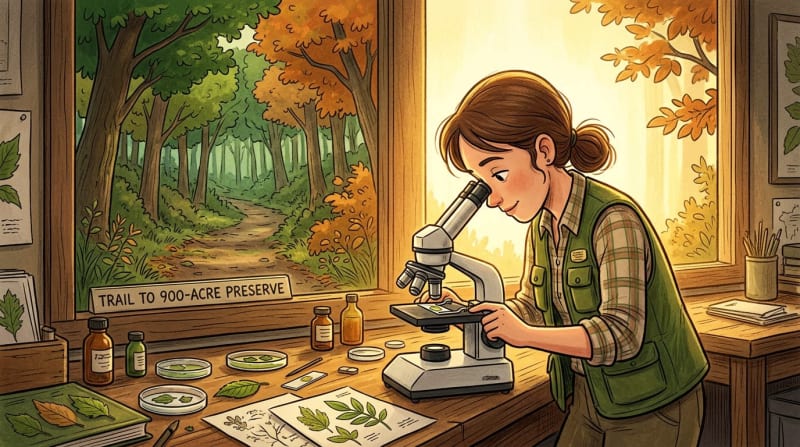
Dobles is a retired Kodak finance employee who volunteers at the Rochester Museum and Science Center's Cumming Nature Center in Naples, NY — a 900-acre Finger Lakes preserve with 12 miles of trails. She has been walking those trails long enough that they feel like her own backyard. Under the microscope that day, she found a tardigrade — a microscopic eight-legged animal, sometimes called a water bear or moss piglet — that didn't match anything in the published scientific literature.
She reached out to Piotr Gasiorek, an assistant professor at Jagellonian University in Poland who specializes in tardigrade taxonomy. Confirming a new species is a deliberate process. The formal identification took about a year. At the end of it, the species was confirmed as new to science.
A New Species — and New York State Lost Fifteen Years of Counting
A New Species — and New York State Lost Fifteen Years of Counting
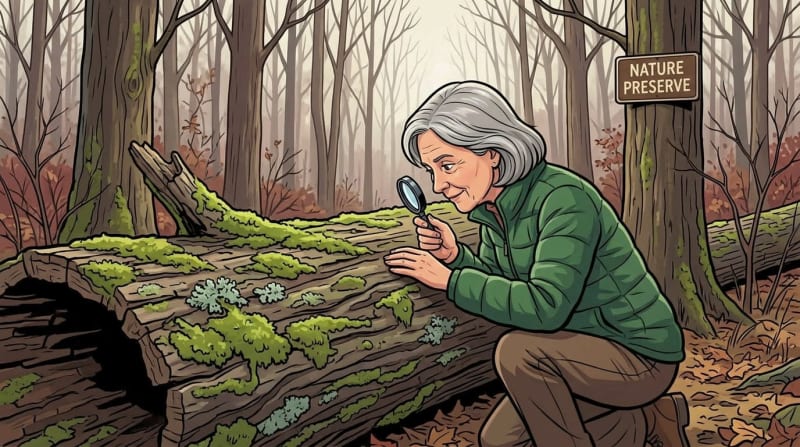
Before Dobles began her work at Cumming Nature Center, New York State had 12 recognized tardigrade species on record. Her research at the Naples preserve raised that count to 27 — more than doubled, because a Kodak retiree decided to look at a log she'd walked past for years.
The new species is named Mesocrista Ojagwaji. The second word was chosen by Jamie Jacobs, a member of the Tonawanda Seneca Nation Turtle Clan and keeper of the Onondowaga language. Ojagwaji references the tardigrade spotting in that Indigenous language. The name makes the species itself a record of where the animal was found and the people who knew that land first.
Tardigrades are extraordinarily resilient. These microscopic animals withstand extreme heat, radiation, and complete dehydration — conditions that would kill virtually anything else. That a species this widespread could still go unnamed in a familiar patch of Finger Lakes moss is the part Dobles keeps returning to. "Globally, we are probably eliminating species faster than we can find them," she told WXXI News. "In the soil, and at the microscopic level, there's so much we don't know."
What It Means to Find a New Thing in a Familiar Place
What It Means to Find a New Thing in a Familiar Place
Dobles did not name the species after herself. Naming a discovery after yourself is the standard scientific convention. She chose differently — reaching out to Jamie Jacobs and the Tonawanda Seneca Nation to bring another voice into the process.
"For me, it's more fun to partner with other people and involve them in the process. And make that connection."
— Judy Dobles, to WXXI News
The Cumming Nature Center draws families, school groups, and hikers to its trails every year — the same trails Dobles walks, the same moss, the same logs. The center is open year-round. The trails are 12 miles total, and the same log is still there.
Content ID: zAvKn4Wal34dSITH0qMk8IBG
See an error? Tell us.



Comments
Share with the Community