
T-Mobile's $2 Billion Greenlight Bet: What It Means for Rochester Internet
The Short Version
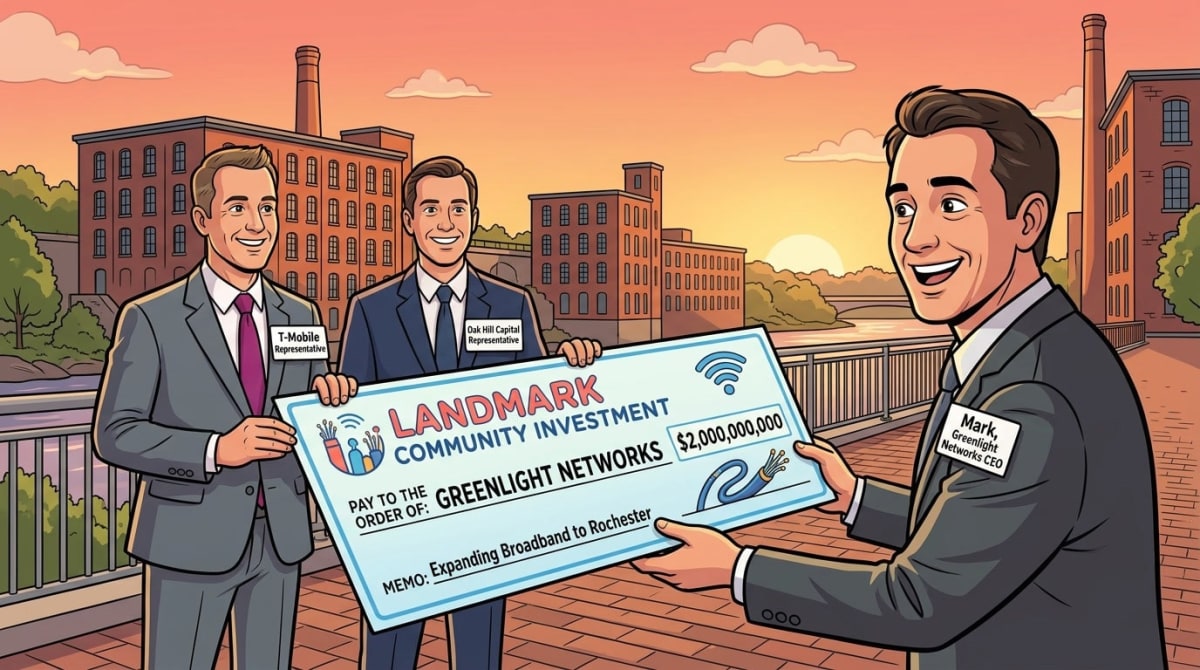
- T-Mobile is investing $2 billion in a new joint venture with Oak Hill Capital, the private equity firm that owns Rochester-based Greenlight Networks — one of the largest capital commitments in Rochester broadband history.
- The deal is structured as a joint venture, not an acquisition — Greenlight retains its identity and Oak Hill keeps a stake, which matters for how the company operates locally.
- Greenlight was already showing robust growth before this announcement; T-Mobile's capital accelerates an existing trajectory, not a turnaround.
- More capital means faster neighborhood-by-neighborhood fiber rollout, which shortens the wait for Rochester residents without Greenlight service and adds competitive pressure on cable providers for those who have it.
- Key questions remain open: whether the Greenlight brand survives the partnership, what happens to local employment, and how long regulatory review will take before the deal closes.
T-Mobile announced this week it will invest $2 billion in a new joint venture with Oak Hill Capital, the private equity firm that owns Rochester-based Greenlight Networks. The deal puts one of the largest capital commitments in Rochester's broadband history behind a company that was already growing fast.
The Deal: T-Mobile, Oak Hill Capital, and Greenlight Networks
The Deal: T-Mobile, Oak Hill Capital, and Greenlight Networks
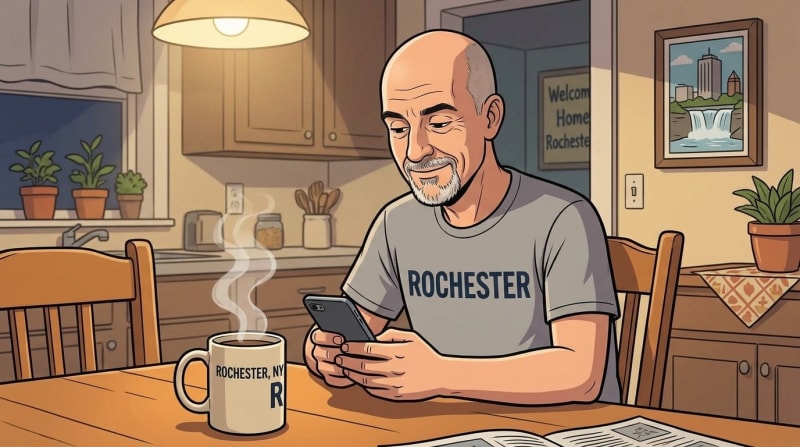
The structure is a joint venture — not an outright acquisition. Oak Hill Capital retains a stake, and Greenlight continues operating as its own entity, at least for now. T-Mobile brings $2 billion in capital; Oak Hill and Greenlight bring the infrastructure and market position they've built here.
That context matters: Greenlight was already on a robust growth trajectory before this announcement. This isn't a rescue — it's an acceleration.
Greenlight Networks: Rochester's Homegrown Fiber Story
Greenlight Networks: Rochester's Homegrown Fiber Story
Greenlight Networks built its business in Rochester by doing something cable providers largely haven't: running fiber-optic cable directly to homes, not just to neighborhood nodes. That approach delivers faster, more consistent speeds than the hybrid cable infrastructure that has served most of this region for decades.
Being Rochester-based isn't just a point of local pride. Decisions about which neighborhoods to build in, how to price service, and how to handle customer support have historically been made by people with a stake in this community. The growth Greenlight was logging before this week's announcement suggests that proposition worked.
What This Means for Rochester Internet Customers
What This Means for Rochester Internet Customers
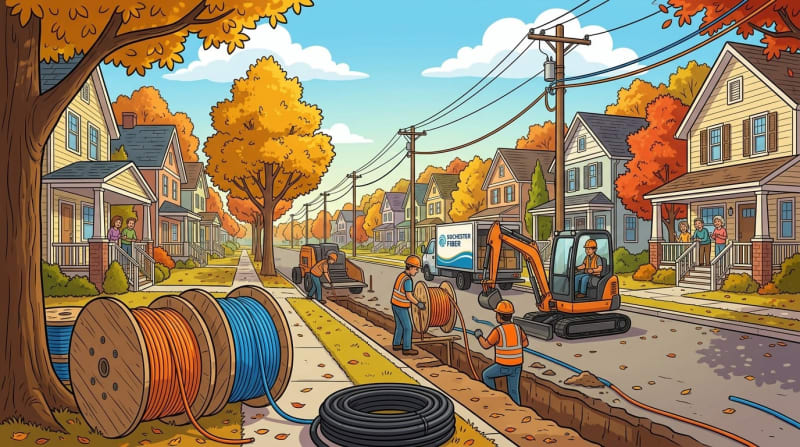
The most direct implication is speed of expansion. Building fiber infrastructure is expensive — materials, labor, permitting, construction street by street. A $2 billion capital injection removes the constraint that most ISPs face when deciding whether to extend coverage to the next neighborhood or the next suburb.
For Rochester residents who don't yet have access to Greenlight service, this deal makes the wait shorter. For those who do, it means the company serving them just got significantly better capitalized — which matters for long-term network investment.
More Greenlight coverage also means more competitive pressure on cable providers. In markets where fiber ISPs have expanded aggressively, cable operators have responded with price adjustments and speed upgrades. That dynamic benefits customers regardless of which provider they choose.
T-Mobile's Fiber Strategy: Why Rochester?
T-Mobile's Fiber Strategy: Why Rochester?
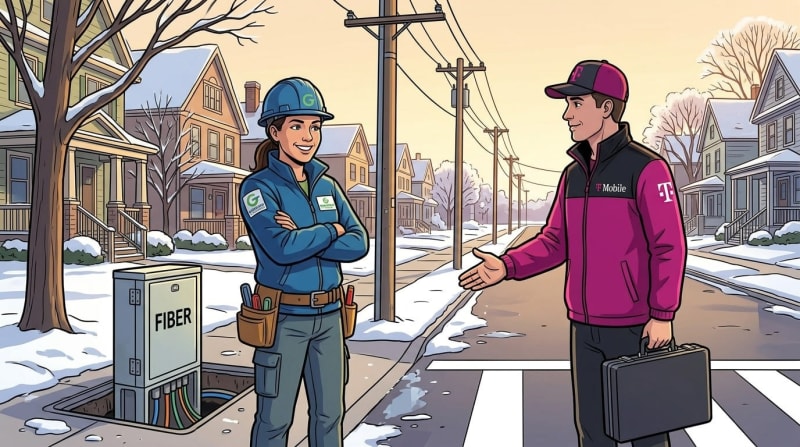
T-Mobile has been expanding into fixed home broadband for several years, most visibly through its wireless-based Home Internet product. A joint venture with an established fiber operator is a different kind of move — one that puts T-Mobile into physical fiber infrastructure rather than cellular spectrum.
Rochester is a logical place to make that bet. Greenlight has already done the hard work of building out infrastructure and winning customers in a competitive market. T-Mobile isn't starting from zero; it's backing a proven operation with capital to go further.
The joint venture structure also gives T-Mobile a path into fixed fiber without the regulatory complexity of a full acquisition. Greenlight keeps its identity. T-Mobile gets exposure to a growing fiber market and a foothold it didn't have to build from scratch.
Unanswered Questions for the Rochester Region
Unanswered Questions for the Rochester Region
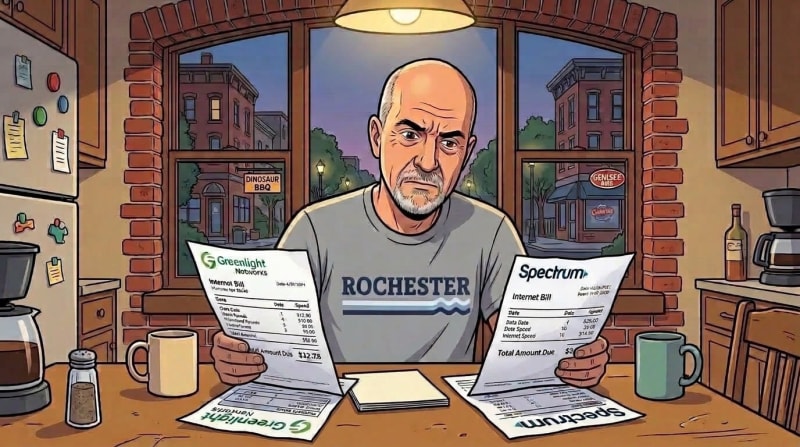
The announcement doesn't settle everything. Whether the Greenlight brand survives as T-Mobile's involvement deepens is not yet clear. Customers tend to notice rebrands, and a shift in identity could change how the company is perceived locally.
Job creation and headquarters implications are also open. Rochester-based operations carry a different employment story than remote corporate functions. Whether the joint venture preserves Greenlight's local workforce hasn't been addressed publicly.
Regulatory review is the other variable. Large deals in broadband markets draw scrutiny from the FCC and state regulators. The timeline from announcement to close depends on how that review goes.
What isn't in question: the investment is $2 billion, the capital is committed, and Greenlight Networks has more to build with than at any point in its history.
Content ID: FeHRj8okBdveeyWqU6Fb29zW
See an error? Tell us.


Comments
Share with the Community