
Rochester Is About to Rewrite Its Zoning Code — Here Is What Changes and What It Means for Your Neighborhood
The Short Version
- Monroe County's median home price hit $308,500 in May 2026 — a new record — making ZAP's provisions for more housing supply one of the most consequential votes Rochester City Council will take this year.
- Eliminating parking minimums doesn't ban parking — it removes the city-mandated floor that forces surface lots onto walkable commercial corridors even when most customers arrive on foot or by bus.
- ZAP would make it easier to add accessory dwelling units — garage apartments, basement studios, backyard cottages — adding naturally affordable housing to established neighborhoods without displacing anyone.
- The Zoning Alignment Project aligns Rochester's code with the Rochester 2034 Comprehensive Plan, the long-range vision the community helped shape — the vote is whether the rules finally match the values.
- Public comment closes before the July 13 City Council vote — rochesterzap.com has the ZAP draft, your neighborhood's zoning district, and instructions for how to weigh in before it's decided.
Something is happening at Rochester City Hall on July 13, and it matters more than the agenda item title suggests.
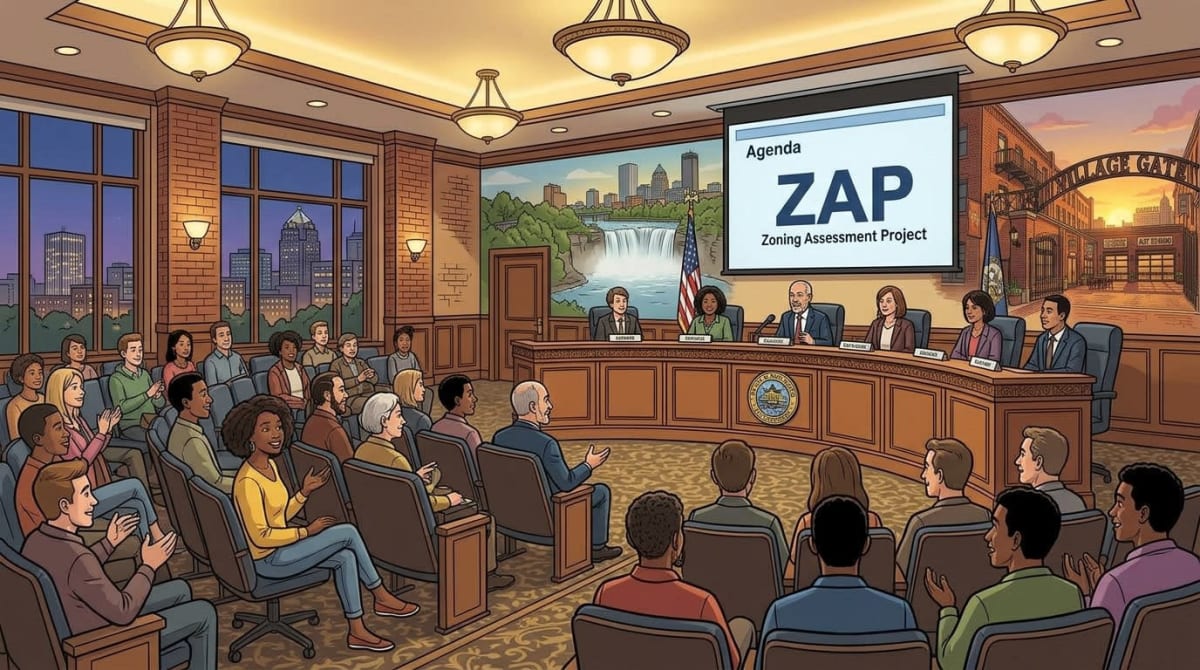
City Council will vote on the Zoning Alignment Project — ZAP — a comprehensive Rochester zoning reform that Reconnect Rochester has called one of the biggest local planning updates in the region in years. What ZAP proposes to change — eliminating parking minimums citywide, relaxing rules around accessory dwelling units — sounds technical. It isn't. These are decisions about what your neighborhood can become.
The final draft is out. The final public hearing is scheduled. The vote is July 13. If you care about affordability, walkability, or what gets built on your street, the next few weeks are the window.
What Is ZAP and Why Is Rochester Doing This Now?

What Is ZAP and Why Is Rochester Doing This Now?
Rochester's zoning code is the set of rules that determines what can be built where — how tall, how close to the street, how many parking spaces, what uses are allowed in which zones. Every neighborhood in the city lives inside a zoning category that shapes what it can and can't become.
The Zoning Alignment Project is Rochester's effort to bring that code into alignment with the Rochester 2034 Comprehensive Plan — the long-range planning document the city developed through years of community engagement. The mismatch between the two has been the gap between what Rochester residents said they wanted and what the city's rules actually permitted.
According to the official project site, ZAP's goals are placemaking, focused growth, equity, and designing at the pedestrian scale — connecting the zoning code to how neighborhoods actually feel to live in, not just to the formulas of an older era. This is a comprehensive update, not a minor amendment.
The final draft has been released. A final public hearing is scheduled before the July 13 City Council vote. What that vote decides will govern Rochester's built environment for the next generation.
What would it mean if the city's rules finally caught up with what its residents said they wanted — not just for developers, but for everyone trying to build a life here?
What Changes for Parking — and Why That Matters More Than You'd Think

What Changes for Parking — and Why That Matters More Than You'd Think
Parking minimums are one of those regulations so embedded in the city's fabric that most people don't know they exist. They require any new building to include a minimum number of parking spaces based on its use — and that requirement has shaped the physical look of Rochester's commercial corridors in ways that are hard to un-see once you notice them.
Buildings set back from the street to make room for surface lots. Empty asphalt between storefronts. New development designed not around what's walkable or neighborly, but around a parking formula written for a different era and a different relationship with the car.
Reconnect Rochester is calling on the City to eliminate parking minimums citywide as part of ZAP. This doesn't ban parking — property owners and developers can still build as much parking as they believe their tenants or customers need. What it eliminates is the city-mandated floor: the requirement to build parking even when walkability, transit access, or the actual behavior of a neighborhood's residents doesn't call for it.
A café on Monroe Avenue that draws customers who walk or bike shouldn't need a surface lot. An apartment building near a frequent bus line shouldn't be required to add a parking space to every unit regardless of whether tenants own cars. Removing minimums lets Rochester's corridors and transit-accessible neighborhoods build in ways that match how people actually use them.
What would Monroe Avenue, Park Avenue, or Upper Falls look like if what got built there matched what actually happens there?
Accessory Dwelling Units — What's Being Proposed for Backyard Cottages and Basement Apartments
Accessory Dwelling Units — What's Being Proposed for Backyard Cottages and Basement Apartments
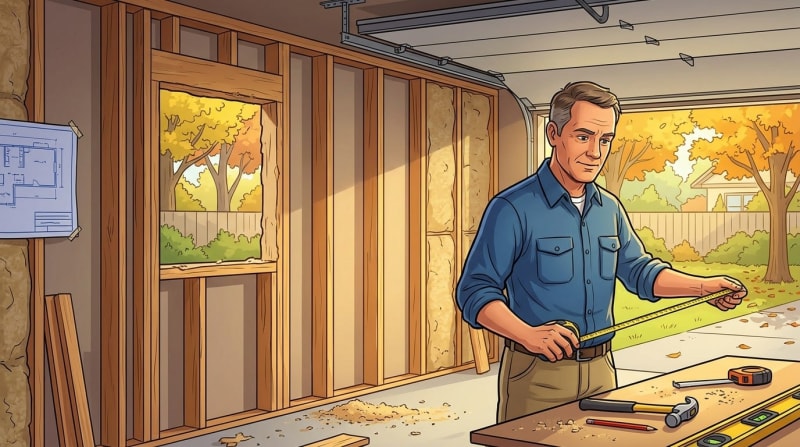
An accessory dwelling unit — ADU — is a second housing unit on a single-family lot. A finished basement studio. A garage converted into a one-bedroom apartment. A small backyard cottage behind the main house.
Rochester currently has rules that limit ADUs: setback requirements, size restrictions, and approval processes that create real barriers to adding them even when a homeowner wants to and a neighborhood could use the housing. ZAP proposes relaxing those restrictions, making it easier to add an ADU to an existing residential lot.
The logic is direct. ADUs add housing in established, walkable neighborhoods without tearing anything down. They let homeowners generate rental income — often meaningfully — while adding the kind of naturally affordable rental unit that new construction pipelines rarely produce. They show up in existing neighborhoods already connected to streets, transit, and community — not in new subdivisions built from scratch.
For Rochester, where housing affordability is increasingly defining who can stay and who gets pushed out, ADUs represent one of the least disruptive ways to add supply in neighborhoods that already work.
What would it mean for a family to stay in the neighborhood they grew up in because a neighbor's garage became an apartment they could afford?
Rochester's Housing Market Context: Why Zoning Reform Has Stakes
Rochester's Housing Market Context: Why Zoning Reform Has Stakes
The stakes are measurable. Monroe County's median home price reached $308,500 in May 2026 — a new record, according to the New York State Association of Realtors. That's the market Rochester residents are navigating while the zoning code limits what can be built.
Zoning and housing supply are connected. When rules restrict ADUs, require parking that raises construction costs, and block denser housing near transit, the shortage shows up as price pressure on what little supply exists. The households who feel it first are the ones with the least margin.
ZAP's transit-supportive provisions aim to address part of this: allowing denser housing near bus routes, so that more residents can live close to the RTS lines they depend on. The connection between housing location and transit access is real — and for Rochester residents who don't own cars, or can't afford to, it isn't abstract.
ZAP alone won't solve Rochester's affordability challenge. No zoning update does. But the rules that limit supply and raise construction costs have consequences — and the July 13 vote is a chance to change some of those rules.
How to Have Your Say Before the July 13 Vote

How to Have Your Say Before the July 13 Vote
If you want to weigh in before City Council votes, there are concrete ways to do it.
The final public hearing is the formal on-the-record opportunity to speak before the vote. Check rochesterzap.com for the date, time, and location — and for how to submit written comment if you can't appear in person. City Council members can also be reached directly through the City of Rochester's website.
The ZAP draft itself is at rochesterzap.com, with the ability to navigate by zoning district. That means you can look up your specific neighborhood, find its zoning category, and see what the current rules allow and what would change. It's more readable than most municipal documents, and it's worth the time to understand what it means for your block.
Reconnect Rochester has been tracking ZAP closely and advocating specifically on the parking minimum and ADU provisions. Their advocacy updates are a useful guide to what's contested and where the key decisions land before the vote.
Rochester's zoning code hasn't been updated comprehensively in decades. The neighborhoods this code will govern are already there — occupied by people who live and work in them, shaped by rules written for a different era.
The vote is July 13. What kind of city do you want Rochester to be — and what part do you want to play in deciding it?
Content ID: nCdJn0jikOAwUMdwI3LBQDI1
See an error? Tell us.



Comments
Share with the Community