

The Rochester Scientist Who Discovered Why Sleep Cleans Your Brain Just Earned Medicine's Highest Honor
The Short Version
- Maiken Nedergaard, a neuroscientist at URMC, was elected to the National Academy of Medicine in October 2026 for discovering the glymphatic system — the brain's sleep-activated waste-clearance network.
- The glymphatic system uses cerebrospinal fluid to flush toxic byproducts from the brain, running primarily during sleep, not while we're awake.
- Nedergaard's team made the discovery concrete by watching cerebrospinal fluid move in and out of a live brain in real time using advanced microscopy.
- Nearly 2,000 scientific papers worldwide cite the glymphatic finding, and it has opened new avenues for potentially treating Alzheimer's disease and other neurological conditions.
- Her advice is direct: protect sleep as seriously as nutrition and physical activity.
Every morning before 6 a.m., Rochester International Airport fills up. Maiken Nedergaard has noticed. She has also spent years proving why those early departures carry a cost that doesn't show up on a boarding pass. Nedergaard, a neuroscientist at the University of Rochester Medical Center, discovered the glymphatic system — the brain's sleep-activated waste-clearance network, central to long-term brain health. This week, the National Academy of Medicine elected her as a member for that work, one of the highest honors in health and medicine.
What the Glymphatic System Actually Is
What the Glymphatic System Actually Is
The glymphatic system uses cerebrospinal fluid, moved through the brain by glial support cells, to collect and carry away waste products that build up during wakefulness. The system is primarily active during sleep. During the day the brain is working — processing, remembering, solving — and those processes leave byproducts behind. Sleep is when the system runs its clearance cycle.
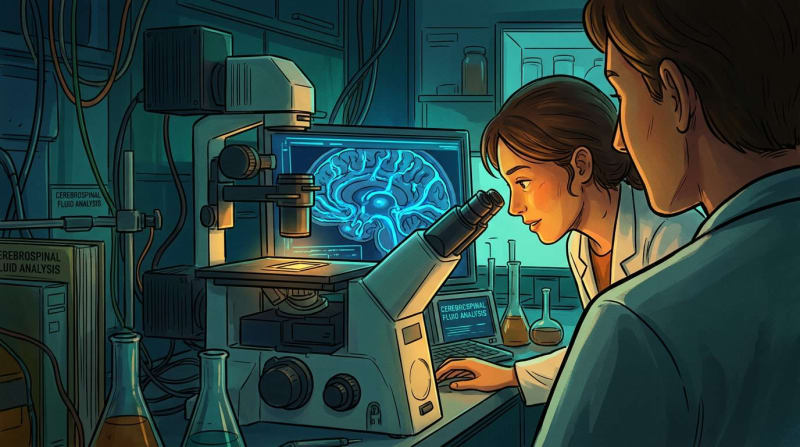
What made the work definitive was watching it happen. Using advanced microscopy, Nedergaard's team looked directly into a live brain and observed the fluid moving in real time. "We could look into a live] brain, and we could visualize, in real time, that this fluid was actually flowing in and flowing out," she told the [UR Review. A process that had been theorized for decades became visible.
Why This Changes What We Know About Sleep
Why This Changes What We Know About Sleep
Sleep had been understood mainly as rest — the brain powering down while the body recovered. Nedergaard's work changed that. The brain isn't idling at night. It is running the one maintenance job it cannot perform while it is also doing everything else.
The implications for disease are direct. Nedergaard's research has opened new avenues for understanding and potentially treating neurological conditions including Alzheimer's disease. The connection between poor sleep and cognitive decline had been observed for years. Nedergaard's work gave it a mechanism.
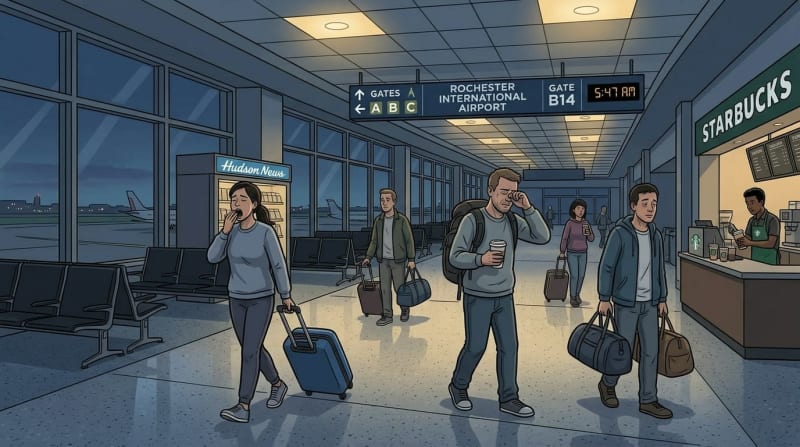
"The airport here in Rochester is always remarkably busy before 6:00 am, and I cannot help but wonder how much sleep all those travelers sacrificed just to begin their journey," she told URMC. Her advice is direct: "Protect sufficient, regular sleep as seriously as you protect your nutrition and physical activity."
The Scale of the Impact
The Scale of the Impact
Nedergaard's discovery has generated nearly 2,000 scientific papers worldwide. That number is the measure of a foundational finding — not a result others noted and moved on from, but a platform that researchers in sleep medicine, Alzheimer's disease, and neurology have continued to build on.
The National Academy of Medicine cited her work for discovering the glymphatic system and for opening new avenues toward understanding and potentially treating neurological conditions, including Alzheimer's disease. The election places her among the most recognized scientists in medicine.
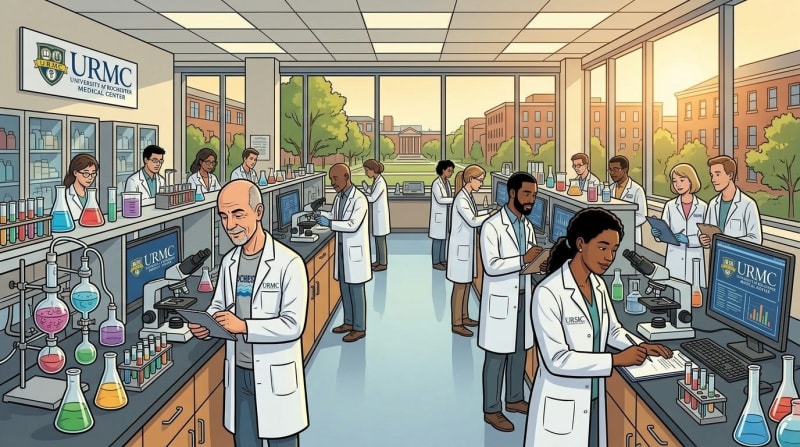
The research is based at URMC. The lab is in Rochester, and what was proven there is now cited in research labs worldwide.
Content ID: Lqk55bN2s5ZAqHE7uVBT73Oz
See an error? Tell us.

Comments
Share with the Community