Eleven New Townhomes Could Rise on Rochester's Last Inner Loop Parcel — Here's the Plan
The Short Version
- Hinge Neighbors has been selected by the City of Rochester to build 11 affordable for-sale townhomes at 125 Charlotte Street, the last undeveloped parcel of the filled-in Inner Loop East.
- Nine of the eleven homes include fully accessible ground-floor ADUs; the homes would start around $175,000 for buyers at or below 60% of area median income, against $500,000-$600,000 market townhomes across the street.
- The $6.85 million project depends on $4.2 million from New York's Block by Block program, with the rest from home sales and community development financing; groundbreaking is targeted for 2027 and completion for 2028.
- The project is explicitly framed as repairing the harm of the Inner Loop and redlining, aimed at a Rochester homeownership gap in which Black homeownership (44.1%) trails white homeownership (74.5%).
- A neighborhood group, Keep East End Green, has gathered more than 1,000 signatures opposing the loss of an informal green space, setting up a genuine community tension between affordable ownership and shared open space that City Council will weigh.
For sixty years, the eastern leg of Rochester's Inner Loop did exactly what it was built to do — it moved cars, and it moved them straight through the middle of neighborhoods that never asked for a highway. When the city tore out and filled that sunken stretch, finishing the work in 2017, it left behind a handful of shovel-ready parcels and one open question: what do you put back where a moat used to be?
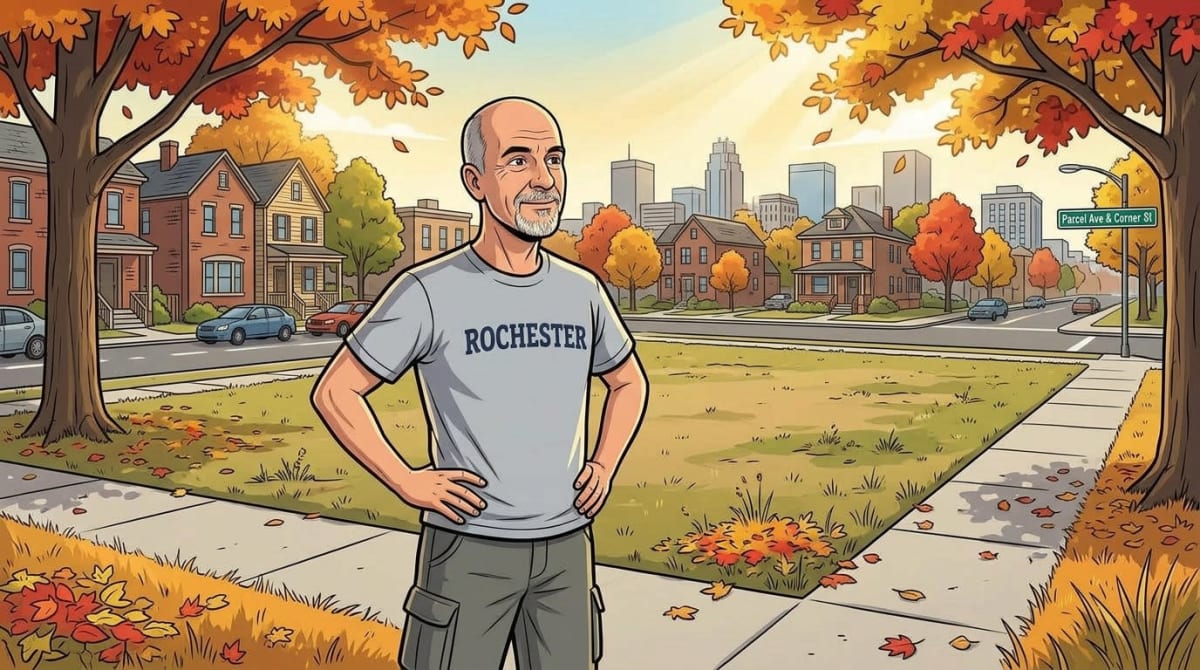
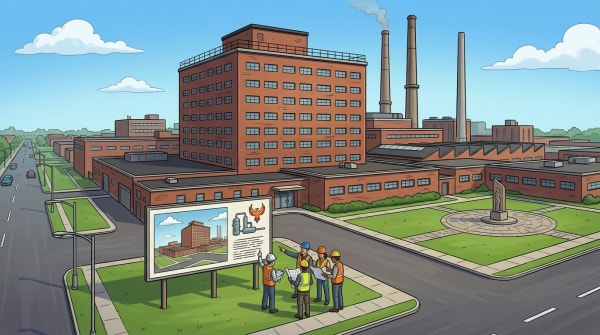
Most of those parcels filled in. One didn't. The half-acre at 125 Charlotte Street — bordered by Pitkin, Charlotte, and North Union streets — is the last undeveloped piece of the Inner Loop. And the plan now on the table for it isn't more market-rate development. It's eleven affordable townhomes, built for ownership, proposed by a group that started as neighbors before it ever became a developer.
The Last Undeveloped Piece of the Inner Loop
The Last Undeveloped Piece of the Inner Loop
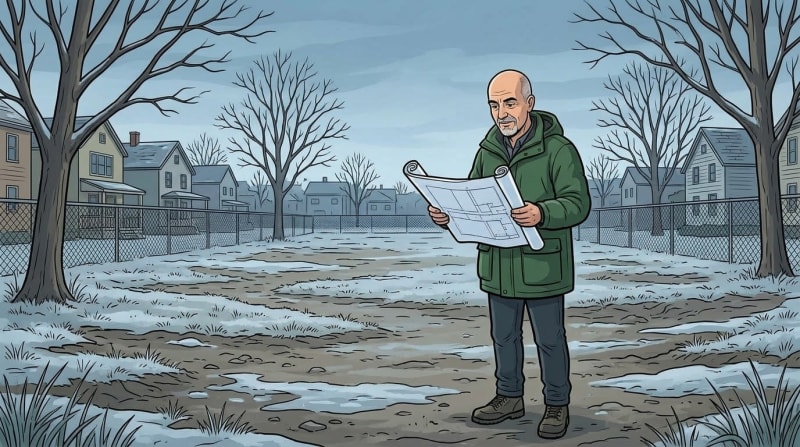
According to WXXI News, 125 Charlotte was one of the first parcels the city offered up after filling the eastern Inner Loop. The city sold it in 2020 with a requirement that construction begin within two years. It didn't, and ownership reverted to the city in November 2022. In fall 2025, the city issued a fresh request for proposals.
That RFP drew four responses. According to the City of Rochester, it selected Hinge Neighbors as the recommended developer, in partnership with The Housing Council at PathStone, development consultant Patrick Tobin LLC, and CJS Architects. The proposed sale still needs Rochester City Council approval. Over the years, this same patch of land had been imagined as part of a mixed-use building with a parking garage, a daycare, and a small-business headquarters — none of which materialized. What finally stuck was the idea that looked least like a typical development deal.
What Hinge Is — and Where It Came From
What Hinge Is — and Where It Came From
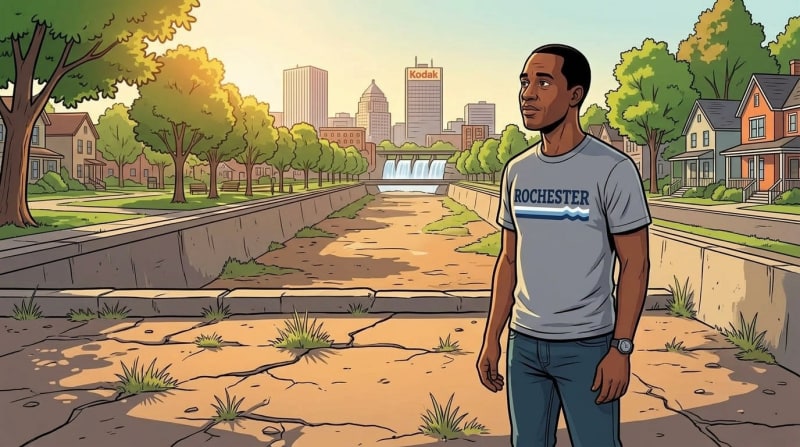
Hinge Neighbors is not an outside firm that flew in for an RFP. According to Hinge Homes, Shawn Dunwoody and Suzanne Mayer co-founded the nonprofit in 2018 with a deliberately unusual goal: bring the communities divided by the Inner Loop together before redevelopment began, not after. For eight years, they listened. And the message that kept surfacing wasn't just housing — it was ownership.
That distinction matters. Dunwoody, a Rochester native, describes the divide in plain terms — tree-lined historic streets to the south, decades of disinvestment to the north. The name "Hinge" is the whole thesis in one word: a hinge is what reconnects two things that were pulled apart. This is a group writing development out of memory rather than out of a spreadsheet — and that is a gift not every parcel gets handed.
The Plan: 11 Townhomes, 20 Families, and a Front Stoop
The Plan: 11 Townhomes, 20 Families, and a Front Stoop
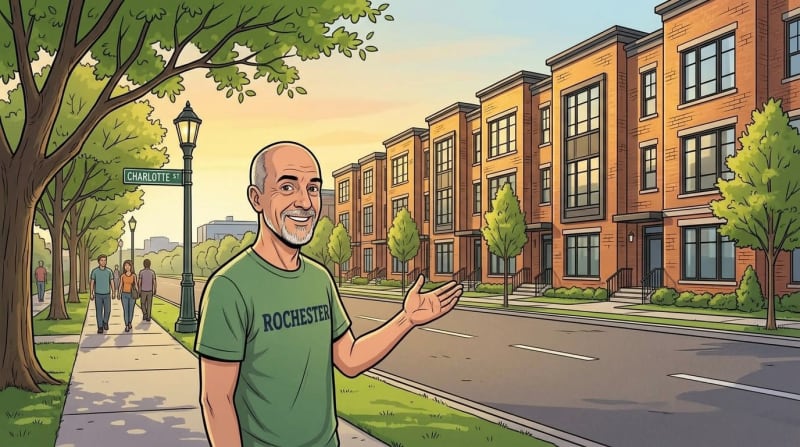
The proposal is for eleven townhomes designed to house roughly twenty families, nine of them featuring fully accessible, ground-floor accessory dwelling units. Here is how the project breaks down:
The ADUs are the quiet genius of the design. An accessory dwelling unit gives an owner options as life changes — space for extended family, a rental that helps carry the mortgage, a studio or workshop for a trade. According to the Rochester Beacon, that flexibility is built in by design, not bolted on.
What makes this genuinely affordable is the price. According to 13WHAM, the for-sale homes would start around \$175,000, aimed at buyers earning no more than 60% of area median income. Dunwoody points out that market-rate townhomes diagonally across the street run \$500,000 to \$600,000. Put those side by side and the gap is the whole point:
The total project runs \$6.85 million. The Rochester Beacon reports the sale is contingent on \$4.2 million from New York Homes and Community Renewal's Block by Block program, with the rest coming from home sales and community development financing:
There's a reason ownership — not just shelter — is the word that keeps coming up. The New York Attorney General's 2023 report found that across every region of the state, white households own homes at nearly double the rate of households of color, a gap the report ties directly to the legacy of redlining. Nationally, U.S. Census figures from late 2020 put Black homeownership at 44.1% against white homeownership at 74.5%:
A project that puts first-time, for-sale homes into a neighborhood the highway once emptied is aimed squarely at that gap. Mayer has framed the location itself as the experiment — building affordable ownership outside of poverty-concentrated areas, where the chance to build generational wealth has historically been out of reach. What would it mean for twenty families to own a front stoop on a street that, two generations ago, was scheduled to disappear?
The Green Space Question
The Green Space Question
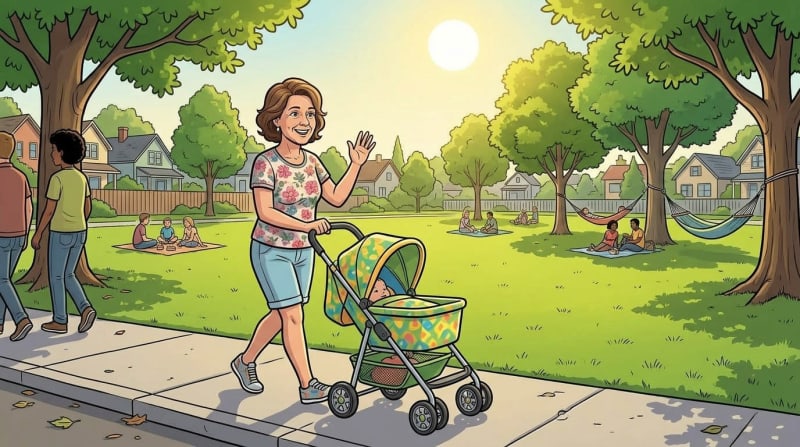
This is where the story stops being simple, and it should. The parcel isn't an empty lot to the people who live around it — it's an informal park, a patch of grass along North Union Street that neighbors describe as a communal backyard. A group called Keep East End Green has organized against the project, gathering more than 1,000 petition signatures. As WHEC reported, their argument is not anti-housing — it's that residents shouldn't have to choose between affordable homes and the only accessible open space many of them have.
Both things are true at once. The nearest public parks, Anderson Park and Martin Luther King Jr. Memorial Park, sit a quarter-mile and a half-mile away — close on a map, farther when it's the only green within a stroller's reach. Hinge says its plan retains roughly 40% of the parcel as green space, including a publicly accessible strip along Pitkin Street; the opposition disputes whether that's enough. Dunwoody attributes some of the pushback to early uncertainty about what would be built. The neighbors who show up to Speak to Council aren't wrong to love the grass. The families who want a shot at ownership aren't wrong to want the homes. Naming that tension honestly is more useful than pretending one side simply misunderstands the other.
What Reconnection Actually Asks of Us
What Reconnection Actually Asks of Us
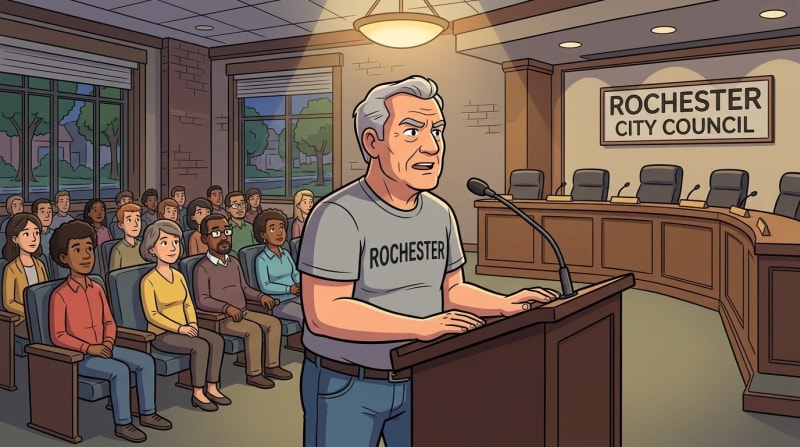
It is easy to say "reconnect communities." It is harder to decide what goes on the one piece of ground where reconnection has to actually happen. The Inner Loop took homes, took green space, took the everyday closeness of a neighborhood and replaced it with a trench. Putting something back means weighing values that don't fit neatly together — ownership and openness, density and breathing room, repair and preservation.
The decision now sits with Rochester City Council, which means it also sits, at least a little, with everyone who shows up to say what this corner should become. According to the Rochester Beacon, if the sale is approved next spring, Hinge could break ground in 2027 with completion targeted for 2028.
That timeline is a year of conversations away from being settled. So the question is genuinely open: when a community finally gets to decide what fills the last scar left by the highway, how does it hold homeownership and shared space in the same hand — and who needs to be in the room when it chooses?
Content ID: 9CyC8iVLKzK1T8dDat88awi7
See an error? Tell us.
Comments
Share with the Community